Results by title
9 books match the query 'War work'
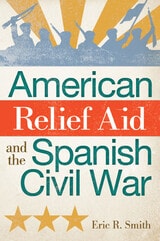
American Relief Aid and the Spanish Civil War
Eric R. Smith
University of Missouri Press, 2013
The Spanish Civil War created a conflict for Americans who preferred that the United States remain uninvolved in foreign affairs. Despite the country's isolationist tendencies, opposition to the rise of fascism across Europe convinced many Americans that they had to act in support of the Spanish Republic. While much has been written about the war itself and its international volunteers, little attention has been paid to those who coordinated these relief efforts at home.
American Relief Aid and the Spanish Civil War tells the story of the political campaigns to raise aid for the Spanish Republic as activists pushed the limits of isolationist thinking. Those concerned with Spain’s fate held a range of political convictions (including anarchists, socialists, liberals, and communists) with very different understandings of what fascism was. Yet they all agreed that fascism’s advance must be halted. With labor strikes, fund-raising parties, and ambulance tours, defenders of Spain in the United States sought to shift the political discussion away from isolation of Spain’s elected government and toward active assistance for the faltering Republic.
Examining the American political organizations affiliated with this relief effort and the political repression that resulted as many of Spain’s supporters faced the early incarnations of McCarthyism’s trials, Smith provides new understanding of American politics during the crucial years leading up to World War II. By also focusing on the impact the Spanish Civil War had on those of Spanish ethnicity in the United States, Smith shows how close to home the seemingly distant war really hit.
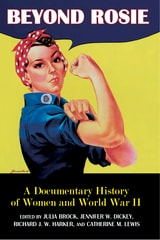
Beyond Rosie
A Documentary History of Women and World War IIJulia Brock
University of Arkansas Press, 2015
Beyond Rosie offers readers an opportunity to see the numerous contributions they made to the fight against the Axis powers and how American women’s roles changed during the war. The primary documents (newspapers, propaganda posters, cartoons, excerpts from oral histories and memoirs, speeches, photographs, and editorials) collected here represent cultural, political, economic, and social perspectives on the diverse roles women played during World War II.
Cordelia Harvey
Civil War AngelBob Kann
Wisconsin Historical Society Press, 2011
Cordelia Harvey: Civil War Angel includes sidebars on medical care, early nursing, and military prisons. A timeline, glossary of terms, and suggestions for activities and discussion round out this spirited narrative.
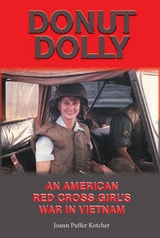
Donut Dolly
An American Red Cross Girl's War in VietnamJoann Puffer Kotcher
University of North Texas Press, 2011

No Gifts from Chance
A Biography of Edith WhartonBy Shari Benstock
University of Texas Press, 2004
The first new biography of America's foremost woman of letters in twenty years, No Gifts from Chance presents an Edith Wharton for our times. Far from the emotionally withdrawn and neurasthenic victim of earlier portraits, she is revealed here as an ambitious, disciplined, and self-determined woman who fashioned life to her own desires. Drawing on government records, legal and medical documents, and recently opened collections of Wharton's letters, Shari Benstock's biography offers new information on what have been called the key mysteries of her life: the question of her paternity, her troubled relations with her mother and older brothers, her marriage to manic-depressive Teddy Wharton, and her extramarital affair with Morton Fullerton.
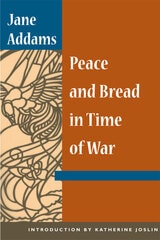
Peace and Bread in Time of War
Jane Addams
University of Illinois Press, 2002
Addams's unyielding pacifism during the Great War drew criticism from politicians and patriots who deemed her the "most dangerous woman in America." Even those who had embraced her ideals of social reform condemned her outspoken opposition to U.S. entry into World War I or were ambivalent about her peace platforms. Turning away from the details of the war itself, Addams relies on memory and introspection in this autobiographical portrayal of efforts to secure peace during the Great War. "I found myself so increasingly reluctant to interpret the motives of other people that at length I confined all analysis of motives to my own," she writes. Using the narrative technique she described in The Long Road of Women's Memory, an extended musing on the roles of memory and myth in women's lives, Addams also recalls attacks by the press and defends her political ideals.
Katherine Joslin's introduction provides additional historical context to Addams's involvement with the Woman's Peace Party, the Women's International League for Peace and Freedom, and her work on Herbert Hoover's campaign to provide relief and food to women and children in war-torn enemy countries.
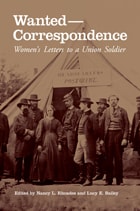
Wanted—Correspondence
Women’s Letters to a Union SoldierNancy L. Rhoades
Ohio University Press, 2009
A unique collection of more than 150 letters written to an Ohio serviceman during the American Civil War that offers glimpses of women’s lives as they waited, worked, and wrote from the Ohio home front. The letters reveal fascinating details of the lives of mostly young, single women—friends, acquaintances, love interests, and strangers who responded to one Union soldier’s advertisement for correspondents. Almost all of the women who responded to Lieutenant Edwin Lewis Lybarger’s lonely-hearts newspaper advertisement lived in Ohio and supported the Union. Lybarger carried the collection of letters throughout three years of military service, preserved them through his life, and left them to be discovered in an attic trunk more than a century after Lee’s surrender.
Women’s letter writing functioned as a form of “war work” that bolstered the spirits of enlisted men and “kinship work” that helped forge romantic relationships and sustain community bonds across the miles. While men’s letters and diaries abound in Civil War history, less readily available are comprehensive collections of letters from middle-class and rural women that survived the weathering of marches, camp life, and battles to emerge unscathed from men’s knapsacks at war’s end.
The collection is accompanied by a detailed editorial introduction that highlights significant themes in the letters. Together, they contribute to the still-unfolding historical knowledge concerning Northern women’s lives and experiences during this significant period in American history.
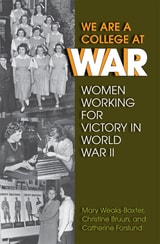
We Are a College at War
Women Working for Victory in World War IIMary Weaks-Baxter, Christine Bruun, and Catherine Forslund
Southern Illinois University Press, 2010
We Are a College at War weaves together the individual World War II experiences of students and faculty at the all-female Rockford College (now Rockford University) in Rockford, Illinois, to draw a broader picture of the role American women and college students played during this defining period in U.S. history. It uses the Rockford community’s letters, speeches, newspaper stories, and personal recollections to demonstrate how American women during the Second World War claimed the right to be everywhere—in factories and other traditionally male workplaces, and even on the front lines—and links their efforts to the rise of feminism and the fight for women’s rights in the 1960s and 1970s.
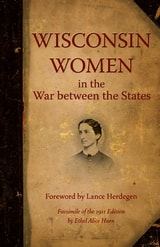
Wisconsin Women in the War between the States
Ethel Hurn
Wisconsin Historical Society Press, 2013
“There was too much to be done by the most of us, to keep the wolf from the door, to give way to our feelings, and it was better so. It gave us the feeling that we, too, although not enlisted in the ranks South, had a battle to fight at home on more than one line, and the worst of all was to keep up hope against hope, that our loved ones would be spared to come back to us…”
As the fiftieth anniversary of the American Civil War neared, the Wisconsin History Commission was established to develop and publish a series of “original papers” on Wisconsin’s role in what was officially called the War of Rebellion. Picked as the sixth selection and published in May 1911 was Wisconsin Women in the War between the States by Ethel Alice Hurn. In many ways it was a landmark effort. It was one of the first formal recognitions—not only in Wisconsin but nationally—of the overlooked and almost forgotten role Northern women played in 1861–1865.
The author of the study was Ethel Hurn of Oshkosh, then a student at the University of Wisconsin. Gathering the material for the book proved a daunting task. During the Civil War era women could not vote, hold bank accounts, or take a direct role in business. Nevertheless, in the time of national crisis, women took over farms and shops and other endeavors, and some left quiet family hearths to move onto the public stage. They prepared food, sewed and laundered, knitted socks and gloves, and organized campaigns and fairs as relief efforts that raised millions of dollars to aid wounded soldiers and assist war widows and orphans. However, these women’s work was generally undertaken without thought of keeping a formal record. It could be found only in scattered collections of letters, newspaper files, several interviews, and the brief reports and pamphlets of soldier fairs and soldiers’ aid societies.
Wisconsin Women in the War between the States is just as significant today as it was a century ago because it documented an important turning point in the changing role of women in American society. Other scholars have added to the record in the passing years, but Hurn’s groundbreaking book is welcomed back in print during this 150th anniversary of the American Civil War to be discovered and enjoyed as well as to enlighten a new generation of readers.