Results by title
7 books match the query 'Water conservation'
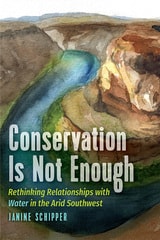
Conservation is not Enough
Rethinking Relationships with Water in the Arid SouthwestJanine Schipper
University of Wyoming Press, 2025
Using an exploratory and qualitative approach, the book draws on more than ninety-five interviews conducted over three years, revealing the complex relationships people have with water in the Southwest, and prominently features the voices of participants, effectively illustrating multiple perspectives and diverse ways of thinking about and relating to water. Schipper highlights various perspectives—including a water manager making conservation decisions, a Hopi elder emphasizing our connection to the water cycle, and a ski instructor reflecting on human-made snow—and interweaves personal experiences and reflections on her own relationship with water and conservation efforts.
Conservation Is Not Enough encourages readers to reflect on their personal connections to water and consider new possibilities, and it also urges readers to think beyond conventional conservation approaches. This book helps to transform the collective approach to water and cultivate fresh ways of engaging with and relating to water and is of great interest to scholars, students, and residents concerned with water issues in the Colorado River Basin.
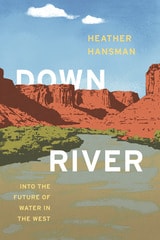
Downriver
Into the Future of Water in the WestHeather Hansman
University of Chicago Press, 2019
The Green River, the most significant tributary of the Colorado River, runs 730 miles from the glaciers of Wyoming to the desert canyons of Utah. Over its course, it meanders through ranches, cities, national parks, endangered fish habitats, and some of the most significant natural gas fields in the country, as it provides water for 33 million people. Stopped up by dams, slaked off by irrigation, and dried up by cities, the Green is crucial, overused, and at-risk, now more than ever.
Fights over the river’s water, and what’s going to happen to it in the future, are longstanding, intractable, and only getting worse as the West gets hotter and drier and more people depend on the river with each passing year. As a former raft guide and an environmental reporter, Heather Hansman knew these fights were happening, but she felt driven to see them from a different perspective—from the river itself. So she set out on a journey, in a one-person inflatable pack raft, to paddle the river from source to confluence and see what the experience might teach her. Mixing lyrical accounts of quiet paddling through breathtaking beauty with nights spent camping solo and lively discussions with farmers, city officials, and other people met along the way, Downriver is the story of that journey, a foray into the present—and future—of water in the West.
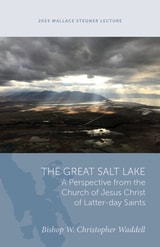
Great Salt Lake
A Perspective from the Church of Jesus Christ of Latter-day SaintsBishop W. Christopher Waddell
University of Utah Press, 2024
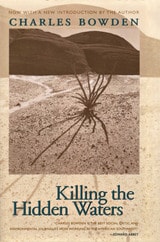
Killing the Hidden Waters
By Charles Bowden
University of Texas Press, 1985
In the quarter-century since his first book, Killing the Hidden Waters, was published in 1977, Charles Bowden has become one of the premier writers on the American environment, rousing a generation of readers to both the wonder and the tragedy of humanity's relationship with the land.
Revisiting his earliest work with a new introduction, "What I Learned Watching the Wells Go Down," Bowden looks back at his first effort to awaken people to the costs and limits of using natural resources through a simple and obvious example—water. He drives home the point that years of droughts, rationing, and even water wars have done nothing to slake the insatiable consumption of water in the American West. Even more timely now than in 1977, Killing the Hidden Waters remains, in Edward Abbey's words, "the best all-around summary I've read yet, anywhere, of how our greed-driven, ever-expanding urban-industrial empire is consuming, wasting, poisoning, and destroying not only the resource basis of its own existence, but also the vital, sustaining basis of life everywhere."
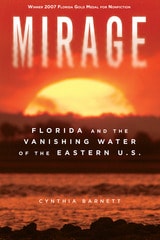
Mirage
Florida and the Vanishing Water of the Eastern U.S.Cynthia Barnett
University of Michigan Press, 2007
“Never before has the case been more compellingly made that America’s dependence on a free and abundant water supply has become an illusion. Cynthia Barnett does it by telling us the stories of the amazing personalities behind our water wars, the stunning contradictions that allow the wettest state to have the most watered lawns, and the thorough research that makes her conclusions inescapable. Barnett has established herself as one of Florida’s best journalists and Mirage is a must-read for anyone who cares about the future of the state.”
—Mary Ellen Klas, Capital Bureau Chief, Miami Herald
“Mirage is the finest general study to date of the freshwater-supply crisis in Florida. Well-meaning villains abound in Cynthia Barnett’s story, but so too do heroes, such as Arthur R. Marshall Jr., Nathaniel Reed, and Marjorie Harris Carr. The author’s research is as thorough as her prose is graceful. Drinking water is the new oil. Get used to it.”
—Michael Gannon, Distinguished Professor of history, University of Florida, and author of Florida: A Short History
“With lively prose and a journalist’s eye for a good story, Cynthia Barnett offers a sobering account of water scarcity problems facing Florida—one of our wettest states—and the rest of the East Coast. Drawing on lessons learned from the American West, Mirage uses the lens of cultural attitudes about water use and misuse to plead for reform. Sure to engage and fascinate as it informs.”
—Robert Glennon, Morris K. Udall Professor of Law and Public Policy, University of Arizona, and author of Water Follies: Groundwater Pumping and the Fate of America’s Fresh Waters
Part investigative journalism, part environmental history, Mirage reveals how the eastern half of the nation—historically so wet that early settlers predicted it would never even need irrigation—has squandered so much of its abundant freshwater that it now faces shortages and conflicts once unique to the arid West.
Florida’s parched swamps and supersized residential developments set the stage in the first book to call attention to the steady disappearance of freshwater in the American East, from water-diversion threats in the Great Lakes to tapped-out freshwater aquifers along the Atlantic seaboard.
Told through a colorful cast of characters including Walt Disney, Jeb Bush and Texas oilman Boone Pickens, Mirage ferries the reader through the key water-supply issues facing America and the globe: water wars, the politics of development, inequities in the price of water, the bottled-water industry, privatization, and new-water-supply schemes.
From its calamitous opening scene of a sinkhole swallowing a house in Florida to its concluding meditation on the relationship between water and the American character, Mirage is a compelling and timely portrait of the use and abuse of freshwater in an era of rapidly vanishing natural resources.
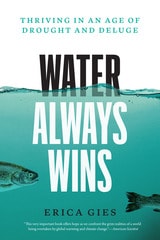
Water Always Wins
Thriving in an Age of Drought and DelugeErica Gies
University of Chicago Press, 2022
Nearly every human endeavor on the planet was conceived and constructed with a relatively stable climate in mind. But as new climate disasters remind us every day, our world is not stable—and it is changing in ways that expose the deep dysfunction of our relationship with water. Increasingly severe and frequent floods and droughts inevitably spur calls for higher levees, bigger drains, and longer aqueducts. But as we grapple with extreme weather, a hard truth is emerging: our development, including concrete infrastructure designed to control water, is actually exacerbating our problems. Because sooner or later, water always wins.
In this quietly radical book, science journalist Erica Gies introduces us to innovators in what she calls the Slow Water movement who start by asking a revolutionary question: What does water want? Using close observation, historical research, and cutting-edge science, these experts in hydrology, restoration ecology, engineering, and urban planning are already transforming our relationship with water.
Modern civilizations tend to speed water away, erasing its slow phases on the land. Gies reminds us that water’s true nature is to flex with the rhythms of the earth: the slow phases absorb floods, store water for droughts, and feed natural systems. Figuring out what water wants—and accommodating its desires within our human landscapes—is now a crucial survival strategy. By putting these new approaches to the test, innovators in the Slow Water movement are reshaping the future.
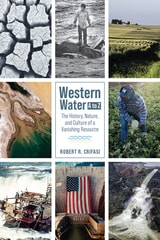
Western Water A to Z
The History, Nature, and Culture of a Vanishing Resourceby Robert R. Crifasi
University Press of Colorado, 2022
Organized as a collection of terms, the book addresses the most salient water issues and provides helpful background information regarding their origins and implications. Photographs serve a vital role in the cultural dialogue on water and stand as an equal partner to the text. Each subject is covered in about one page and is accompanied by one or two striking images from famous photographers like Margaret Bourke-White, Carleton E. Watkins, Arthur Rothstein, William Henry Jackson, and Dorothea Lang as well as Crifasi’s own work. Water often finds itself at the center of our cultural discourse in art, cinema, and literature, which play essential roles in shaping our understanding and experience of Western water. Crifasi also engages personalities that are nearly synonymous with Western water—John Wesley Powell, Elwood Mead, and Floyd Dominy, among others—to show how their lives intertwined with and often influenced the course of water development across the region.
Travelers, adventurers, students, and anyone interested in water will find Western Water A to Z a handy and entertaining reference guide.