Results by title
7 books match the query 'Water-supply, Agricultural'

Agricultural Development in Japan
The Land Improvement District in Concept and PracticeGil Latz
University of Chicago Press, 1989
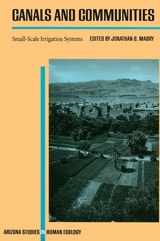
Canals and Communities
Small-Scale Irrigation SystemsJonathan B. Mabry
University of Arizona Press, 1996
CONTENTS
Introduction
The Ethnology of Irrigation: Cross-Cultural Characteristics of Local Water Management, Jonathan B. Mabry
Patterns of Cooperation and Conflict in Local Irrigation
1. La Gente es Muy Perra: Conflict and Cooperation over Irrigation Water in Cucurpe, Sonora, Mexico, Thomas E. Sheridan
2. Dhasheeg Agriculture in the Jubba Valley of Somalia, Catherine Besteman
3. The Dry and the Drier: Cooperation and Conflict in Moroccan Irrigation, John R. Welch
4. The Political Ecology of Irrigation in an Andean Peasant Community, Paul H. Gelles
Methods and Models for Analyzing Local Irrigation
5. Rapid Rural Appraisal of Arid Land Irrigation: A Moroccan Example, John R. Welch, Jonathan B. Mabry, and Hsain Ilahiane
6. Simulation Modelling of Balinese Irrigation, J. Stephen Lansing
7. Institutional Innovation in Small-Scale Irrigation Networks: A Cape Verdean Case, Mark W. Langworthy and Timothy J. Finan
Development Lessons from Local Irrigation
8. Qanats and Rural Societies: Sustainable Agriculture and Irrigation Cultures in Contemporary Iran, Michael E. Bonine
9. The Utility of Tradition in Sri Lankan Bureaucratic Irrigation: The Case of the Kirindi Oya Project, Pamela Stanbury
10. The Relevance of Indigenous Irrigation: A Comparative Analysis of Sustainability, Jonathan B. Mabry and David A. Cleveland
Conclusion
The Hydraulics of History: Evolutionary Trajectories of Local and Centralized Irrigation, Jonathan B. Mabry
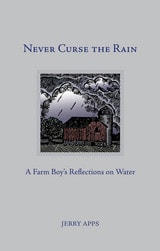
Never Curse the Rain
A Farm Boy’s Reflections on WaterJerry Apps
Wisconsin Historical Society Press, 2017
In Never Curse the Rain, Jerry shares his memories of water, from its importance to his family’s crops and cattle to its many recreational uses—fishing trips, canoe journeys, and the simple pleasures of an afternoon spent dreaming in the haymow as rain patters on the barn roof. Water is still a touchstone in Jerry’s life, and he explores the ways he’s found it helpful in soothing a troubled mind or releasing creativity. He also discusses his concerns about the future of water and ensuring we always have enough. For, as Jerry writes, "Water is one of the most precious things on this planet, necessary for all life, and we must do everything we can to protect it."
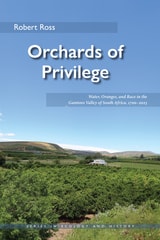
Orchards of Privilege
Water, Oranges, and Race in the Gamtoos Valley of South Africa, 1700–2023Robert Ross
Ohio University Press, 2025
This study of the Gamtoos River floodplain in South Africa’s Eastern Cape Province traces its transformation from an eighteenth-century natural landscape of thick bush into an agricultural zone now threatened by climate change. The first half of the book explains how missionaries from the London Missionary Society and residents of the Hankey Mission Station introduced irrigation, turning the area into a community of small-scale farmers. Despite early failures, by 1849 they had constructed South Africa’s first major irrigation tunnel and aqueduct. However, conflicts between the missionaries and residents led to the loss of communal lands to privatization, which ultimately impoverished the local farmers. The second half explores efforts to develop the valley for large-scale agriculture, addressing challenges like drought, flash floods, and saline water. By the mid-twentieth century, Afrikaners dominated the area, benefiting from the construction in 1970 of the Kouga Dam, which provided fresh water for the floodplain. This led to the rise of a wealthy white farming community, sustained by apartheid policies and labor from the “Coloured” and African populations. In the early twenty-first century, however, this prosperity has become threatened by severe droughts linked to global climate change. In view of these historical transformations, the Gamtoos River floodplain exemplifies the complex interplay between human ambition, environmental challenges, and sociopolitical forces.
Thirst for Growth
Water Agencies as Hidden Government in CaliforniaRobert Gottlieb
University of Arizona Press, 1991
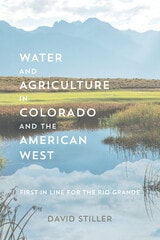
Water and Agriculture in Colorado and the American West
First in Line for the Rio GrandeDavid Stiller
University of Nevada Press, 2021
David Stiller’s thoughtful study focuses on the history of agricultural water use of the Rio Grande in Colorado’s San Luis Valley. After surveying the practices of early farmers in the region, he focuses on the impacts of Euro-American settlement and the ways these new agrarians endeavored to control the river. Using the Rio Grande as a case study, Stiller offers an informed and accessible history of the development of practices and technologies to store, distribute, and exploit water in Colorado and other western states, as well as an account of the creation of water rights and laws that govern this essential commodity throughout the West to this day. Stiller’s work ranges from meticulously monitored fields of irrigated alfalfa and potatoes to the local and state water agencies and halls of Congress. He also includes perceptive comments on the future of western water as these arid states become increasingly urbanized during a period of worsening drought and climate change.
An excellent read for anyone curious about important issues in the West, Water and Agriculture in Colorado and the American West offers a succinct summary and analysis of Colorado’s use of water by agricultural interests, in addition to a valuable discussion of the past, present, and future of struggles over this necessary and endangered resource.
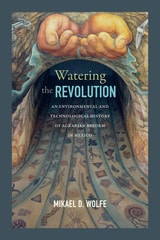
Watering the Revolution
An Environmental and Technological History of Agrarian Reform in MexicoMikael D. Wolfe
Duke University Press, 2017