Results by title

4 books match the query 'Waterfront'
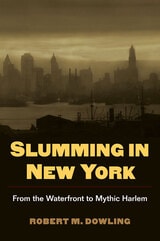
cover of Slumming in New York: From the Waterfront to Mythic Harlem

Slumming in New York

From the Waterfront to Mythic Harlem

Robert M. Dowling

University of Illinois Press, 2006

This remarkable exploration of the underbelly of New York City life from 1880 to 1930 takes readers through the city's inexhaustible variety of distinctive neighborhood cultures. Slumming in New York samples a number of New York "slumming" narratives--including Stephen Crane's Bowery tales, Paul Laurence Dunbar's The Sport of the Gods, Hutchins Hapgood's The Spirit of the Ghetto, Jacob Riis's How the Other Half Lives, and Carl Van Vechten's Nigger Heaven--to characterize and examine the relationship between New York writing and the city's cultural environment.

Using the methods of ethnicity theory, black studies, regional studies, literary studies, and popular culture, Robert M. Dowling reveals the way in which "outsider" authors helped alleviate New York's mounting social anxieties by popularizing "insider" voices from neighborhoods as distinctive as the East Side waterfront, the Bowery, the Tenderloin's "black Bohemia," the Jewish Lower East Side, and mythic Harlem.

[more]
cover of Wobblies on the Waterfront: Interracial Unionism in Progressive-Era Philadelphia

Wobblies on the Waterfront

Interracial Unionism in Progressive-Era Philadelphia

Peter Cole

University of Illinois Press, 2007
The rise and fall of America's first truly interracial labor union For almost a decade during the 1910s and 1920s, the Philadelphia waterfront was home to the most durable interracial, multiethnic union seen in the United States prior to the CIO era. For much of its time, Local 8 was majority black, always with a cadre of black leaders. The union also claimed immigrants from Eastern Europe, as well as many Irish Americans, who had a notorious reputation for racism. This important study is the first book-length examination of how Local 8, affiliated with the Industrial Workers of the World, accomplished what no other did at the time. Peter Cole outlines the factors that were instrumental in Local 8's success, both ideological (the IWW's commitment to working-class solidarity) and pragmatic (racial divisions helped solidify employer dominance). He also shows how race was central not only to the rise but also to the decline of Local 8, as increasing racial tensions were manipulated by employers and federal agents bent on the union's destruction.
[more]
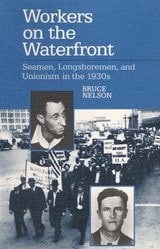
cover of Workers on the Waterfront: Seamen, Longshoremen, and Unionism in the 1930s

Workers on the Waterfront

Seamen, Longshoremen, and Unionism in the 1930s

Bruce Nelson

University of Illinois Press, 1988
With working lives characterized by exploitation and rootlessness, merchant seamen were isolated from mainstream life. Yet their contacts with workers in port cities around the world imbued them with a sense of internationalism. These factors contributed to a subculture that encouraged militancy, spontaneous radicalism, and a syndicalist mood. Bruce Nelson's award-winning book examines the insurgent activity and consciousness of maritime workers during the 1930s. As he shows, merchant seamen and longshoremen on the Pacific Coast made major institutional gains, sustained a lengthy period of activity, and expanded their working-class consciousness. Nelson examines the two major strikes that convulsed the region and caused observers to state that day-to-day labor relations resembled guerilla warfare. He also looks at related activity, from increasing political activism to stoppages to defend laborers from penalties, refusals to load cargos for Mussolini's war in Ethiopia, and forced boardings of German vessels to tear down the swastika.
[more]
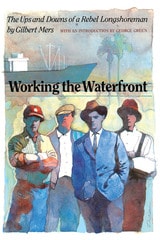
cover of Working the Waterfront: The Ups and Downs of a Rebel Longshoreman

Working the Waterfront

The Ups and Downs of a Rebel Longshoreman

By Gilbert Mers

University of Texas Press, 1988

"Somebody said, 'History is written by the winners. The losers have nothing to say.' This book is by one of the losers, a bit player, not the star of the drama." So begins Gilbert Mers in these personal recollections of forty-two years on the Texas waterfront as longshoreman and radical union activist. But far from having "nothing to say," Mers reveals himself as a thoughtful philosopher of democratic ideals and eloquent agitator for union reform. He challenges the conventional wisdom that the leader is more valuable than the led. He contends that long tenure in positions of power dulls the union officer's working-class instincts. Always one to row against the current, Mers believes the union exists for the benefit of its members!

This is primary material of the best kind, vivid and evocative, and Mers, in his eighties at the time of writing the book, is an unusually vigorous and articulate spokesman for a democratic and humane unionism.

Whether he is describing the sweaty, dangerous and back-breaking work of loading cotton bales into the hold of an outbound ship or the gut-gripping tension of a face-to-face encounter with Texas Rangers bent on "law and order," Mers writes with the voice and conscience of the rank-and-file worker. He paints the waterfront world as it was, and perhaps still is—full of danger, humor, dignity in demoralizing circumstances, frustration, struggle, and sometimes hope—and tells his story with such wry humanity that even those who disagree with his destination will enjoy the ride.

[more]