Results by title
3 books match the query 'Watershed management'
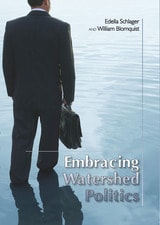
Embracing Watershed Politics
Edella Schlager
University Press of Colorado, 2008
Enriched by case studies of the organizations and decision making processes in several major U.S. watersheds (the Delaware River Basin, San Gabriel River, Platte River, and the Columbia River Basin), Embracing Watershed Politics presents a reasoned explanation of why there are so few watershed-scale integrated management agencies and how the more diverse multi-organizational arrangements found in the vast majorities of watersheds work. Although the presence of multiple organizations representing a multitude of communities of interest complicates watershed management, these institutional arrangements can-under certain conditions-suit the complexity and uncertainty associated with watershed management in the twenty-first century.
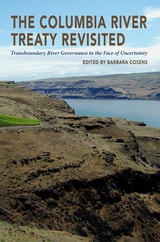
The Columbia River Treaty Revisited
Transboundary River Governance in the Face of UncertaintyEdited by Barbara Cosens
Oregon State University Press, 2012
The Columbia River Treaty Revisited, with contributions from historians, geographers, environmental scientists, and other experts, is intended to facilitate conversation about the impending expiration. It allows the reader, through the close inspection of the Columbia River Basin, to better grasp the uncertainty of water governance. It aids efforts, already underway, to understand changes in the basin since the treaty was passed, to predict future changes, and to determine whether alteration of the treaty is ultimately advisable.
The Columbia River Treaty Revisited will appeal to those interested in water basin management–scholars, stakeholders, and residents of the Columbia River basin alike.
A Project of the Universities Consoritum on Columbia River Governance
The Universities Consortium on Columbia River Governance, with representatives from universities in the U.S. and Canada, formed to offer a nonpartisan platform to facilitate an informed, inclusive, international dialogue among key decision-makers and other interested people and organizations; to connect university research to problems faced within the basin; and to expose students to a complex water resources problem. The Consortium organized the symposium on which this volume is based.
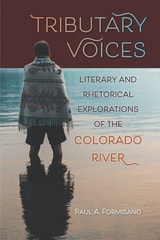
Tributary Voices
Literary and Rhetorical Exploration of the Colorado RiverPaul A. Formisano
University of Nevada Press, 2022
Through literary, rhetorical, and historical analysis of some of the Colorado River’s lesser-known stakeholders, Tributary Voices considers a more comprehensive approach to river management on the eve of the one-hundredth anniversary of the signing of the Colorado River Compact, which governs the allocation of water rights to the seven states in the region. Ranging from the early twentieth century to the present, Tributary Voices examines nature writing, women’s narratives, critiques of dam development, the Latina/o communities’ appeals for river restoration, American Indian authors’ and tribal nations’ claims of water sovereignty, and teachings about environmental stewardship and provident living. This innovative study models an interdisciplinary approach to water governance and reinvigorates our imagination in achieving a more sustainable water ethic.