Results by title
16 books match the query 'Well-being'
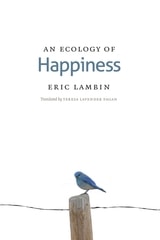
An Ecology of Happiness
Eric Lambin
University of Chicago Press, 2012
In this clever and wide-ranging work, Lambin draws on new scientific evidence in the fields of geography, political ecology, environmental psychology, urban studies, and disease ecology, among others, to answer such questions as: To what extent do we need nature for our well-being? How does environmental degradation affect our happiness? What can be done to protect the environment and increase our well-being at the same time? Drawing on case studies from Asia, Africa, Europe, and North America, Lambin makes a persuasive case for the strong link between healthy ecosystems and happy humans.
Unique in its scope and evenhanded synthesis of research from many fields, An Ecology of Happiness offers a compelling human-centered argument that is impossible to overlook when we marvel at murmurations of starlings or seek out the most brilliant fall foliage: nature makes our steps a little lighter and our eyes a little brighter. What better reason to protect an ecosystem or save a species than for our own pleasure?

Culture and Well-Being
Anthropological Approaches to Freedom and Political EthicsAlberto Corsin Jimenez
Pluto Press, 2008
This book takes a critical look at the notion of well-being by examining what well-being means, or could mean, to people living in a number of different regions including Sudan, Nepal, Papua New Guinea, India, Sierra Leone, and the UK.
The contributors take issue with some of the assumptions behind Western concepts of well-being. They explore what characterizes a "good life" and how this idea has been affected by globalization and neoliberalism.
The book makes a major contribution to social theory by presenting new analytical models that make sense of the changing shapes of people's life and ethical values.
Discoveries in the Economics of Aging
Edited by David A. Wise
University of Chicago Press, 2014
The latest volume in the NBER’s Economics of Aging series, Discoveries in the Economics of Aging assembles incisive analyses of the most recent research in this expanding field of study. A substantive focus of the volume is the well-documented relationship between health and financial well-being, especially as people age. The contributors explore this issue from a variety of perspectives within the context of the changing demographic landscape. The first part of the volume explores recent trends in health measurement, including the use of alternative measurement indices. Later contributions explore, among other topics, alternate determinants of health, including retirement, marital status, and cohabitation with family, and the potential for innovations, interventions, and public policy to improve health and financial well-being.
Exploring Degrowth
A Critical GuideVincent Liegey
Pluto Press, 2020
As politicians and corporations obsess over growth objectives, the degrowth movement demands that we must slow down the economy by transforming our economies, our politics and our cultures to live within the Earth's limits.
This book navigates the practice and strategies of the movement, looking at its strengths and weaknesses. Covering horizontal democracy, local economies and the reduction of work, it shows us why degrowth is a compelling and realistic project.
Fit Nation
The Gains and Pains of America's Exercise ObsessionNatalia Mehlman Petrzela
University of Chicago Press, 2022
If a shared American creed still exists, it’s a belief that exercise is integral to a life well lived. A century ago, working out was the activity of a strange subculture, but today, it’s almost impossible to avoid exhortations to exercise: Walk 5K to cure cancer! Awaken your inner sex kitten at pole-dancing class! Sweat like (or even with) a celebrity in spin class! Exercise is everywhere.
Yet the United States is hardly a “fit nation.” Only 20 percent of Americans work out consistently, over half of gym members don’t even use the facilities they pay for, and fewer than 30 percent of high school students get an hour of exercise a day. So how did fitness become both inescapable and inaccessible?
Spanning more than a century of American history, Fit Nation answers these questions and more through original interviews, archival research, and a rich cultural narrative. As a leading political and intellectual historian and a certified fitness instructor, Natalia Mehlman Petrzela is uniquely qualified to confront the complex and far-reaching implications of how our contemporary exercise culture took shape. She explores the work of working out not just as consumers have experienced it, but as it was created by performers, physical educators, trainers, instructors, and many others.
For Petrzela, fitness is a social justice issue. She argues that the fight for a more equitable exercise culture will be won only by revolutionizing fitness culture at its core, making it truly inclusive for all bodies in a way it has never been. Examining venues from the stage of the World’s Fair and Muscle Beach to fat farms, feminist health clinics, radical and evangelical college campuses, yoga retreats, gleaming health clubs, school gymnasiums, and many more, Fit Nation is a revealing history that shows fitness to be not just a matter of physical health but of what it means to be an American.
Happiness and the Law
John Bronsteen, Christopher Buccafusco, and Jonathan S. Masur
University of Chicago Press, 2014
Drawing on new research in psychology, neuroscience, and economics, the authors of Happiness and the Law assess how the law affects people’s quality of life—and how it can do so in a better way. Taking readers through some of the common questions about and objections to the use of happiness research in law and policy, they consider two areas in depth: criminal punishment and civil lawsuits. More broadly, the book proposes a comprehensive approach to assessing human welfare—well-being analysis—that is a valuable alternative to the strictly economically based cost-benefit analyses currently dominating how we evaluate public policy. The study of happiness is the next step in the evolution from traditional economic analysis of the law to a behavioral approach. Happiness and the Law will serve as the definitive, yet accessible, guide to understanding this new paradigm.
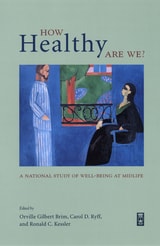
How Healthy Are We?
A National Study of Well-Being at MidlifeEdited by Orville Gilbert Brim, Carol D. Ryff, and Ronald C. Kessler
University of Chicago Press, 2003
The MacArthur Foundation addressed these questions head-on by funding a landmark study known as "Midlife in the U.S.," or MIDUS. For the first time in a single study, researchers were able to integrate epidemiological, sociological, and psychological assessments, as well as innovative new measures to evaluate how work and family life influence each other.
How Healthy Are We? presents the key findings from the survey in three sections: physical health, quality of life and psychological well-being, and the contexts (family, work) of the midlife. The topics covered by almost forty scholars in a wide variety of fields are vast, including everything from how health and well-being vary with socioeconomic standing, gender, race, or region of the country to how middle-aged people differ from younger or older adults in their emotional experience and quality of life. This health—the study measures not only health-the absence of illness—but also reports on the presence of wellness in middle-aged Americans.
The culmination of a decade and a half of research by leading scholars, How Healthy Are We? will dramatically alter the way we think about health in middle age and the factors that influence it. Researchers, policymakers, and others concerned about the quality of midlife in contemporary America will welcome its insights.
* Having a good life means having good relationships with others to almost 70% of those surveyed. Less than 40% mentioned their careers.
* Reports of disruptive daily stressors vary by age, with young adults and those in midlife experiencing more than those in later adulthood.
* Men have higher assessments of their physical and mental health than woman until the age of 60.
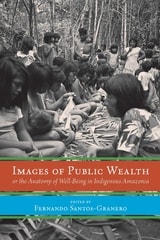
Images of Public Wealth or the Anatomy of Well-Being in Indigenous Amazonia
Edited by Fernando Santos-Granero
University of Arizona Press, 2015
Mindful of the widespread discontent generated by the ongoing economic crisis in postindustrial societies as well as the renewed attempts by social scientists to measure more effectively what we consider to be “development” and “economic success,” the contributors to this volume contend that the study of public wealth in indigenous Amazonia provides not only an exceptional opportunity to apprehend native notions of wealth, poverty, and the good life, but also to engage in a critical revision of capitalist constructions of living well.
Through ethnographic analysis and thought-provoking new approaches to contemporary and historical cases, the book’s contributors reveal how indigenous views of wealth—based on the abundance of intangibles such as vitality, good health, biopower, and convivial relations—are linked to the creation of strong, productive, and moral individuals and collectivities, differing substantially from those in capitalist societies more inclined toward the avid accumulation and consumption of material goods.
Law and Happiness
Edited by Eric A. Posner and Cass R. Sunstein
University of Chicago Press, 2010
Since the earliest days of philosophy, thinkers have debated the meaning of the term happiness and the nature of the good life. But it is only in recent years that the study of happiness—or “hedonics”—has developed into a formal field of inquiry, cutting across a broad range of disciplines and offering insights into a variety of crucial questions of law and public policy.
Law and Happinessbrings together the best and most influential thinkers in the field to explore the question of what makes up happiness—and what factors can be demonstrated to increase or decrease it. Martha Nussbaum offers an account of the way that hedonics can productively be applied to psychology, Cass R. Sunstein considers the unexpected relationship between happiness and health problems, Matthew Adler and Eric A. Posner view hedonics through the lens of cost-benefit analysis, David A. Weisbach considers the relationship between happiness and taxation, and Mark A. Cohen examines the role crime—and fear of crime—can play in people’s assessment of their happiness, and much more.
The result is a kaleidoscopic overview of this increasingly prominent field, offering surprising new perspectives and incisive analyses that will have profound implications on public policy.
Learning from the High Priestess
Affect, Femme Care, and Somatic PracticeAnn Cvetkovich
Duke University Press, 2026

Life Within Limits
Well-being in a World of WantMichael Jackson
Duke University Press, 2011
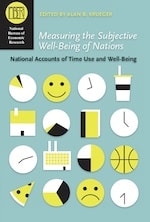
Measuring the Subjective Well-Being of Nations
National Accounts of Time Use and Well-BeingEdited by Alan B. Krueger
University of Chicago Press, 2009
Surely everyone wants to know the source of happiness, and indeed, economists and social scientists are increasingly interested in the study and effects of subjective well-being. Putting forward a rigorous method and new data for measuring, comparing, and analyzing the relationship between well-being and the way people spend their time—across countries, demographic groups, and history—this book will help set the agenda of research and policy for decades to come.
It does so by introducing a system of National Time Accounting (NTA), which relies on individuals’ own evaluations of their emotional experiences during various uses of time, a distinct departure from subjective measures such as life satisfaction and objective measures such as the Gross Domestic Product. A distinguished group of contributors here summarize the NTA method, provide illustrative findings about well-being based on NTA, and subject the approach to a rigorous conceptual and methodological critique that advances the field. As subjective well-being is topical in economics, psychology, and other social sciences, this book should have cross-disciplinary appeal.
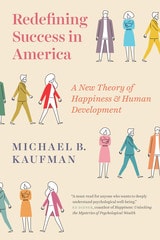
Redefining Success in America
A New Theory of Happiness and Human DevelopmentMichael Kaufman
University of Chicago Press, 2019
Returning to the legendary Harvard Student Study of undergraduates from the 1960s and interviewing participants almost fifty years later, Kaufman shows that formative experiences in family, school, and community largely shape a future adult’s worldview and well-being by late adolescence, and that fundamental change in adulthood, when it occurs, is shaped by adult family experiences, not by ever-greater competitive success. Published research on general samples shows that these patterns, and the book’s findings generally, are broadly applicable to demographically varied populations in the United States.
Leveraging biography-length clinical interviews and quantitative evidence unmatched even by earlier landmark studies of human development, Redefining Success in America redefines the conversation about the nature and origins of happiness, and about how adults develop. This longitudinal study pioneers a new paradigm in happiness research, developmental science, and personality psychology that will appeal to scholars and students in the social sciences, psychotherapy professionals, and serious readers navigating the competitive journey.

The Gospel of Happiness
How Secular Psychology Points to the Wisdom of Christian PracticeChristopher Kaczor
St. Augustine's Press, 2019
Just as Aristotelian metaphysics provided a new basis for the natural theology of Aquinas’s time, so too, positive psychology provides a basis for a natural moral theology in our own time. this book marshals the empirically verifiable findings of positive psychology that show the wisdom of the Christian tradition. Christian warnings about the dangers of greed, coveting a neighbor’s goods (social comparison), and pride find an empirical verification. Likewise, positive psychology vindicates the wisdom of Christian teaching on the importance of forgiveness, of gratitude, of humility, and of serving one’s neighbor. moreover, positive psychology also can be a service to Christian believers by helping them in their struggles with willpower, by providing new motivations for prayer, and by helping them identify their signature strengths. Finally, this book argues, in a variety of ways, that it is folly to think that even the best of psychology can serve as a replacement for Christianity.
Unwell Writing Centers
Searching for Wellness in Neoliberal Educational Institutions and Beyondby Genie Nicole Giaim, foreword by Elizabeth Boquet
Utah State University Press, 2022
The book is broken into sections based on journeying: searching for wellness, finding wellness, and imagining a “well” future that includes a sustainable model of writing center work. Each chapter begins with a personal narrative about wellness issues in writing centers, including the author’s experiences in and responses to local emergencies. She shares findings from a longitudinal assessment study on non-institutional interventions in writing centers and provides resources for administrators to create more ethical "well" writing centers. The book also includes an appendix of training documents, emergency planning documents, and several wellness-specific interventions developed from anti-racist, anti-neoliberal, and organizational theories.
Establishing the need for a field-specific response to the austerity-minded eruption of wellness-focused interventions in higher education, Unwell Writing Centers is a critical text for graduate students and new directors that can easily be applied in workplaces in and outside of higher education.
Well-Being in the Library Workplace
A Handbook for ManagersBobbi L. Newman
American Library Association, 2025
- navigating the pitfalls of vocational awe, which can lead to unrealistic expectations and self-neglect;
- setting and recalibrating healthy boundaries;
- approaching difficult conversations by creating spaces for positive staff communication;
- overcoming limited budgets;
- the proper mindset for encouraging realistic performance expectations among employees;
- using recognition, appreciation, and staff professional development as tools for wellness;
- nurturing social connections and collaboration to combat loneliness;
- effective techniques for addressing sensitive issues such as disabilities, confronting anti-fat bias, and moral injury;
- emotional and invisible labor mitigation; and
- self-care methods for library leaders at risk of burnout.