Results by title
7 books match the query 'Weschler, Lawrence'
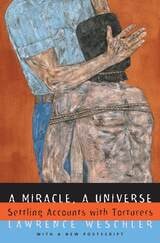
A Miracle, A Universe
Settling Accounts with TorturersLawrence Weschler
University of Chicago Press, 1998
During the past fifteen years, one of the most vexing issues facing fledgling transitional democracies around the world—from South Africa to Eastern Europe, from Cambodia to Bosnia—has been what to do about the still-toxic security apparatuses left over from the previous regime. In this now-classic and profoundly influential study, the New Yorker's Lawrence Weschler probes these dilemmas across two gripping narratives (set in Brazil and Uruguay, among the first places to face such concerns), true-life thrillers in which torture victims, faced with the paralysis of the new regime, themselves band together to settle accounts with their former tormentors.
"Disturbing and often enthralling."—New York Times Book Review
"Extraordinarily moving. . . . Weschler writes brilliantly."—Newsday
"Implausible, intricate and dazzling."—Times Literary Supplement
"As Weschler's interviewees told their tales, I paced agitatedly, choked back tears. . . . Weschler narrates these two episodes with skill and tact. . . . An inspiring book."—George Scialabba, Los Angeles Weekly
[more]
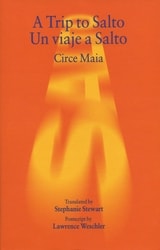
A Trip to Salto / Un viaje a Salto
Circe Maia
Swan Isle Press, 2004
“One day you’re going to ask me, ‘Mama, do you remember that trip to Salto?’ and I don’t want such questions to go unanswered.”
What happens on that trip to Salto opens this moving narrative by Uruguayan writer and poet Circe Maia. It begins with a mother and her young daughter desperately trying to catch an overnight train to Salto that they hope carries their husband and father, a physician and political prisoner who is traveling to the Salto prison accompanied by military guards after being interrogated in Montevideo. Their ensuing trip reveals the effects of a totalitarian regime on families and social relationships.
The tale of their journey is followed by a series of diary entries written by the mother between 1972 and 1974. The diary complements the opening account as each entry sensitively chronicles the family’s struggle to cope with daily life under prolonged separation, fear, and uncertainty. The diarist questions how one’s sense of community and love for country change when basic human rights can no longer be taken for granted.
Presented here in a bilingual edition, A Trip to Salto ultimately provides an intimate glimpse into Uruguayan history while it explores the deeper truths about an individual’s capacity to resist, adapt, and hope.
[more]
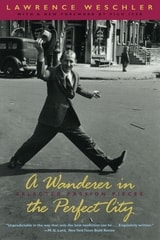
A Wanderer in the Perfect City
Selected Passion PiecesLawrence Weschler
University of Chicago Press, 2006
“There is something both marvelous and hilarious,” writes Lawrence Weschler, “in watching the humdrum suddenly take flight. This is, in part, a collection of such launchings.”
Indeed, the eight essays collected in A Wanderer in the Perfect City do soar into the realm of passion as Weschler profiles people who “were just moseying down the street one day, minding their own business, when suddenly and almost spontaneously, they caught fire, they became obsessed, they became intensely focused and intensely alive.” With keen observations and graceful prose, Weschler carries us along as a teacher of rudimentary English from India decides that his destiny is to promote the paintings of an obscure American abstract expressionist; a gifted poker player invents a more exciting version of chess; an avant-garde Russian émigré conductor speaks Latin, exclusively, to his infant daughter; and Art Spiegelman composes Maus. But simple summaries can’t do these stories justice: like music, they derive their character from digressions and details, cadence and tone. And like the upwelling of passion Weschler’s characters feel, they are better experienced than explained.
“Weschler seems so hungry for life that the rest of us become hungry for him . . . a magician, a performer, and a scholar. All in one.”—from the Foreword by Pico Iyer
“Weschler is the owner of a large dose of novelistic vision, and a particularly poetic set of ears, but . . . as important an endowment as a novelist’s eye or a poet’s ear is still the journalistic nose which led him down the proverbial alley.”—National Post (Canada)
“Weschler is a thoughtful observer and a superb storyteller.”—Minneapolis Star Tribune
Indeed, the eight essays collected in A Wanderer in the Perfect City do soar into the realm of passion as Weschler profiles people who “were just moseying down the street one day, minding their own business, when suddenly and almost spontaneously, they caught fire, they became obsessed, they became intensely focused and intensely alive.” With keen observations and graceful prose, Weschler carries us along as a teacher of rudimentary English from India decides that his destiny is to promote the paintings of an obscure American abstract expressionist; a gifted poker player invents a more exciting version of chess; an avant-garde Russian émigré conductor speaks Latin, exclusively, to his infant daughter; and Art Spiegelman composes Maus. But simple summaries can’t do these stories justice: like music, they derive their character from digressions and details, cadence and tone. And like the upwelling of passion Weschler’s characters feel, they are better experienced than explained.
“Weschler seems so hungry for life that the rest of us become hungry for him . . . a magician, a performer, and a scholar. All in one.”—from the Foreword by Pico Iyer
“Weschler’s essays are exquisitely written—so perfectly and unobtrusively organized that one can’t imagine telling them a better way.” —New York Times Book Review
“Weschler is the owner of a large dose of novelistic vision, and a particularly poetic set of ears, but . . . as important an endowment as a novelist’s eye or a poet’s ear is still the journalistic nose which led him down the proverbial alley.”—National Post (Canada)
“Weschler is a thoughtful observer and a superb storyteller.”—Minneapolis Star Tribune
[more]
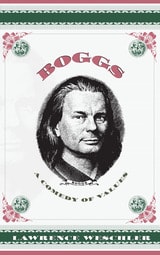
Boggs
A Comedy of ValuesLawrence Weschler
University of Chicago Press, 1999
In this highly entertaining book, Lawrence Weschler chronicles the antics of J. S. G. Boggs, an artist whose consuming passion is money, or perhaps more precisely, value. Boggs draws money-paper notes in standard currencies from all over the world-and tries to spend his drawings. It is a practice that regularly lands him in trouble with treasury police around the globe and provokes fundamental questions regarding the value of art and the value of money.
"Lawrence Weschler, who evidently admires [Boggs]-something not difficult to do-has written what may be the most extraordinary biography imaginable: "weird," to use a favourite Boggs word. It does something towards changing our entire outlook on money and its uses. And the reader is left with an uneasy feeling that anything in this world can be created by drawing it." —Ruth Rendell, Daily Telegraph
"As ideal a subject matter as money is for Boggs' genius, Boggs is as ideal a topic for Weschler's considerable talents. . . . A writer any less lucid than Weschler would smudge the lines, making of Boggs a counterculture caricature or a high-art huckster. And a writer any less confident would knock the balance, making academic mud pies of Boggs' enlightened chaos." —Jonathon Keats, San Francisco Chronicle Book Review
"[A] witty and engaging chronicle. . . . Weschler's fascinating account of the artist as agent provocateur demonstrates both the significance of Boggs's art and his determination to continue his unusual critique of the idea of money." —Henry Wessells, Washington Post Book World
"[A] witty, excellently written account of a bizarre and fascinating snippet of modern life." —Paul Ormerod, Times Higher Education Supplement
"The book, like the artist, challenges people to pause and consider the extent to which the economic bedrock of everyday life is in part a confusing welter of artistic abstractions. It's a work that is at once informative, entertaining, and provocative-a reading experience, one might say, of rather good value." —Toby Lester, Atlantic Monthly
"[A] fascinating tale, especially in these days of fluctuating currency rates, the euro, and inexplicable Net-stock valuations." —Paul Lukas, Fortune
Lawrence Weschler, a recipient of the prestigious Lannan Literary Award for 1998, is the author of numerous books, including Calamities of Exile: Three Nonfiction Novellas, and Mr. Wilson's Cabinet of Wonder, which was a finalist for both the Pulitzer Prize and the National Book Critics Circle Award.
[more]

Calamities of Exile
Three Nonfiction NovellasLawrence Weschler
University of Chicago Press, 1998
From the author of Mr. Wilson's Cabinet of Wonder, Calamities of Exile combines three gripping narratives that afford a sort of double CAT scan into the natures of both modern totalitarianism and timeless exile.
"Beautiful but harrowing chronicles of three exiles that probe the moral and personal risks of their encounters with totalitarianism. . . . Piercing and timely."—Kirkus Reviews, starred review
"Weschler . . . combines a novelist's gift for drama with the objectivity and research skills of a journalist. . . . The result is three gripping profiles of very human but also extraordinary men."—Publishers Weekly
"[Weschler's] thorough accounting of the men's covert operations, assumed identities and strained relationships with fathers, wives, and colleagues creates a disturbing triptych of the perils of totalitarianism."—Lance Gould, New York Times Book Review
"Weschler tells these three tragic tales with an admirable combination of psychological penetration, intellectual thrust, concision and compassion."—Francis King, Spectator
"Endlessly absorbing. . . . Breathtaking."—Jeri Laber, Los Angeles Times Book Review
[more]
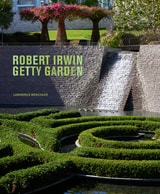
Robert Irwin Getty Garden
Lawrence Weschler
J. Paul Getty Trust, The, 2020
A beautifully illustrated, accessible volume about one of the Getty Center’s best-loved sites. Among the most beloved sites at the Getty Center, the Central Garden has aroused intense interest from the moment artist Robert Irwin was awarded the commission. First published in 2002, Robert Irwin Getty Garden is comprised of a series of discussions between noted author Lawrence Weschler and Irwin, providing a lively account of what Irwin has playfully termed “a sculpture in the form of a garden aspiring to be art.” The text revolves around four garden walks: extended conversations in which the artist explains the critical choices he made—from plant materials to steel—in the creation of a living work of art that has helped to redefine what a modern garden can and should be. This updated edition features new photography of the Central Garden in a smaller, more accessible format.
[more]
The Subtenant / To Outwit God
Hanna Krall
Northwestern University Press, 1992
This volume presents two works by acclaimed Polish journalist Hanna Krall: The Subtenant, a semi-autobiographical novel, and To Outwit God, a remarkable interview with Marek Edelman, the last surviving leader of the Warsaw Ghetto uprising. The Subtenant explores the troubled and ever-shifting relationships between Poles and Jews, beginning with the author's concealment as a child during the Nazi years and ending in 1981 when martial law was declared in Poland. In To Outwit God, Edelman's words assault conventional assumptions about heroes and heroism, taking in his time not only in the Warsaw Ghetto but his careers as a physician and a Solidarity activist. Taken together, the two works form a powerful memoir of Jewish survival, a meditation on Polish-Jewish relations, and a commentary on the forces that have produced modern Polish opposition movements.
[more]