Results by title
3 books match the query 'West Bengal'
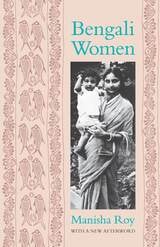
Bengali Women
Manisha Roy
University of Chicago Press, 1992
In a new Afterword, Roy discusses changes in Bengali society and culture over the last two decades which have direct bearings on women's lives: divorce and the breakup of the joint family, education, increasing Westernization via television and women's magazines, and the erosion of traditional religious practices.
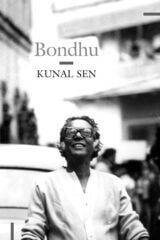
Bondhu
My Father, My FriendKunal Sen
Seagull Books, 2023
“No one remembers when and why I started calling my father Bondhu. It was a strange way to address a father, as the word means ‘friend’ in Bengali. . . . As I got older, I became very self-conscious about such an odd name . . . and yet I cannot explain why I could not switch to the more acceptable Baba or something similar.”
Just as Kunal Sen, son of actor Gita Sen and filmmaker Mrinal Sen, was approaching adolescence, his father’s cinematic celebrity was reaching new heights. In this memoir, Kunal reflects on growing up in a middle-class household in South Calcutta, where his father’s Marxist beliefs and unrelenting urge “to be challenged and contradicted” often collided with the practical challenges of making a living. Through it all, what emerges is a picture of a family’s unyielding commitment to the craft of cinema, the risks each of its members took, and their endearing sense of humor. Celebrating Mrinal Sen’s birth centenary in 2023, Bondhu takes us on an intimate journey of a son attempting to reconcile his father’s public and private selves.
Visible Histories, Disappearing Women
Producing Muslim Womanhood in Late Colonial BengalMahua Sarkar
Duke University Press, 2008
Drawing on extensive archival research and oral histories of Muslim women who lived in Calcutta and Dhaka in the first half of the twentieth century, Sarkar traces Muslim women as they surface and disappear in colonial, Hindu nationalist, and liberal Muslim writings, as well as in the memories of Muslim women themselves. The oral accounts provide both a rich source of information about the social fabric of urban Bengal during the final years of colonial rule and a glimpse of the kind of negotiations with stereotypes that even relatively privileged, middle-class Muslim women are still frequently obliged to make in India today. Sarkar concludes with some reflections on the complex links between past constructions of Muslim women, current representations, and the violence against them in contemporary India.