Results by title
13 books match the query 'What Is'
A New Anatomy of Storyworlds
What Is, What If, As IfMarie-Laure Ryan
The Ohio State University Press, 2022
A Rhetoric of Bourgeois Revolution
The Abbe Sieyes and What is the Third Estate?William H. Jr. Sewell
Duke University Press, 1994
This book studies the powerful rhetoric of the great pamphlet and the brilliant but enigmatic thought of its author. William H. Sewell’s insightful analysis reveals the fundamental role played by the new discourse of political economy in Sieyes’s thought and uncovers the strategies by which this gifted rhetorician gained the assent of his intended readers—educated and prosperous bourgeois who felt excluded by the nobility in the hierarchical social order of the old regime. He also probes the contradictions and incoherencies of the pamphlet’s highly polished text to reveal fissures that reach to the core of Sieyes’s thought—and to the core of the revolutionary project itself.
Combining techniques of intellectual history and literary analysis with a deep understanding of French social and political history, Sewell not only fashions an illuminating portrait of a crucial political document, but outlines a fresh perspective on the history of revolutionary political culture.
PLOTINUS Ennead I.1
What is the Living Thing? What is Man?: Translation with an Introduction and CommentaryGerard O'Daly
Parmenides Publishing, 2017
Ennead I.1 is a succinct and concentrated analysis of key themes in Plotinus' psychology and ethics. It focuses on the soul-body relation, discussing various Platonic, Aristotelian, and Stoic views before arguing that there is only a soul-trace in the body (forming with the body a “compound”), while the reasoning soul itself is impassive and flawless. The soul-trace hypothesis is used to account for human emotions, beliefs, and perceptions, and human fallibility in general. Its problematic relation to our rational powers, as well as the question of moral responsibility, are explored. Plotinus develops his original and characteristic concept of the self or “we,” which is so called because it is investigated as something common to all humans (rather than a private individual self), and because it is multiple, referring to the reasoning soul or to the “living thing” composed of soul-trace and body. Plotinus explores the relation between the “we” and consciousness, and also its relation to the higher metaphysical entities, the Good, and Intellect.
Renaissance Drama 40
What is Renaissance Drama?William N. West
Northwestern University Press, 2012
In this fortieth volume of Renaissance Drama, we pause again, not with the idea that we could define, or even describe, what might be, ought to be, or is included in the study of Renaissance drama (or if it is even always or ever the Renaissance, or the drama, that we study). But this does not even seem to have been what moved the first conversations that became "Research Opportunities" and Renaissance Drama. Rather, as they seem to have felt, we want to look at where we are and where our studies might lead us, and we too think we might as well make a beginning. For this issue, the editors invited a number of scholars working on different kinds of Renaissance drama, in a variety of ways and in several languages, to contribute brief essays addressing the state of the field of Renaissance drama, "the field" being convenient shorthand for the practical but productive indefinition under which we carry out our research and publish Renaissance Drama. In particular we asked them to consider these questions:
- How and with what effects has the study of Renaissance drama (or early modern performance) changed over the past half-century?
- What now is Renaissance drama? What could Renaissance drama become?
- What do you see as the most exciting (or least productive) development in the field?
- How have other developments in literary studies, performance studies, or other historical periods affected work in the field?
- What is missing from work in the field that it would be desirable to include or revive?
- Are there strategies you would propose for working through the divisions in the field based on national boundaries, between languages and traditions, or between canonical figures like Shakespeare, Molière, and other kinds of work? What kinds of distinctions do you see in the field? How are they useful or misleading?
- What new avenues in the field should open up further? Where should we look now?
- What is the most important work being done, or remaining to be done?
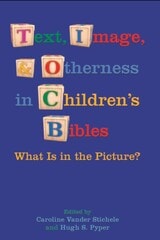
Text, Image, and Otherness in Children's Bibles
What is in the Picture.Caroline Vander Stichele
SBL Press, 2012
What Is A Poet?
Hank Lazer
University of Alabama Press, 1987
This book discusses the extent of distrust and the extent of the misunderstandings that exist in the poetry world.
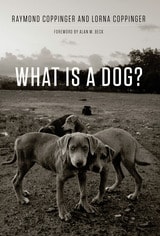
What Is a Dog?
Raymond Coppinger and Lorna Coppinger
University of Chicago Press, 2016
Exploring the natural history of these animals, the Coppingers explain how the village dogs of Vietnam, India, Africa, and Mexico are strikingly similar. These feral dogs, argue the Coppingers, are in fact the truly archetypal dogs, nearly uniform in size and shape and incredibly self-sufficient. Drawing on nearly five decades of research, they show how dogs actually domesticated themselves in order to become such efficient scavengers of human refuse. The Coppingers also examine the behavioral characteristics that enable dogs to live successfully and to reproduce, unconstrained by humans, in environments that we ordinarily do not think of as dog friendly.
Providing a fascinating exploration of what it actually means—genetically and behaviorally—to be a dog, What Is a Dog? will undoubtedly change the way any beagle or bulldog owner will reflect on their four-legged friend.

What Is a Person?
AN ETHICAL EXPLORATIONJames W. Walters
University of Illinois Press, 1997
important to understand what constitutes a person. What are the medical,
ethical, moral, mental, legal, and philosophical criteria that determine
protectable human life?
Following immediately on the publication of his highly praised book Choosing
Who's to Live, James Walters addresses with depth and wisdom another
ambitious and complicated matter: determining the nature of personhood.
By providing a much-needed religious/philosophical context for the discussion--examining
contemporary thinking on just what constitutes valuable life--Walters
broadens his inquiry beyond the human to include other animals and deals
with the phenomenon of anencephalic infants, those who are born without
higher brains.
Searching for a measurable and humane standard of personhood, Walters
looks at the current definition of it and declares it inadequate--offering
instead the idea of proximate personhood, with criteria for helping to
determine which individuals possess a unique claim to life.
What Is a Person?
Rethinking Humanity, Social Life, and the Moral Good from the Person UpChristian Smith
University of Chicago Press, 2010
What is a person? This fundamental question is a perennial concern of philosophers and theologians. But, Christian Smith here argues, it also lies at the center of the social scientist’s quest to interpret and explain social life. In this ambitious book, Smith presents a new model for social theory that does justice to the best of our humanistic visions of people, life, and society.
Finding much current thinking on personhood to be confusing or misleading, Smith finds inspiration in critical realism and personalism. Drawing on these ideas, he constructs a theory of personhood that forges a middle path between the extremes of positivist science and relativism. Smith then builds on the work of Pierre Bourdieu, Anthony Giddens, and William Sewell to demonstrate the importance of personhood to our understanding of social structures. From there he broadens his scope to consider how we can know what is good in personal and social life and what sociology can tell us about human rights and dignity.
Innovative, critical, and constructive, What Is a Person? offers an inspiring vision of a social science committed to pursuing causal explanations, interpretive understanding, and general knowledge in the service of truth and the moral good.
What Is a World?
On Postcolonial Literature as World LiteraturePheng Cheah
Duke University Press, 2016
What Is an Event?
Robin Wagner-Pacifici
University of Chicago Press, 2017
What Is an Event? ranges across several disciplines, systematically analyzing the ways that events emerge, take shape, gain momentum, flow, and even get bogged down. As an exploration of how events are constructed out of ruptures, it provides a mechanism for understanding eventful forms and flows, from the micro-level of individual life events to the macro-level of historical revolutions, contemporary terrorist attacks, and financial crises. Wagner-Pacifici takes a close look at a number of cases, both real and imagined, through the reports, personal narratives, paintings, iconic images, political posters, sculptures, and novels they generate and through which they live on. What is ultimately at stake for individuals and societies in events, Wagner-Pacifici argues, are identities, loyalties, social relationships, and our very experiences of time and space. What Is an Event? provides a way for us all—as social and political beings living through events, and as analysts reflecting upon them—to better understand what is at stake in the formations and flows of the events that mark and shape our lives.
What Is the Good Life?
Luc Ferry
University of Chicago Press, 2005
In What Is the Good Life? Ferry argues that the question of the meaning of life, on which much philosophical debate throughout the centuries has rested, has not vanished, but at the very least the question is posed differently today. Ferry points out the pressures in our secularized world that tend to reduce the idea of a successful life or "good life" to one of wealth, career satisfaction, and prestige. Without deserting the secular presuppositions of our world, he shows that we can give ourselves a richer sense of life's possibilities. The "good life" consists of harmonizing life's different forces in a way that enables one to achieve a sense of personal satisfaction in the realization of one's creative abilities.

What is to Be Done About Law and Order?
Crisis in the NinetiesJohn Lea and Jock Young
Pluto Press, 1993