Results by title
5 books match the query 'White Mountains'

Bad Blood
Freedom and Death in the White MountainsCasey Sherman
University Press of New England, 2012
Bristlecone Pine in the White Mountains of California
Growth and Ring-Width CharacteristicsHarold C. Fritts
University of Arizona Press, 1969
Papers of the Laboratory of Tree-Ring Research, No. 4
Critical Hours
Search and Rescue in the White MountainsSandy Stott
University Press of New England, 2018
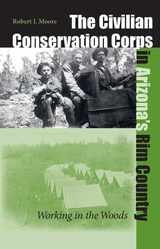
The Civilian Conservation Corps In Arizona's Rim Country
Working In The WoodsRobert J. Moore
University of Nevada Press, 2006
Part of the massive relief effort of Roosevelt’s New Deal, the CCC was created in 1933 to give young men an opportunity to work and make money to help families devastated by the Great Depression, and to participate in forest and conservation projects across the country. In Arizona, thousands of young men, many of them from the industrial Northeast, served in the state’s CCC forest camps. Arizona’s Mogollon Rim is a spectacular expanse of cliffs that slices through half the state, stretching from Sedona eastward to New Mexico. Along with the White Mountains, it includes the largest contiguous forest of ponderosa pine in America. Remote and little-visited in the 1930s, the Rim Country offered copious outlets for the CCC men’s energies: building roads, public campsites, hiking trails, fire lookout towers, and administration buildings; fighting fires; controlling erosion; eliminating vermin; and restoring damaged soils. The CCC enrollees were also given an opportunity to continue interrupted educations, learn useful skills and self-discipline, participate in sports and other leisure activities, and meet local residents. Author Robert J. Moore interviewed a number of CCC veterans who served in the Rim Country, and their stories are part of this book. So too are photographs—many of them from veterans’ personal collections—of Rim Country camps and workers, and such ephemera as camp newspapers. This is an engrossing account of several thousand young men who came to Arizona to escape the misery of the Great Depression, whose work in the woods changed the state, and who in the process were themselves changed. Here is the human face of Arizona’s CCC, the men’s experiences, their work, and their lasting impact on the forests of the Rim Country.

This Grand and Magnificent Place
The Wilderness Heritage of the White MountainsChristopher Johnson
University of New Hampshire Press, 2020
This is the complex story of New Hampshire's White Mountains, from the range's days as the majestic homeland of the Abenaki, first seen by English colonists four centuries ago, to its unassailable standing today as one of America's most beloved national forests, comprising 112,000 acres of protected wilderness.
Christopher Johnson, an avid hiker intimately familiar with the White Mountains, achieves two important objectives in This Grand and Magnificent Place. He lovingly explores their rich ecological, political, economic, and cultural history and, more broadly, opens a panoramic window on the evolution of American attitudes and policies toward wilderness over time.
Two competing visions of wilderness historically have coexisted in America: the instrumental, in which the wilderness is seen as a conglomeration of resources to be exploited for the benefit of entrepreneurs and consumers, and the aesthetic, in which the wilderness is appreciated for its natural beauty, the personal growth that it stimulates, the national pride it engenders, and the spiritual truth it offers. Johnson never loses sight of this fundamental dichotomy as he shares marvelous true tales of the first intrepid European settlers who “tamed” the Whites. He discusses Ethan Allen Crawford, the area's first innkeeper, the emergence of tourism, and America's love affair with the “wilderness experience”; and he explores tales of Thomas Cole, Nathaniel Hawthorne, and other renowned artists who immortalized these mountains in their works. He considers the coming of grand resort hotels—and the contemporaneous wilderness revival—in the late nineteenth century and the passing of the landmark 1911 Weeks Act, which was instrumental in preserving American wilderness in the face of development and threats of irreparable environmental damage. Johnson traces the perilous course of the twentieth-century movement toward wilderness preservation, which has successfully conserved the Whites, an extraordinary American treasure, for future generations. Finally, he poses thoughtful and essential questions regarding the destiny of this American wilderness, exploring the balance between maintaining its usefulness while conserving its glorious heritage.
This skillful and accessible history will rivet general readers, students, and professionals interested in the history, culture, and politics of the White Mountains, as well as those fascinated by environmental history and wilderness protection everywhere.