Results by title
6 books match the query 'Who's'

Lawyer and Client
Who's in ChargeDouglas E. Rosenthal
Russell Sage Foundation, 1974
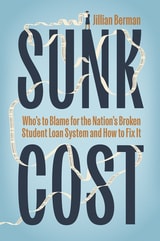
Sunk Cost
Who’s to Blame for the Nation’s Broken Student Loan System and How to Fix ItJillian Berman
University of Chicago Press, 2025
Student-loan horror stories are a dime a dozen. But students today are faced with a seemingly insurmountable paradox: Research consistently shows that the clearest viable option to financial stability is a college degree. But if and when Americans decide to pursue diplomas, student loan payments quickly follow, and even after securing full-time employment, many borrowers struggle to make ends meet for years. In Sunk Cost, journalist Jillian Berman explores how the nation’s student loan program went from a well-intentioned initiative aimed at helping low- and middle-income students afford college to one that traps borrowers in long-term debt.
Berman interviewed dozens of borrowers and policymakers and dug into the archives to unearth the true causes of the student loan problem. A couple of generations ago, policy makers generously subsidized Americans’ college educations because they knew it would be advantageous for the entire country: a more educated population meant better quality of life for all. But today, higher education is viewed as an individual goal, so students and their families are expected to be on the hook for it themselves. Berman explains how this enormous shift happened, which industries benefit from it, and what it means for college-going Americans today. She shares real-life stories of college graduates who are being crushed under some of the harshest consequences of the student loan system. These borrowers pursued higher education in hopes of a better life and yet some have been trapped in debt for decades, making it difficult to put food on the table, much less imagine a life beyond debt.
By connecting personal accounts to the policy history of student loans, Berman makes clear that if American society continues to push students toward higher education, but fails to truly subsidize it, the financial strain will become unbearable for all but the most privileged. The current system is broken, but Berman proposes that significant changes are possible, and will require political will from state lawmakers and Congress, along with a philosophical shift, to tackle one of the largest consumer finance challenges of our time.
The Post-Cold War Trading System
Who's on First?Sylvia Ostry
University of Chicago Press, 1997
With keen historical awareness, Ostry examines the role of key economic power brokers, particularly the United States, in the reconstruction and reconfiguration of an international economy after World War II. She argues that U.S. policy efforts were so successful that they led to an unprecedented renewal of economic growth, living standards, and education levels in postwar Europe and Japan. Ironically, those same policy successes unintentionally fostered the relative decline of U.S. dominance on the world trade scene as the reduction of trade and investment barriers prompted friction and conflict between different kinds of capitalist systems.
Identifying the historical and legal issues key to postwar trade policy, Ostry has commandingly charted our economic course through the last half of this century and, perhaps, into the next.
"Sylvia Ostry knows this subject as few others do, both as a scholar of international trade issues and a major player in the ongoing negotiations that have created the rules of the trade game. The Post-Cold War Trading System is a fine summary of where we've been and where we ought to be going."—Peter Passell, economic scene columnist for The New York Times
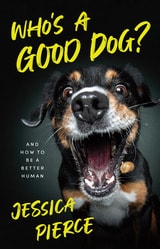
Who's a Good Dog?
And How to Be a Better HumanJessica Pierce
University of Chicago Press, 2023
A guide to cultivating a shared life of joy and respect with our dogs.
Who’s a Good Dog? is an invitation to nurture more thoughtful and balanced relationships with our canine companions. By deepening our curiosity about what our dogs are experiencing, and by working together with them in a spirit of collaboration, we can become more effective and compassionate caregivers.
With sympathy for the challenges met by both dogs and their humans, bioethicist Jessica Pierce explores common practices of caring for dogs, including how we provide exercise, what we feed, how and why we socialize and train, and how we employ tools such as collars and leashes. She helps us both to identify potential sources of fear and anxiety in our dogs’ lives and to expand practices that provide physical and emotional nourishment. Who’s a Good Dog? also encourages us to think more critically about what we expect of our dogs and how these expectations can set everyone up for success or failure. Pierce offers resources to help us cultivate attentiveness and kindness, inspiring us to practice the art of noticing, of astonishment, of looking with fresh eyes at these beings we think we know so well. And more than this, she makes her findings relatable by examining facets of her relationship with Bella, the dog in her life. As Bella shows throughout, all dogs are good dogs, and we, as humans and dog guardians, could be doing a little bit better to get along with them and give them what they need.
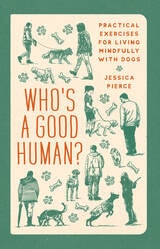
Who's a Good Human?
Practical Exercises for Living Mindfully with DogsJessica Pierce
University of Chicago Press, 2026
Most dog books focus on how to change our companion’s behavior; very few ask how we might change our own.
This workbook and journal, created by ethicist, celebrated author, and dog guardian Jessica Pierce, helps readers learn to live more mindfully with their dogs. Across ten chapters filled with exercises grounded in behavioral science and contemplative practice, Pierce invites readers to mirror their dog’s movements, savor shared silence, examine the impulse to command, reflect on past relationships with dogs, and prepare for the inevitabilities of aging and loss. She teaches readers how to view their dogs with the care of a field biologist—keeping notes, mapping relationships, and generally observing to better understand the dog’s world. She also challenges long-held assumptions about traditional dog training and asks whether our methods truly serve our dogs or simply reassure us as humans.
Many readers of Pierce’s acclaimed earlier books asked for a practical guide to help them put ideas into daily practice. For both those readers and those new to her work, this workbook is her response: a human-training manual informed by science, ethics, and lived experience. Each chapter begins with a short introduction to orient the reader, followed by self-directed exercises, reflection prompts, and shared experiences from living with her dog, Bella. Annotated further-reading sections point to both accessible books and peer-reviewed research. With its blend of gentle guidance and intellectual rigor, this workbook helps readers cultivate a more curious, collaborative, and compassionate relationship with the dogs they love.
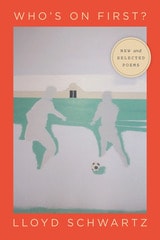
Who's on First?
New and Selected PoemsLloyd Schwartz
University of Chicago Press, 2021
For more than four decades, readers and critics have found Lloyd Schwartz’s poems unlike anyone else’s—a rare combination of the heartbreaking and the hilarious. With his ear for the poetry of the vernacular, Schwartz offers us a memorable cast of characters—both real and imagined, foolish and oracular. Readers experience his mother’s piercing flashes of memory, the perverse comic wisdom of Gracie Allen, the uninhibited yet loving exhibitionists of antique pornography, and eager travelers crossing America in a club-car or waiting in a Brazilian airport. Schwartz listens to these people without judging—understanding that they are all trying to live their lives, whenever possible, with tenderness, humor, and grace.
Who’s on First? brings together a selection of poems from all of Schwartz’s previous collections along with eagerly awaited new poems, highlighting his formal inventiveness in tangling and untangling the yarn of comedy and pathos. Underlying all of these poems is the question of what it takes and what it costs to make art.