Results by title
12 books match the query 'Wicca'
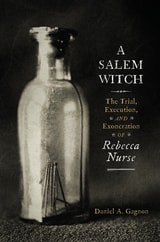
A Salem Witch
The Trial, Execution, and Exoneration of Rebecca NurseDaniel A. Gagnon
Westholme Publishing, 2023
The accusations against Nurse, a well-respected member in the community, seemed unbelievable. Unflinchingly, this ailing elderly woman insisted on her innocence and refused to falsely confess. Supported by many in Salem, Nurse’s family and neighbors challenged her accusers in court and prepared a thorough defense for her, yet nothing could surmount the fear of witchcraft, and she was sentenced to death. Nurse, seen as a martyr for the truth, later became the first person accused of witchcraft to be memorialized in North America.
In A Salem Witch: The Trial, Execution, and Exoneration of Rebecca Nurse, the first full account of Nurse’s life, Daniel A. Gagnon vividly recreates seventeenth-century Salem, and in the process challenges previous interpretations of Nurse’s life and the 1692 witch hunt in general. Through primary source research, he reveals how the Nurse family’s role in several disputes prior to the witch hunt was different than previously thought, as well as how Nurse’s case helps answer the important question of whether the accusations of witchcraft were caused by mental illness or malicious intent. A Salem Witch reveals a remarkable woman whose legacy has transformed how the witch hunt has been remembered and memorialized.
Between the Living and the Dead
A Perspective on Witches and Seers in the Early Modern AgeÉva Pócs
Central European University Press, 1998

Black Magic City
How Gods, Money, and Healing Shaped Rio de JaneiroAna Paulina Lee
Duke University Press, 2027
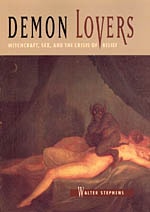
Demon Lovers
Witchcraft, Sex, and the Crisis of BeliefWalter Stephens
University of Chicago Press, 2002
As Walter Stephens demonstrates in Demon Lovers, it was not Hausmännin or other so-called witches who were obsessive about sex with demons—instead, a number of devout Christians, including trained theologians, displayed an uncanny preoccupation with the topic during the centuries of the "witch craze." Why? To find out, Stephens conducts a detailed investigation of the first and most influential treatises on witchcraft (written between 1430 and 1530), including the infamous Malleus Maleficarum (Hammer of Witches).
Far from being credulous fools or mindless misogynists, early writers on witchcraft emerge in Stephens's account as rational but reluctant skeptics, trying desperately to resolve contradictions in Christian thought on God, spirits, and sacraments that had bedeviled theologians for centuries. Proof of the physical existence of demons—for instance, through evidence of their intercourse with mortal witches—would provide strong evidence for the reality of the supernatural, the truth of the Bible, and the existence of God. Early modern witchcraft theory reflected a crisis of belief—a crisis that continues to be expressed today in popular debates over angels, Satanic ritual child abuse, and alien abduction.
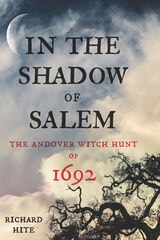
In the Shadow of Salem
The Andover Witch Hunt of 1692Richard Hite
Westholme Publishing, 2024
By July 1692, the witch hunt surrounding the town of Salem and Salem Village had been raging for four months. The Massachusetts Bay colony’s new governor, William Phips, had established a special court to try the suspected witches and the trials were well under way. No new arrests had taken place for nearly six weeks and residents had every reason to believe the crisis soon would be over. However, a middle-aged woman in nearby Andover lay gravely ill. Her husband suspected witchcraft as the cause and invited some of the afflicted girls from Salem Village to the town, thinking they could determine whether his suspicions were valid. Not surprisingly, they confirmed his supposition. The first person these girls accused in Andover—a frail and elderly widow bereaved by a series of family tragedies over the previous three years—not only confessed, but stated that there were more than three hundred witches in the region, five times more than the number of suspects already in jail. This touched off a new wave of accusations, confessions, and formal charges. Before the witchcraft crisis ended, forty-five residents of Andover found themselves jailed on suspicion of witchcraft—more than the combined total of suspects from Salem Village and the town of Salem. Of these, three were hanged and one died while awaiting execution.
Based on extensive primary source research, In the Shadow of Salem: The Andover Witch Hunt of 1692, by historian and archivist Richard Hite, tells for the first time the fascinating story of this long overlooked phase of the largest witch hunt in American history. Untangling a net of rivalries and ties between families and neighbors, the author explains the actions of the accusers, the reactions of the accused, and their ultimate fates. In the process, he shows how the Andover arrests prompted a large segment of the town’s population to openly oppose the entire witch hunt and how their actions played a crucial role in finally bringing the 1692 witchcraft crisis to a close.
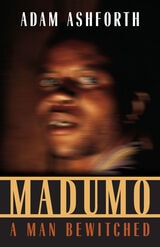
Madumo, a Man Bewitched
Adam Ashforth
University of Chicago Press, 2000
So begins this true story of witchcraft and friendship set against the turbulent backdrop of contemporary Soweto. Adam Ashforth, an Australian who has spent many years in the black township, finds his longtime friend Madumo in dire circumstances: his family has accused him of using witchcraft to kill his mother and has thrown him out on the street. Convinced that his life is cursed, Madumo seeks help among Soweto's bewildering array of healers and prophets. An inyanga, or traditional healer, confirms that he has indeed been bewitched. With Ashforth by his side, skeptical yet supportive, Madumo embarks upon a physically grueling treatment regimen that he follows religiously-almost to the point of death-despite his suspicion that it may be better to "Westernize my mind and not think about witchcraft."
Ashforth's beautifully written, at times poignant account of Madumo's struggle shows that the problem of witchcraft is not simply superstition, but a complex response to spiritual insecurity in a troubling time of political and economic upheaval. Post-apartheid Soweto, he discovers, is suffering from a deluge of witchcraft. Through Madumo's story, Ashforth opens up a world that few have seen, a deeply unsettling place where the question "Do you believe in witchcraft?" is not a simple one at all. The insights that emerge as Ashforth accompanies his friend on an odyssey through Soweto's supernatural perils have profound implications even for those of us who live in worlds without witches.
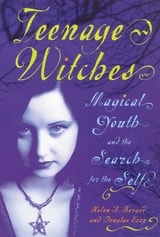
Teenage Witches
Magical Youth and the Search for the SelfBerger, Helen
Rutgers University Press, 2007
Yet, as Helen A. Berger and Douglas Ezzy show in this in-depth look into the lives of teenage Witches, the reality of their practices, beliefs, values, and motivations is very different from the sensational depictions we see in popular culture. Drawing on extensive research across three countries--the United States, England, and Australia--and interviews with young people from diverse backgrounds, what they find are highly spiritual and self-reflective young men and women attempting to make sense of a postmodern world via a religion that celebrates the earth and emphasizes self-development.
The authors trace the development of Neo-Paganism (an umbrella term used to distinguish earth-based religions from the pagan religions of ancient cultures) from its start in England during the 1940s, through its growing popularity in the decades that followed, up through its contemporary presence on the Internet. Though dispersed and disorganized, Neo-Pagan communities, virtual and real, are shown to be an important part of religious identity particularly for those seeking affirmation during the difficult years between childhood and adulthood.

The Anti-Witch
Jeanne Favret-Saada
HAU, 2015
Jeanne Favret-Saada is arguably one of France’s most brilliant anthropologists, and The Anti-Witch is nothing less than a masterpiece. A synthesis of ethnographic theory and psychoanalytic revelation, where the line between researcher and subject is blurred—if not erased—The Anti-Witch develops the contours of an anthropology of therapy, while deeply engaging with what it means to be caught in the logic of witchcraft. Through an intimate and provocative sharing of the ethnographic voice with Madame Flora, a “dewitcher,” Favret-Saada delivers a critical challenge to some of anthropology’s fundamental concepts.
Sure to be of interest to practitioners of psychoanalysis as well as to anthropologists, The Anti-Witch will bring a new generation of scholars into conversation with the work of a truly innovative thinker.
The Witch Studies Reader
Soma Chaudhuri and Jane Ward, editors
Duke University Press, 2025
Contributors. Maria Amir, Ruth Asiimwe, Bernadette Barton, Ethel Brooks, Shelina Brown, Ruth Charnock, Soma Chaudhuri, Carolyn Chernoff, Saira Chhibber, Simon Clay, Krystal Cleary, Adrianna L. Ernstberger, Tina Escaja, Laurie Essig, Marcelitte Failla, D Ferrett, Marion Goldman, Jaime Hartless, Margaretha Haughwout, Patricia Humura, Apoorvaa Joshi, Govind Kelkar, Oliver Kellhammer, Ayça Kurtoğlu, Helen Macdonald, Isabel Machado, Brandy Renee McCann, Dev Nathan, Mary Jo Neitz, Amy Nichols-Belo, Allison (or AP) Pierce, Emma Quilty, Anna Rogel, Karen Schaller, Jacquelyn Marie Shannon, Shashank Shekhar Sinha, Gabriella V. Smith, Nathan Snaza, Shannon Hughes Spence, Eric Steinhart, Morena Tartari, Nicole Trigg, Katie Von Wald, Tushabe wa Tushabe, Jane Ward
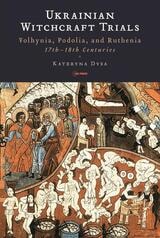
Ukrainian Witchcraft Trials
Volhynia, Podolia, and Ruthenia, 17th–18th CenturiesKateryna Dysa
Central European University Press, 2020
Drawing on quantitative data drawn from a range of trials Kateryna Dysa first describes the ideological background of the tribunals based on works written by priests and theologians that reflect attitudes toward the devil and witches. The main focus of her work, however, is the process leading to witchcraft accusations. From the stories of participants of the trials she shows what led people to enunciate first suspicions then accusations of witchcraft. Finally, she presents a microhistory from one Volhynian village, comparing attitudes toward two “female crimes” in the Ukrainian courts.
The study is based on archival research including witch trials transcripts. Dysa approaches the trials as indications of belief and practice, attempting to understand the actors involved rather than dismiss or condemn them. She takes care to situate early modern Ukrainian witchcraft and its accompanying trials in a broader European context, with comparisons to some African cases as well.
Witchcraft Mythologies and Persecutions
Gábor Klaniczay
Central European University Press, 2008
Witchcraft, Magic, and Religion in Seventeenth-Century Massachusetts
Richard Weisman
University of Massachusetts Press, 1984