Results by title

2 books match the query 'Wideman, John Edgar'
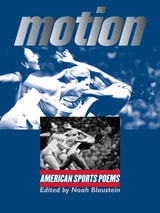
cover of Motion: American Sports Poems

Motion

American Sports Poems

Noah Blaustein

University of Iowa Press, 2001

Sports have long served as inspiration for poetry-the ancient Greeks wrote odes in praise of their athletes-so it is little surprise that in a culture as obsessed with athletes as our own sports would exert an influence on contemporary poets. Motion: American Sports Poems rescues sports from our society's focus on superstars, multimillion-dollar contracts, and gold medals to capture champions and losers, competitors and spectators in moments that are anything but fleeting.

As Noah Blaustein points out in his preface, among the many parallels made between sports and poetry is the idea of transcendence. Forged from the most basic elements of sport-energy, movement, and rhythm-the poems in this anthology reflect something universal: sport as metaphor, sport as struggle, sport as the battleground for mythic figures and local heroes.
The often celebrated sports-baseball, boxing, football, and basketball-are here along with unexpected pastimes like surfing, skateboarding, tennis, soccer, karate, rock climbing, bowling, and curling. Young and old, black and white, male and female, the poets in this anthology celebrate everyone who has come together in the shimmy and shake and sweat of sport.
[more]
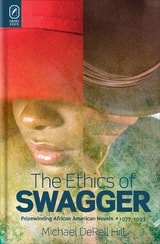
cover of The Ethics of Swagger: Prizewinning African American Novels, 1977–1993

The Ethics of Swagger

Prizewinning African American Novels, 1977–1993

Michael DeRell Hill

The Ohio State University Press, 2013

After World War II and well beyond the Black Arts Movement, African American novelists struggled with white literary expectations imposed upon them. Aesthetics as varied as New Criticism and Deconstruction fueled these struggles, and black writers—facing these struggles— experienced an ethical crisis. Analyzing prizewinning, creative fellowship, and artistic style, this book considers what factors ended that crisis.
 
The Ethics of Swagger explores how novelists who won major prizes between 1977 and 1993 helped move authors of black fiction through insecurity toward autonomy. Identifying these prizewinners—David Bradley, Ernest Gaines, Charles Johnson, Toni Morrison, Gloria Naylor, Alice Walker, and John Edgar Wideman—as a literary class, this book focuses on how they achieved imaginative freedom, recovered black literary traditions, and advanced the academic study of African American writing.
 
The post–Civil Rights era produced the most accomplished group of novelists in black literary history. As these authors worked in an integrating society, they subjected white narrative techniques to the golden mean of black cultural mores. This exposure compelled the mainstream to acknowledge fresh talent and prodded American society to honor its democratic convictions. Shaping national dialogues about merit, award-winning novelists from 1977 to 1993, the Black Archivists, used swagger to alter the options for black art and citizenship.
[more]