Results by title
5 books match the query 'Wildlife refuges'
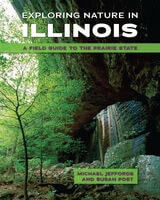
Exploring Nature in Illinois
A Field Guide to the Prairie StateMichael Jeffords and Susan Post
University of Illinois Press, 2014
From the colorful variety of birds at War Bluff Valley Audubon Sanctuary to the exposed bedrock and cliff faces of Apple River Canyon, Exploring Nature in Illinois will inspire readers to explore wonders hidden from urban sprawl and cultivated farmland. Maps and descriptions help travelers access even hard-to-find sites while a wealth of detail and photography offers nature-lovers insights into the flora, fauna, and other aspects of vibrant settings and ecosystems. The authors also include diary entries describing their own impressions of and engagement with the sites.
A unique and much-needed reference, Exploring Nature in Illinois will entertain and enlighten hikers, cyclers, students and scouts, morning walkers, weekend drivers, and anyone else seeking to get back to nature in the Prairie State.
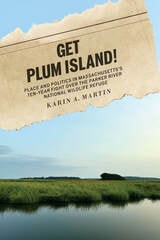
Get Plum Island!
Place and Politics in Massachusetts's Ten-Year Fight Over the Parker River National Wildlife RefugeKarin A. Martin
University of Massachusetts Press, 2026
An environmental history of resistance, negotiation, and conservation on the Massachusetts coast
An hour north of Boston, Parker River National Wildlife Refuge occupies the southern three-quarters of Plum Island, a barrier island off the Massachusetts coast. Parker River is a nationally renowned birding destination and the second most-visited wildlife refuge in the Northeast, drawing over 300,000 visitors annually. Today, environmentally minded Massachusetts barely remembers the decade-long fight that reduced the refuge to half its original size. Get Plum Island! tells the forgotten story of how six small towns in Essex County (Newbury, West Newbury, Rowley, Ipswich, Groveland, and Georgetown) fought the establishment of the refuge in the 1940s. Through political organizing across local, state, and federal levels, the opposition nearly abolished the refuge and ultimately succeeded in making it smaller.
The conflict was deeply shaped by class, geography, and competing visions of land use. On one side were elite conservationists—sportsmen, ornithologists, and preservation advocates from Boston, Cambridge, and Newton—who envisioned a federally protected habitat. On the other side of the conflict, a group of mostly middle- and working-class men, farmers, and local hunters organized a resistance to the establishment of a refuge. Through protests, public hearings, and even aggression toward visiting federal officials, local opposition made the case that their communities had clammed, farmed, and hunted the disputed lands before there even was a United States government. They recounted a version of their history as founders of the nation that made them, in their view, entitled to the land that was given to them by the English Crown. In telling this story, Get Plum Island! reveals how ordinary citizens can challenge—and reshape—federal authority, and offers a timely case study in the politics of land, class, and conservation.
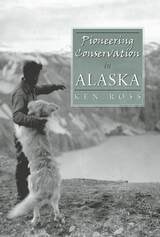
Pioneering Conservation in Alaska
Ken Ross
University Press of Colorado, 2006
The Alaskan frontier tempted fur traders, whalers, salmon fishers, gold miners, hunters, and oilmen to take what they could without regard for long-term consequences. Wildlife species, ecosystems, and Native cultures suffered, sometimes irreparably. Damage to wildlife and lands drew the attention of environmentalists, including John Muir, who applied their influence to enact wildlife protection laws and set aside lands for conservation. Alaska served as a testing ground for emergent national resource policy in the United States, as environmental values of species and ecosystem sustainability replaced the unrestrained exploitation of Alaska's early frontier days.
Efforts of conservation leaders and the territory's isolation, small human population, and late development prevented widespread destruction and gave Americans a unique opportunity to protect some of the world's most pristine wilderness.
Enhanced by more than 100 photographs, Pioneering Conservation in Alaska illustrates the historical precedents for current natural resource disputes in Alaska and will fascinate readers interested in wildlife and conservation.
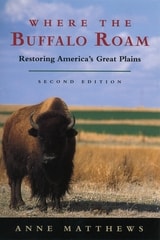
Where the Buffalo Roam
Restoring America's Great PlainsAnne Matthews
University of Chicago Press, 2002
This edition includes a new foreword by environmental historian Donald Worster. Matthews's new afterword describes how with growing support from Native Americans and private groups like the Nature Conservancy, the Poppers' dream of a Buffalo Commons is becoming a reality.
"An admirably crafted book, as poignant and entertaining as it is informative."—Seattle Times
"A priceless piece of Americana."—The Boston Globe
"Matthew's delightful account of the Poppers, their proposal and the controversy surrounding it does focus new attention on the region and its problems."—The Philadelphia Inquirer
"Bright, active, effective journalism. . . . An extremely savvy overlook of the dilemmas of the Great Plains."—Wallace Stegner
Wildlife Sanctuaries and the Audubon Society
Places to Hide and SeekBy John M. "Frosty" Anderson
University of Texas Press, 2000
National Audubon Society sanctuaries across the United States preserve the unique combinations of plants, climates, soils, and water that endangered birds and other animals require to survive. Their success stories include the recovery of the common and snowy egrets, wood storks, Everglade kites, puffins, and sandhill cranes, to name only a few.
In this book, Frosty Anderson describes the development of fifteen NAS sanctuaries from Maine to California and from the Texas coast to North Dakota. Drawn from the newsletter "Places to Hide and Seek," which he edited during his tenure as Director/Vice President of the Wildlife Sanctuary Department of the NAS, these profiles offer a personal, often humorous look at the daily and longer-term activities involved in protecting bird habitats. Collectively, they record an era in conservation history in which ordinary people, without benefit of Ph.Ds, became stewards of the habitats in which they had lived all their lives. It's a story worth preserving, and it's entertainingly told here by the man who knows it best.