Results by title
6 books match the query 'William'
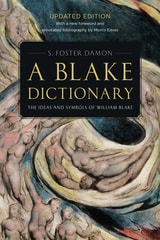
A Blake Dictionary
The Ideas and Symbols of William BlakeS. Foster Damon
Dartmouth College Press, 2013
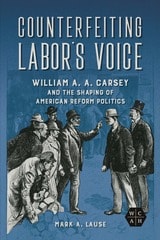
Counterfeiting Labor's Voice
William A. A. Carsey and the Shaping of American Reform PoliticsMark A. Lause
University of Illinois Press, 2024
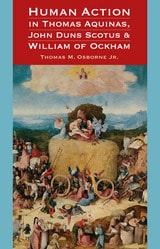
Human Action in Thomas Aquinas, John Duns Scotus, and William of Ockham
Thomas M. Osborne Jr.
Catholic University of America Press, 2014
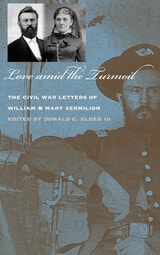
Love amid the Turmoil
The Civil War Letters of William and Mary VermilionDonald C. Elder, III
University of Iowa Press, 2003
William Vermilion (1830-1894) served as a captain in Company F of the 36th Iowa Infantry from October 1862 until September 1865. Although he was a physician in Iconium in south central Iowa at the start of the war, after it ended he became a noted lawyer in nearby Centerville; he was also a state senator from 1869 to 1872. Mary Vermilion (1831-1883) was a schoolteacher who grew up in Indiana; she and William married in 1858. In this volume historian Donald Elder provides a careful selection from the hundreds of supportive, informative, and heart-wrenching letters that they wrote each other during the war—the most complete collection of letters exchanged between a husband and a wife during the Civil War.

William & Rosalie
A Holocaust TestimonyWilliam Schiff
University of North Texas Press, 2007

William of Sherwood’s Treatise on Syncategorematic Words
Translated by Norman KretzmannIntroduction by Norman Kretzmann
University of Minnesota Press, 1968
William of Sherwood's Treatise on Syncategorematic Words was first published in 1968. Minnesota Archive Editions uses digital technology to make long-unavailable books once again accessible, and are published unaltered from the original University of Minnesota Press editions.
This is the first translation of an important medieval work in philosophy, an advanced treatise by the thirteenth-century English logician William of Sherwood. The treatise draws on doctrines developed in Sherwood's Introduction to Logic,which has also been translated by Professor Kretzmann.
William of Sherwood is an important figure in the development of the logica moderna,the distinctively medieval contribution to logic and semantics. As Professor Kretzmann explains, the logica moderna may have originally aimed only ad providing ad hoc rules regarding inferences that involve problematic locutions of ordinary discourse. But its principal aim soon became the development of a more or less general account of the ways in which words are used to stand for things or to affect the meanings of other words. In Sherwood's time the logica moderna seems to have been thought of as having two branches, an account of the "properties of terms" and an account of the signification and function of "syncategorematic words." Sherwood deals with the first branch in his Introduction to Logic and with the second branch in the treatise presented here.
The translation is copiously annotated to supply the kind of explanatory material a twentieth-century reader may need for an understanding of a thirteenth-century discussion. As Professor Kretzmann points out, many of the problems dealt with in this treatise closely resemble the problems of twentieth-century philosophical logic and philosophy of language.