Results by title
2 books match the query 'Willis, Deborah'
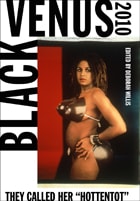
Black Venus 2010
They Called Her "Hottentot"Edited by Deborah Willis
Temple University Press, 2010
As a young South African woman of about twenty, Saartjie Baartman, the so-called “Hottentot Venus,” was brought to London and placed on exhibit in 1810. Clad in the Victorian equivalent of a body stocking, and paraded through the streets and on stage in a cage she became a human spectacle in London and Paris. Baartman’s distinctive physique became the object of ridicule, curiosity, scientific inquiry, and desire until and after her premature death. The figure of Sarah Baartman was reduced to her sexual parts.
Black Venus 2010 traces Baartman’s memory in our collective histories, as well as her symbolic history in the construction and identity of black women as artists, performers, and icons. The wide-ranging essays, poems, and images in Black Venus 2010 represent some of the most compelling responses to Baartman. Each one grapples with the enduring legacy of this young African woman who forever remains a touchstone for black women.
Contributors include: Elizabeth Alexander, Holly Bass, Petrushka A Bazin, William Jelani Cobb, Lisa Gail Collins, Renée Cox, J. Yolande Daniels, Carole Boyce Davies, Leon de Wailly, Manthia Diawara, Diana Ferrus, Cheryl Finley, Nikky Finney, Kianga K. Ford, Terri Francis, Sander Gilman, Renée Green, Joy Gregory, Lyle Ashton Harris, Michael D. Harris, Linda Susan Jackson, Kellie Jones, Roshini Kempadoo, Simone Leigh, Zine Magubane, E. Ethelbert Miller, Robin Mitchell, Charmaine Nelson, Tracey Rose, Radcliffe Roye, Bernadette Searle, Lorna Simpson, Debra S. Singer, Penny Siopis, Hank Willis Thomas, Kara Walker, Michele Wallace, Carla Williams, Carrie Mae Weems, J. T. Zealy, and the editor.
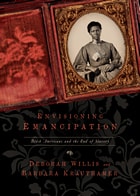
Envisioning Emancipation
Black Americans and the End of SlaveryDeborah Willis
Temple University Press, 2017
The Emancipation Proclamation is one of the most important documents in American history. As we commemorate its 150th anniversary, what do we really know about those who experienced slavery?
In their pioneering book, Envisioning Emancipation, renowned photographic historian Deborah Willis and historian of slavery Barbara Krauthamer have amassed 150 photographs—some never before published—from the antebellum days of the 1850s through the New Deal era of the 1930s. The authors vividly display the seismic impact of emancipation on African Americans born before and after the Proclamation, providing a perspective on freedom and slavery and a way to understand the photos as documents of engagement, action, struggle, and aspiration.
Envisioning Emancipation illustrates what freedom looked like for black Americans in the Civil War era. From photos of the enslaved on plantations and African American soldiers and camp workers in the Union Army to Juneteenth celebrations, slave reunions, and portraits of black families and workers in the American South, the images in this book challenge perceptions of slavery. They show not only what the subjects emphasized about themselves but also the ways Americans of all colors and genders opposed slavery and marked its end.
Filled with powerful images of lives too often ignored or erased from historical records, Envisioning Emancipation provides a new perspective on American culture.