Results by title
4 books match the query 'Wilson, Emily'
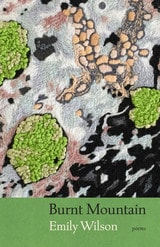
Burnt Mountain
Emily Wilson
University of Iowa Press, 2025

Hope And Dignity
Older Black Women of the SouthEmily Wilson
Temple University Press, 1992

Micrographia
Emily Wilson
University of Iowa Press, 2009
Eight years after her revelatory first book, Emily Wilson deepens her focus and extends her vision in new poems of striking intelligence and originality. Venturing into landscapes both interior and exterior, Micrographia explores what Wilson calls “the complex rigged wildness” of geographical, emotional, and verbal states, a territory located “somewhere in that / enjambment within / a cave within the brain.” Following in the tradition of such poets as Dickinson, Bishop, and Ammons, Wilson’s work regards the mind as “enmeshed” with the natural world, always “at the hinge of going over.” Her way of speaking is as precisely calibrated and as restless as her way of seeing, and the terrain of Micrographia rises from a rich and unpredictable encounter with poetic language and form. At the same time, the voice of these poems is never less than urgent, “coming clear by the foment / moving through it.”
Wilson’s eye travels the troubled boundaries between visible and invisible worlds, ranging from coastal Nova Scotia to the Andean highlands to Brooklyn’s industrial Gowanus Canal to the poet’s own backyard. Steeped in tradition but spoken in tones that are utterly distinctive, these intricate poems enter into the microscopic, micrographic spaces between words and things, between thinking and being.
The Keep
Emily Wilson
University of Iowa Press, 2001
The poems in The Keep are influenced by art, by paintings, by “thinking about abstraction and figuration and the space between, beauty apprehended and lost, the divine apprehended and lost.” Emily Wilson's poems are also saturated with nature; from “the great oaks emptying, russet, gusseted” to “the caribou mov[ing] through us beyond numerous,” each image connects the natural world of tides and marshes and forests to the human world of documentation and preservation. The image of the keep as a place of safety and as a kind of prison also informs this very strong collection.