Results by title
13 books match the query 'Wine'

Bread, Wine, and Money
The Windows of the Trades at Chartres CathedralJane Welch Williams
University of Chicago Press, 1993
Williams weaves a tight net of historical circumstances, iconographic traditions, exegetical implications, political motivations, and liturgical functions to explain the imagery in the windows of the trades. Her account of changing social relationships in thirteenth-century Chartres focuses on the bakers, tavern keepers, and money changers whose bread, wine, and money were used as means of exchange, tithing, and offering throughout medieval society. Drawing on a wide variety of original documents and scholarly work, this book makes important new contributions to our knowledge of one of the great monuments of Western culture.
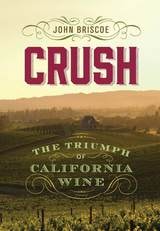
Crush
The Triumph of California WineJohn Briscoe
University of Nevada Press, 2018
Finalist, Northern California Book Awards General Non-Fiction
Look. Smell. Taste. Judge. Crush is the 200-year story of the heady dream that wines as good as the greatest of France could be made in California. A dream dashed four times in merciless succession until it was ultimately realized in a stunning blind tasting in Paris. In that tasting, in the year of America's bicentennial, California wines took their place as the leading wines of the world.
For the first time, Briscoe tells the complete and dramatic story of the ascendancy of California wine in vivid detail. He also profiles the larger story of California itself by looking at it from an entirely innovative perspective, the state seen through its singular wine history.
With dramatic flair and verve, Briscoe not only recounts the history of wine and winemaking in California, he encompasses a multidimensional approach that takes into account an array of social, political, cultural, legal, and winemaking sources. Elements of this history have plot lines that seem scripted by a Sophocles, or Shakespeare. It is a fusion of wine, personal histories, cultural, and socioeconomic aspects.
Crush is the story of how wine from California finally gained its global due. Briscoe recounts wine’s often fickle affair with California, now several centuries old, from the first harvest and vintage, through the four overwhelming catastrophes, to its amazing triumph in Paris.
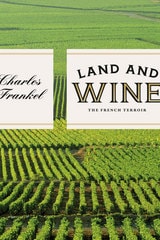
Land and Wine
The French TerroirCharles Frankel
University of Chicago Press, 2014
For centuries, France has long been the world’s greatest wine-producing country. Its wines are the global gold standard, prized by collectors, and its winemaking regions each offer unique tasting experiences, from the spice of Bordeaux to the berry notes of the Loire Valley. Although grape variety, climate, and the skill of the winemaker are essential in making good wine, the foundation of a wine’s character is the soil in which its grapes are grown. Who could better guide us through the relationship between the French land and the wine than a geologist, someone who deeply understands the science behind the soil? Enter scientist Charles Frankel.
In Land and Wine, Frankel takes readers on a tour of the French winemaking regions to illustrate how the soil, underlying bedrock, relief, and microclimate shape the personality of a wine. The book’s twelve chapters each focus in-depth on a different region, including the Loire Valley, Alsace, Burgundy, Champagne, Provence, the Rhône valley, and Bordeaux, to explore the full meaning of terroir. In this approachable guide, Frankel describes how Cabernet Franc takes on a completely different character depending on whether it is grown on gravel or limestone; how Sauvignon yields three different products in the hills of Sancerre when rooted in limestone, marl, or flint; how Pinot Noir will give radically different wines on a single hill in Burgundy as the vines progress upslope; and how the soil of each château in Bordeaux has a say in the blend ratios of Merlot and Cabernet-Sauvignon. Land and Wine provides a detailed understanding of the variety of French wine as well as a look at the geological history of France, complete with volcanic eruptions, a parade of dinosaurs, and a menagerie of evolution that has left its fossils flavoring the vineyards.
Both the uninitiated wine drinker and the confirmed oenophile will find much to savor in this fun guide that Frankel has spiked with anecdotes about winemakers and historic wine enthusiasts—revealing which kings, poets, and philosophers liked which wines best—while offering travel tips and itineraries for visiting the wineries today.
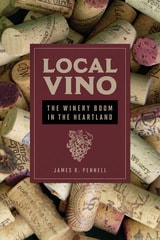
Local Vino
The Winery Boom in the HeartlandJames R. Pennell
University of Illinois Press, 2016
In Local Vino, James R. Pennell tracks among the hardy vines and heartland terroir of wineries across Illinois, Iowa, Indiana, and Ohio. Blending history and observation, Pennell gives us a top-down view of the business from cuttings and cultivation to sales and marketing. He also invites entrepreneurs to share stories of their ambitions, hard work, and strategies. Together, author and subjects trace the hows and whys of progress toward that noblest of goals: a great vintage that puts their winery on the map.
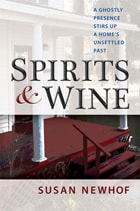
Spirits and Wine
Susan Newhof
University of Michigan Press, 2011
"A graceful, elegantly told ghost story that is at times frightening, at times heartwarming, often quite funny, and always an engrossing and fascinating read."
---Rodney Vaccaro, Emmy Award–winning Hollywood screenwriter and producer
"I started Friday night and got up Saturday morning with a desire to get back to it to finish. In my experience, if I wake up and the first thing on my mind is getting back to a book, it's a good book."
---Bryan Uecker, co-owner of The Book Nook & Java Shop, Montague, Michigan
"A spellbinding mystery of timeless love, loss, and a house that held all the answers. I couldn't put it down."
---Judith Evans Thomas, coauthor of the Born to Shop travel books
"Living in a 100-year old Michigan farmhouse myself, I was totally pulled into the real possibilities Newhof's characters found themselves in. Ghosts and real life haunts made for a compelling read."
---Robbyn Smith van Frankenhuyzen, author of the series Hazel Ridge Farm Stories
"Spirits and Wine is a can't-put-down novel that feels less like fiction and more like sharing a glass of wine with your best friends who go on to disclose the deeply disturbing, deadly things occurring in the lovely old house they planned to restore. Susan Newhof writes truthfully and with beautiful care, evoking the icy appeal of a small lakeshore town in Michigan while revealing the wretched secrets that cling to one dwelling. After reading this harrowing tale in one sitting, I am dying to ask the author---did these menacing events really happen . . . to you?"
---Jerrilyn Farmer, author of the best-selling Madeline Bean Mysteries
"If only the walls could talk---and they do in Susan Newhof's thrilling Spirits and Wine. Readers, be prepared for an absorbing adventure into John and Anna's journey to solve a century-old mystery wrapped within the walls of their newly purchased 'dream home.' Told creatively in tandem, the couple's story of life in pursuit of truth will leave you wondering just where the fact ends and the fiction begins. Keep the lights on and enjoy!"
---Beckey Burgoyne, author of Perfectly Amanda: Gunsmoke's "Miss Kitty"---To Dodge and Beyond
It's a mystery and a ghost story, all wrapped up in one.
A newly married couple buys an old house in a small lakeshore town in West Michigan and finds it haunted by the dramatic secrets of its past inhabitants. As the couple settles in, disturbing events prompt them to investigate who those residents were, what happened to them, and why one spirit remains active. Could the Spanish influenza epidemic in the region, which resulted in the deaths of an unprecedented number of young, healthy adults in Michigan and elsewhere in 1918---19, and the resulting slew of orphans, have something to do with the spirit now haunting their house?
They are determined to discover the truth about their house, even if it jeopardizes their own safety.

The Poisoned Chalice
Eucharistic Grape Juice and Common-Sense Realism in Victorian MethodismJennifer L. Woodruff Tait
University of Alabama Press, 2011
This work examines the introduction of grape juice into the celebration of Holy Communion in the late 19th century Methodist Episcopal Church and reveals how a 1,800-year-old practice of using fermented communion wine became theologically incomprehensible in a mere forty years. Through study of denominational publications, influential exegetical works, popular fiction and songs, and didactic moral literature, Jennifer Woodruff Tait charts the development of opposing symbolic associations for wine and grape juice. She argues that 19th century Methodists, steeped in Baconian models of science and operating from epistemological presuppositions dictated by common-sense realism, placed a premium on the ability to perceive reality accurately in order to act morally. They therefore rejected any action or substance that dulled or confused the senses (in addition to alcohol, this included “bad” books, the theatre, stimulants, etc., which were all seen as unleashing unchecked, ungovernable thoughts and passions incompatible with true religion).
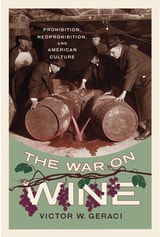
The War on Wine
Prohibition, Neoprohibition, and American CultureVictor W. Geraci
University of Nevada Press, 2023
The development of an American wine ethos.
The history of wine is a tale of capitalist production and consumer experience, and early Americans embraced the idea of having their own wine culture. But many began to believe that excessive alcohol consumption had become a moral, ethical, economic, political, social, and health conundrum. The result was a national on-again, off-again relationship with the concept of an American wine culture.
Citizens struggled to build a wine culture patterned after their diasporic European custom of wine as a moderating beverage that was part of a healthy diet. Yet, as America grew, untold attempts to create a wine culture failed due to climate, pests, diseases, wars, and depressions, resulting in some people considering the nation an alcoholic republic. Thus began an anti-alcohol culture war aimed at restricting or prohibiting alcoholic beverages.
With the passage of the Eighteenth Amendment (Prohibition), a culture war started between wet and dry proponents. After the repeal of Prohibition, the decimated wine industry responded by forming the Wine Institute to rebrand wine’s role in American society, after which neoprohibitionists attempted to restrict alcohol availability and consumption. To confront these aggressive actions, the Wine Institute hired politically trained John A. De Luca to navigate the new attacks and pushed for rebranding wine as a cultural spirit with health benefits.

The Wine of Eternity
Short Stories from the LatvianKnuts Lesins
University of Minnesota Press, 1957
The Wine of Eternity was first published in 1957. Minnesota Archive Editions uses digital technology to make long-unavailable books once again accessible, and are published unaltered from the original University of Minnesota Press editions.
Ever since the small Baltic nation of Latvia became a part of the Soviet Union in 1940, its identity has been blurred to Western eyes. Many of its people have left their country in voluntary or forced exile. But, wherever they are today, the Latvians still cherish and preserve a rich national heritage of folklore and culture. Much of this is revealed in these stories, the work of an established Latvian writer who became a wartime refugee from his country.
This volume makes the work of Knuts Lesins available in English for the first time, although his writing has been published extensively in Europe in the original Latvian. In addition to the stories, the author provides a background sketch of the history and culture of Latvia. While much of the fascinating folklore of the country is interwoven in the stories, they are not primarily folk tales. They are perhaps best described as penetrating glimpses into human lives at moments of crisis or decision which reveal an individual's character and philosophy.
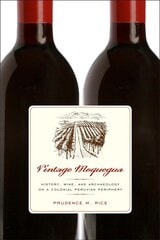
Vintage Moquegua
History, Wine, and Archaeology on a Colonial Peruvian PeripheryBy Prudence M. Rice
University of Texas Press, 2011
The microhistory of the wine industry in colonial Moquegua, Peru, during the colonial period stretches from the sixteenth through nineteenth centuries, yielding a wealth of information about a broad range of fields, including early modern industry and labor, viniculture practices, the cultural symbolism of alcohol consumption, and the social history of an indigenous population. Uniting these perspectives, Vintage Moquegua draws on a trove of field research from more than 130 wineries in the Moquegua Valley.
As Prudence Rice walked the remnants of wine haciendas and interviewed Peruvians about preservation, she saw that numerous colonial structures were being razed for development, making her documentary work all the more crucial. Lying far from imperial centers in pre-Hispanic and colonial times, the area was a nearly forgotten administrative periphery on an agricultural frontier. Spain was unable to supply the Peruvian viceroyalty with sufficient wine for religious and secular purposes, leading colonists to import and plant grapevines. The viniculture that flourished produced millions of liters, most of it distilled into pisco brandy. Summarizing archaeological data and interpreting it through a variety of frameworks, Rice has created a three-hundred-year story that speaks to a lost world and its inhabitants.
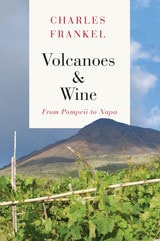
Volcanoes and Wine
From Pompeii to NapaCharles Frankel
University of Chicago Press, 2019
Traveling across regions wellknown to wine lovers like Sicily, Oregon, and California, as well as the less familiar places, such as the Canary Islands, Frankel gives an in-depth account of famous volcanoes and the wines that spring from their idiosyncratic soils. From Santorini’s vineyards of rocky pumice dating back to a four-thousand-year-old eruption to grapes growing in craters dug in the earth of the Canary Islands, from Vesuvius’s famous Lacryma Christi to the ambitious new generation of wine growers reviving the traditional grapes of Mount Etna, Frankel takes us across the stunning and dangerous world of volcanic wines. He details each volcano’s most famous eruptions, the grapes that grow in its soils, and the people who make their homes on its slopes, adapting to an ever-menacing landscape. In addition to introducing the history and geology of these volcanoes, Frankel's book serves as a travel guide, offering a host of tips ranging from prominent vineyards to visit to scenic hikes in each location.
This illuminating guide will be indispensable for wine lovers looking to learn more about volcanic terroirs, as well as anyone curious about how cultural heritage can survive and thrive in the shadow of geological danger.
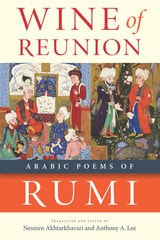
Wine of Reunion
Arabic Poems of RumiNesreen Rumi
Michigan State University Press, 2017
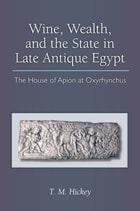
Wine, Wealth, and the State in Late Antique Egypt
The House of Apion at OxyrhynchusT. M. Hickey
University of Michigan Press, 2012
The "glorious house" of the senatorial family of the Flavii Apiones is the best documented economic entity of the Roman Empire during the fifth through seventh centuries, that critical period of transition between the classical world and the Middle Ages. For decades, the rich but fragmentary manuscript evidence that this large agricultural estate left behind, preserved for 1,400 years by the desiccating sands of Egypt, has been central to arguments concerning the agrarian and fiscal history of Late Antiquity, including the rise of feudalism.
Wine, Wealth, and the State in Late Antique Egypt is the most authoritative synthesis concerning the economy of the Apion estate to appear to date. T. M. Hickey examines the records of the family's wine production in the sixth century in order to shed light on ancient economic practices and economic theory, as well as on the wine industry and on estate management. Based on careful study of the original manuscripts, including unpublished documents from the estate archive, he presents controversial conclusions, much at odds with the "top down" models currently dominating the scholarship.
Your Tasting Brain
A Sensory Approach to Wine, Beer, and Other PleasuresRandy Mosher
University of Chicago Press, 2026
A scintillating invitation to enrich our culinary pursuits by understanding how our bodies turn a taste into flavor, emotion, and meaning.
Our foodscape has never been more adventurous, but fully experiencing the subtleties of complex cheeses, wines, or cocktails can be challenging. No longer! In Your Tasting Brain, bestselling food writer Randy Mosher assures us that we can all become master tasters by learning more about the brilliant ways our bodies translate smell, taste, and mouthfeel into flavor—without needing to know everything about terroir, varietals, or exotic ingredients.
In Your Tasting Brain, Mosher shares a road map to send us on our tasting journey, one that connects the worlds of science and art. Our bodies are more finely tuned tasting machines than we realize, Mosher explains. Even a simple grasp of how our senses interact with the world can enhance our culinary delight—and Mosher offers us a tantalizing framework, from how our brain processes, categorizes, and rewards (or punishes) encounters with chemicals in food, all the way to how aromas and flavors spur us to language, emotion, and creativity. Overflowing with scientific insight and practical advice, Your Tasting Brain is an appetizing guide for anyone looking to enhance the pleasures they find in food through attention, curiosity, and practice.