Results by title

5 books match the query 'Winning'
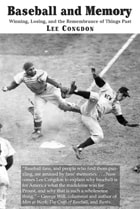
cover of Baseball and Memory: Winning, Losing, and the Remembrance of Things Past

Baseball and Memory

Winning, Losing, and the Remembrance of Things Past

Lee Congdon

St. Augustine's Press, 2011
[more]
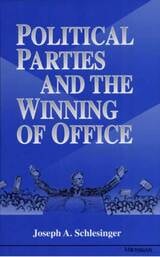
cover of Political Parties and the Winning of Office

Political Parties and the Winning of Office

Joseph A. Schlesinger

University of Michigan Press, 1994
A theory of political parties as office-seeking organizations
[more]
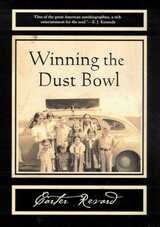
cover of Winning the Dust Bowl

Winning the Dust Bowl

Carter Revard

University of Arizona Press, 2001

Bootleggers and bankrobbers in the Oklahoma Dust Bowl. Proctors and punters at Oxford. Activists and agitators of the American Indian Movement. Carter Revard has known them all, and in this book— a memoir in prose and poetry— he interweaves the many threads of his life as only a gifted writer can. Winning the Dust Bowl traces Revard's development from a poor Oklahoma farm boy during the depths of the Depression to a respected medieval scholar and outstanding Native American poet. It recounts his search for a personal and poetic voice, his struggle to keep and expand it, and his attempt to find ways of reconciling the disparate influences of his life. In these pages, readers will find poems both new and familiar: poems of family and home, of loss and survival. In linking— what he calls "cocooning"— essays, Revard shares what he has noticed about how poems come into being, how changes in style arise from changes in life, and how language can be used to deal with one's relationship to the world. He also includes stories of Poncas and Osages, powwow stories and Oxford fables, and a gallery of photographs that capture images of his past. Revard has crafted a book about poetry and authorship, about American history and culture. Lyrical in one breath and stingingly political in the next, he calls on his mastery of language to show us the undying connection between literature and life.
[more]
cover of Winning the Game and Other Stories

Winning the Game and Other Stories

Rubem Fonseca

Tagus Press, 2013
In these seventeen stories by one of Brazil's foremost living authors, Fonseca introduces readers—with unsurpassed candor and keenness of observation—to a kaleidoscopic, often disturbing world. A hunchback sets his lascivious sights on seducing a beautiful woman. A wealthy businessman hires a ghost writer, with unexpected results. A family of modern-day urban cannibals celebrates a bizarre rite of passage. A man roams the nocturnal streets of Rio de Janeiro in search of meaning. A male ex-police reporter writes an advice column under a female pseudonym. A prosperous entrepreneur picks up a beautiful girl in his Mercedes only to discover his costly mistake. A loser elaborates a lethal plan to become, in his mind, a winner.
[more]
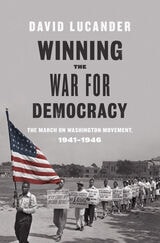
cover of Winning the War for Democracy: The March on Washington Movement, 1941-1946

Winning the War for Democracy

The March on Washington Movement, 1941-1946

David Lucander

University of Illinois Press, 2014

Scholars regard the March on Washington Movement (MOWM) as a forerunner of the postwar Civil Rights movement. Led by the charismatic A. Philip Randolph, MOWM scored an early victory when it forced the Roosevelt administration to issue a landmark executive order that prohibited defense contractors from practicing racial discrimination.

Winning the War for Democracy: The March on Washington Movement, 1941-1946 recalls that triumph, but also looks beyond Randolph and the MOWM's national leadership to focus on the organization's evolution and actions at the local level. Using the personal papers of previously unheralded MOWM members such as T.D. McNeal, internal government documents from the Roosevelt administration, and other primary sources, David Lucander highlights how local affiliates fighting for a double victory against fascism and racism helped the national MOWM accrue the political capital it needed to effect change.

Lucander details the efforts of grassroots organizers to implement MOWM's program of empowering African Americans via meetings and marches at defense plants and government buildings and, in particular, focuses on the contributions of women activists like Layle Lane, E. Pauline Myers, and Anna Arnold Hedgeman. Throughout he shows how local activities often diverged from policies laid out at MOWM's national office, and how grassroots participants on both sides ignored the rivalry between Randolph and the leadership of the NAACP to align with one another on the ground.

[more]