Results by title
8 books match the query 'Wire'

Beyond the Wire
Former Prisoners and Conflict Transformation in Northern IrelandPeter Shirlow and Kieran McEvoy
Pluto Press, 2008
This book provides the first detailed examination of the role played by former loyalist and republican prisoners in grass roots conflict transformation work in the Northern Ireland peace process. It challenges the assumed passivity of former prisoners and ex-combatants. Instead, it suggests that such individuals and the groups which they formed have been key agents of conflict transformation. They have provided leadership in challenging cultures of violence, developed practical methods of resolving inter-communal conflict and found ways for communities to explore their troubled past. In analysing this, the authors challenge the sterile demonisation of former prisoners and the processes that maintain their exclusion from normal civic and social life.
The book is a constructive reminder of the need for full participation of both former combatants and victims in post-conflict transformation. It also lays out a new agenda for reconciliation which suggests that conflict transformation can and should begin ‘from the extremes’.
The book will be of interest to students of criminology, peace and conflict studies, law and politics, geography and sociology as well as those with a particular interest in the Northern Ireland conflict.
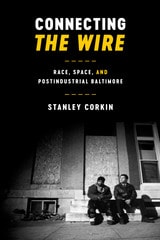
Connecting The Wire
Race, Space, and Postindustrial BaltimoreBy Stanley Corkin
University of Texas Press, 2017
Critically acclaimed as one of the best television shows ever produced, the HBO series The Wire (2002–2008) is a landmark event in television history, offering a raw and dramatically compelling vision of the teeming drug trade and the vitality of life in the abandoned spaces of the postindustrial United States. With a sprawling narrative that dramatizes the intersections of race, urban history, and the neoliberal moment, The Wire offers an intricate critique of a society riven by racism and inequality.
In Connecting The Wire, Stanley Corkin presents the first comprehensive, season-by-season analysis of the entire series. Focusing on the show’s depictions of the built environment of the city of Baltimore and the geographic dimensions of race and class, he analyzes how The Wire’s creator and showrunner, David Simon, uses the show to develop a social vision of its historical moment, as well as a device for critiquing many social “givens.” In The Wire’s gritty portrayals of drug dealers, cops, longshoremen, school officials and students, and members of the judicial system, Corkin maps a web of relationships and forces that define urban social life, and the lives of the urban underclass in particular, in the early twenty-first century. He makes a compelling case that, with its embedded history of race and race relations in the United States, The Wire is perhaps the most sustained and articulate exploration of urban life in contemporary popular culture.
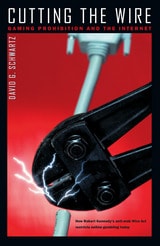
Cutting The Wire
Gaming Prohibition And The InternetDavid G. Schwartz
University of Nevada Press, 2005
The story of the Wire Act and how Robert Kennedy’s crusade against the Mob is creating a new generation of Internet gaming outlaws.
Gambling has been part of American life since long before the existence of the nation, but Americans have always been ambivalent about it. What David Schwartz calls the “pell-mell history of legal gaming in the United States” is a testament to our paradoxical desire both to gamble and to control gambling. It is in this context that Schwartz examines the history of the Wire Act, passed in 1961 as part of Attorney General Robert F. Kennedy’s crusade against organized crime and given new life in recent efforts to control Internet gambling. Cutting the Wire presents the story of how this law first developed, how it helped fight a war against organized crime, and how it is being used today. The Wire Act achieved new significance with the development of the Internet in the early 1990s and the growing popularity of online wagering through offshore facilities. The United States government has invoked the Wire Act in a vain effort to control gambling within its borders, at a time when online sports betting is soaring in popularity. By placing the Wire Act into the larger context of Americans’ continuing ambivalence about gambling, Schwartz has produced a provocative analysis of a national habit and the vexing predicaments that derive from it. In America today, 48 of 50 states currently permit some kind of legal gambling. Schwartz’s historical unraveling of the Wire Act exposes the illogic of an outdated law intended to stifle organized crime being used to set national policy on Internet gaming. Cutting the Wire carefully dissects two centuries of American attempts to balance public interest with the technology of gambling. Available in hardcover and paperback.
On The Wire
Linda Williams
Duke University Press, 2014
Over the Wire and on TV
CBS and UPI in Campaign '80Michael J. Robinson
Russell Sage Foundation, 1983
Republic on the Wire
Cable Television, Pluralism, and the Politics of New Technologies, 1948-1984McMurria, John
Rutgers University Press, 2017
The Wire
Race, Class, and GenreEdited by Liam Kennedy and Stephen Shapiro
University of Michigan Press, 2012
Few other television series have received as much academic, media, and fan celebration as The Wire, which has been called the best dramatic series ever created. The show depicts the conflict between Baltimore's police and criminals to raise a warning about race; drug war policing; deindustrialization; and the inadequacies of America’s civic, educational, and political institutions. The show's unflinching explorations of a city in crisis and its nuanced portrayals of those affected make it a show all about race and class in America.
The essays in this volume offer a range of astute critical responses to this television phenomenon. More consistently than any other crime show of its generation, The Wire challenges viewers' perceptions of the racialization of urban space and the media conventions that support this. The Wire reminds us of just how remarkably restricted the grammar of race is on American television and related media, and of the normative codings of race---as identity, as landscape---across urban narratives, from documentary to entertainment media.

We Are Danny
Targeted Inside the WireElizabeth R. OuYang
Temple University Press, 2027
Private Danny Chen was only nineteen years old when he was found dead on a U.S. Army base in Afghanistan. His non-combat death took place under “suspicious circumstances inside the wire.” The court martials revealed that Chen faced weeks of unrelenting hazing and racial harassment by his superiors. We Are Danny is both Elizabeth OuYang’s troubling and critical account of what transpired and her memoir of Chen’s death and life, starting with his funeral.
OuYang, who led the fight for justice, narrates Chen’s story in a personal style that speaks directly to him. We Are Danny chronicles the community-based efforts to stand up to injustice where young enlistees like Chen, who fight for their country, are met with bigotry. OuYang details organizing local and national campaigns to petition the Army for a timely and thorough investigation of Chen’s death. She describes an unprecedented group meeting with high-ranking officials from the Pentagon, and recounts candlelight vigils, community protests, and the naming of Pvt. Danny Chen Way in Manhattan’s Chinatown to honor him.
There are, sadly, many Private Danny Chens. We Are Danny offers a valuable lesson on how community advocacy and demanding accountability can focus attention on needed military reforms.