Results by title
13 books match the query 'Wives'
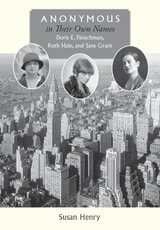
Anonymous in Their Own Names
Doris E. Fleischman, Ruth Hale, and Jane GrantSusan Henry
Vanderbilt University Press, 2012
Yet these women's achievements have been invisible to countless authors who have written about their husbands. This invisibility is especially ironic given that all three were feminists who kept their birth names when they married as a sign of their equality with their husbands, then battled the government and societal norms to retain their names. Hale and Grant so believed in this cause that in 1921 they founded the Lucy Stone League to help other women keep their names, and Grant and Fleischman revived the league in 1950. This was the same year Grant and her second husband, William Harris, founded White Flower Farm, pioneering at that time and today one of the country's most celebrated commercial nurseries.
Despite strikingly different personalities, the three women were friends and lived in overlapping, immensely stimulating New York City circles. Susan Henry explores their pivotal roles in their husbands' extraordinary success and much more, including their problematic marriages and their strategies for overcoming barriers that thwarted many of their contemporaries.
In Sacred Loneliness
The DocumentsTodd Compton
Signature Books, 2022
This volume includes many autobiographical writings, diaries, and letters, with Compton providing annotations and introductory material that illuminates these crucial primary sources. This allows readers to take their understanding of this unique group of women to a new level and to drive home that fact that their lives go far beyond the Nauvoo experiment that forever links them to Mormonism’s founding prophet.
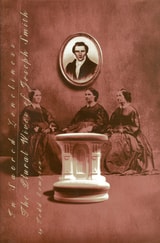
In Sacred Loneliness
The Plural Wives of Joseph SmithTodd Compton
Signature Books, 1997
The majority of Smith’s wives were younger than he, and one-third were between fourteen and twenty years of age. Another third were already married, and some of the husbands served as witnesses at their own wife’s polyandrous wedding. In addition, some of the wives hinted that they bore Smith children—most notably Sylvia Sessions’s daughter Josephine—although the children carried their stepfather’s surname.
For all of Smith’s wives, the experience of being secretly married was socially isolating, emotionally draining, and sexually frustrating. Despite the spiritual and temporal benefits, which they acknowledged, they found their faith tested to the limit of its endurance. After Smith’s death in 1844, their lives became even more “lonely and desolate.” One even joined a convent. The majority were appropriated by Smith’s successors, based on the Old Testament law of the Levirate, and had children by them, though they considered these guardianships unsatisfying. Others stayed in the Midwest and remarried, while one moved to California. But all considered their lives unhappy, except for the joy they found in their children and grandchildren.
Peasants, Warriors, and Wives
Popular Imagery in the ReformationKeith Moxey
University of Chicago Press, 2004
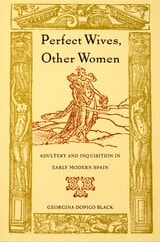
Perfect Wives, Other Women
Adultery and Inquisition in Early Modern SpainGeorgina Dopico Black
Duke University Press, 2001
Subject to the scrutiny of a remarkable array of gazes—inquisitors, theologians, religious reformers, confessors, poets, playwrights, and, not least among them, husbands—the bodies of perfect and imperfect wives elicited diverse readings. Dopico Black reveals how imperialism, the Inquisition, inflation, and economic decline each contributed to a correspondence between the meanings of these human bodies and “other” bodies, such as those of the Jew, the Moor, the Lutheran, the degenerate, and whoever else departed from a recognized norm. The body of the wife, in other words, became associated with categories separate from anatomy, reflecting the particular hermeneutics employed during the Inquisition regarding the surveillance of otherness.
Dopico Black’s compelling argument will engage students of Spanish and Spanish American history and literature, gender studies, women’s studies, social psychology and cultural studies.
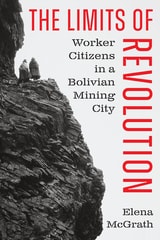
The Limits of Revolution
Worker Citizens in a Bolivian Mining CityElena McGrath
University of Texas Press, 2026
The role of Bolivian mining families in revolution and politics.
In 1952, Bolivia’s Revolutionary Nationalist Movement (MNR) swept into power, promising collective prosperity through class-based nationalism. The heroic symbol of the movement was the worker citizen—the formerly indigenous miner who would fuel economic development in a nationalized mining economy.
The Limits of Revolution explores this history from the worker barrios of the copper mining city of Corocoro. As the state walked back its promises of worker political power at the national level, mining men and women in Corocoro struggled—through protests, court battles, and barfights—to maintain the benefits of worker citizenship locally. After the MNR fell to a military dictatorship in 1964, however, families retreated to defending the nationalized mining company against an increasingly hostile state. In this battle to keep the revolution alive, the expansive potential of worker citizenship disappeared and old racial exclusions resurfaced. Largely forgotten today, Bolivia’s experience of revolution exposes the contradictions of postcolonial nationalism and sheds light on Latin America’s transition from Cold War–era class politics to twenty-first-century Pink Tide politics.
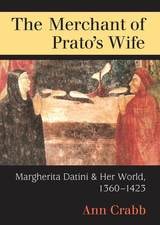
The Merchant of Prato's Wife
Margherita Datini and Her World, 1360-1423Ann Crabb
University of Michigan Press, 2015
The Sport Marriage
Women Who Make It WorkSteven M. Ortiz
University of Illinois Press, 2020
Ortiz defines the traditional sport marriage as a career-dominated marriage, illustrating how it encourages women to contribute to their own subordination through adherence to an unwritten rulebook and a repertoire of self-management strategies. He explains how they make invaluable contributions to their husbands’ careers while adjusting to public life and trying to maintain family privacy, managing power and control issues, and coping with pervasive groupies, overinvolved mothers, a culture of infidelity, and husbands who prioritize team loyalty. He gives these historically silent women a voice, offering readers perceptive and sensitive insight into what it means to be a woman in the male-dominated world of professional sports.
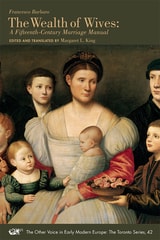
The Wealth of Wives
A Fifteenth-Century Marriage ManualFrancesco Barbaro
Iter Press, 2015
In 1415, Francesco Barbaro produced a marriage manual intended at once for his friend, a scion of the Florentine Medici family, and for the whole set of his peers, the young nobility of Venice. Countering the trends of the day toward dowry chasing and dowry inflation, Barbaro insisted that the real wealth of wives was their capacity to conceive, birth, and rear children worthy of their heritage. The success of the patriciate depended, ironically, on women: for they alone could ensure the biological, cultural, and spiritual reproduction of their marital lineage. The Wealth of Wives circulated in more than 100 manuscript versions, five Latin editions, and translations into German, Italian, French, and English, far outstripping in its influence Leon Battista Alberti’s On the Family (1434).

Wartime Washington
The Civil War Letters of Elizabeth Blair LeeEdited by Virginia Jeans Laas
University of Illinois Press, 1991
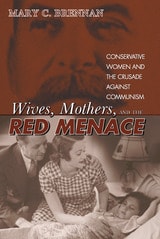
Wives, Mothers, and the Red Menace
Conservative Women and the Crusade against CommunismMary Brennan
University Press of Colorado, 2027
Brennan details the actions and experiences of prominent anti-communists Jean Kerr McCarthy, Margaret Chase Smith, Freda Utley, Doloris Thauwald Bridges, Elizabeth Churchill Brown, and Phyllis Stewart Schlafly. She describes the Cold War context in which these women functioned and the ways in which women saw communism as a very real danger to domestic security and American families. Millions of women, Brennan notes, expanded their notions of household responsibilities to include the crusade against communism. From writing letters and hosting teas to publishing books and running for political office, they campaigned against communism and, incidentally, discovered the power they had to effect change through activism.
Brennan reveals how the willingness of these deeply conservative women to leave the domestic sphere and engage publicly in politics evinces the depth of America's postwar fear of communism. She further argues that these conservative, anti-communist women pushed the boundaries of traditional gender roles and challenged assumptions about women as political players by entering political life to publicly promote their ideals.Wives, Mothers, and the Red Menace offers a fascinating analysis of gender and politics at a critical point in American history. Brennan's work will instigate discussions among historians, political scientists, and scholars of women's studies.
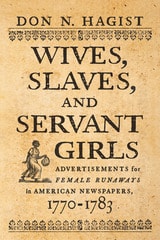
Wives, Slaves, and Servant Girls
Advertisements for Female Runaways in American Newspapers, 1770–1783Don N. Hagist
Westholme Publishing, 2007
In an age when individuals could be owned by others, people were lost and found just like other property. Indentured servants and slaves absconded from the custody of their masters, and their value prompted the masters to seek their return. Wives ran from abusive husbands or into the arms of another. Newspapers in the eighteenth and nineteenth centuries carried large numbers of advertisements offering rewards for the return of runaways or announcing the detention of fugitives. Each ad provided a description of the individual and often included some circumstances of their elopement. The overall effectiveness of these advertisements cannot be measured, but the sheer number of ads suggests they were perceived as useful tools by those who placed them. What could not have been known at the time was the substantial contribution to history that these ads make. The descriptive advertisements provide textual snapshots of thousands of individuals who would otherwise be lost to history, people whose names might not otherwise be recorded. In Wives, Slaves, and Servant Girls: Advertisements for Female Runaways in American Newspapers, 1770–1783, historian Don N. Hagist focuses on the American Revolutionary period to provide a striking portrait of a substantial but largely forgotten segment of the population. Comprised of four hundred advertisements presented chronologically, the volume provides invaluable descriptions of women’s clothes, footwear, jewelry, physical appearances, education, nationalities, occupations, and other details.
Women Who Stay Behind
Pedagogies of Survival in Rural Transmigrant MexicoRuth Trinidad Galván
University of Arizona Press, 2015
The book studies women’s and families’ use of cultural knowledge, community activism, and teaching and learning spaces. Throughout, Trinidad Galván provides answers to these questions: How does the migration of loved ones alter community, familial, and gender dynamics? And what social relations (convivencia), cultural knowledge, and women-centered pedagogies sustain women’s survival (supervivencia)?
Researchers, educators, and students interested in migration studies, gender studies, education, Latin American studies, and Mexican American studies will benefit from the ethnographic approach and theoretical insight of this groundbreaking work.