Results by title

9 books match the query 'Wojcik, Pamela Robertson'
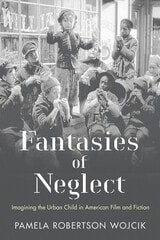
cover of Fantasies of Neglect: Imagining the Urban Child in American Film and Fiction

Fantasies of Neglect

Imagining the Urban Child in American Film and Fiction

Pamela Robertson Wojcik

Rutgers University Press, 2016

In our current era of helicopter parenting and stranger danger, an unaccompanied child wandering through the city might commonly be viewed as a victim of abuse and neglect. However, from the early twentieth century to the present day, countless books and films have portrayed the solitary exploration of urban spaces as a source of empowerment and delight for children. 
 
Fantasies of Neglect explains how this trope of the self-sufficient, mobile urban child originated and considers why it persists, even as it goes against the grain of social reality. Drawing from a wide range of films, children’s books, adult novels, and sociological texts, Pamela Robertson Wojcik investigates how cities have simultaneously been demonized as dangerous spaces unfit for children and romanticized as wondrous playgrounds that foster a kid’s independence and imagination. Charting the development of free-range urban child characters from Little Orphan Annie to Harriet the Spy to Hugo Cabret, and from Shirley Temple to the Dead End Kids, she considers the ongoing dialogue between these fictional representations and shifting discourses on the freedom and neglect of children. 
 
While tracking the general concerns Americans have expressed regarding the abstract figure of the child, the book also examines the varied attitudes toward specific types of urban children—girls and boys, blacks and whites, rich kids and poor ones, loners and neighborhood gangs. Through this diverse selection of sources, Fantasies of Neglect presents a nuanced chronicle of how notions of American urbanism and American childhood have grown up together. 
 
[more]
cover of Guilty Pleasures: Feminist Camp from Mae West to Madonna

Guilty Pleasures

Feminist Camp from Mae West to Madonna

Pamela Robertson

Duke University Press, 1996

“Camp,” Mae West told Playboy, “is the kinda comedy where they imitate me.” But what was West doing, if not camp itself? Guilty Pleasures puts women back into the history of camp, a story long confined to gay male practice. Emphasizing the distinctive roles women have played as producers and consumers of camp, Pamela Robertson links her subject to feminist discussions of gender parody, performance, and spectatorship. Her book offers a heady tour of social and cultural criticism at its most interesting, and American culture at its most flamboyant.
Robertson grounds her theoretical discussion of female performance and spectatorship in detailed studies of figures such as Mae West, Joan Crawford, and Madonna. She locates these figures in turn within a tradition of feminist camp—a female form of aestheticism related to masquerade and rooted in burlesque, parallel to but different from gay male camp. Through analyses of films from Gold Diggers of 1933 to Johnny Guitar, as well as video and television, Robertson shows how the gold digger is to feminist camp what the dandy is to gay male camp—its original personification and defining voice. Set against a backdrop of social history, her analysis demonstrates that feminist camp flourishes during periods of antifeminist backlash in America, and that it reflects a working-class sensibility particularly attuned to changing attitudes toward women’s work and sexuality.
Appealing to a wide range of scholars spanning the fields of film and mass culture, feminism, gay/lesbian/queer studies, and cultural studies, Guilty Pleasures will also attract an audience of general readers interested in camp and popular culture.
[more]
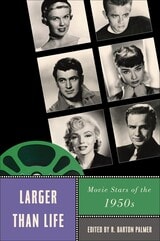
cover of Larger Than Life: Movie Stars of the 1950s

Larger Than Life

Movie Stars of the 1950s

Palmer, R. Barton

Rutgers University Press, 2010

The constellation of Hollywood stars burned brightly in the 1950s, even as the industry fell on hard economic times. Major artists of the 1940s--James Stewart, Jerry Lewis, and Gregory Peck--continued to exert a magical appeal but the younger generation of moviegoers was soon enthralled by an emerging cast, led by James Dean and Marlon Brando. They, among others, ushered in a provocative acting style, "the Method," bringing hard-edged, realistic performances to the screen. Adult-oriented small-budget dramas were ideal showcases for Method actors, startlingly realized when Brando seized the screen in On the Waterfront. But, with competition from television looming, Hollywood also featured film-making of epic proportion--Ben-Hur and other cinema wonders rode onto the screen with amazing spectacle, making stars of physically impressive performers such as Charlton Heston.

Larger Than Life offers a comprehensive view of the star system in 1950s Hollywood and also in-depth discussions of the decade's major stars, including Montgomery Clift, Judy Holliday, Jerry Lewis, James Mason, Marilyn Monroe, Kim Novak, Bing Crosby, Gene Kelly, Jayne Mansfield, and Audrey Hepburn.
[more]
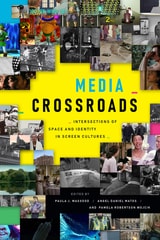
cover of Media Crossroads: Intersections of Space and Identity in Screen Cultures

Media Crossroads

Intersections of Space and Identity in Screen Cultures

Paula J. Massood, Angel Daniel Matos, and Pamela Robertson Wojcik, editors

Duke University Press, 2021

The contributors to Media Crossroads examine space and place in media as they intersect with sexuality, race, ethnicity, age, class, and ability. Considering a wide range of film, television, video games, and other media, the authors show how spaces—from the large and fantastical to the intimate and virtual—are shaped by the social interactions and intersections staged within them. The highly teachable essays include analyses of media representations of urban life and gentrification, the ways video games allow users to adopt an experiential understanding of space, the intersection of the regulation of bodies and spaces, and how style and aesthetics can influence intersectional thinking. Whether interrogating the construction of Portland as a white utopia in Portlandia or the link between queerness and the spatial design and gaming mechanics in the Legend of Zelda video game series, the contributors deepen understanding of screen cultures in ways that redefine conversations around space studies in film and media.

Contributors. Amy Corbin, Desirée J. Garcia, Joshua Glick, Noelle Griffis, Malini Guha, Ina Rae Hark, Peter C. Kunze, Paula J. Massood, Angel Daniel Matos, Nicole Erin Morse, Elizabeth Patton, Matthew Thomas Payne, Merrill Schleier, Jacqueline Sheean, Sarah Louise Smyth, Erica Stein, Kirsten Moana Thompson, John Vanderhoef, Pamela Robertson Wojcik
[more]
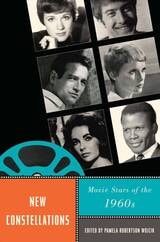
cover of New Constellations: Movie Stars of the 1960s

New Constellations

Movie Stars of the 1960s

Wojcik, Pamela Robertson

Rutgers University Press, 2012

American culture changed radically over the course of the 1960s, and the culture of Hollywood was no exception. The film industry began the decade confidently churning out epic spectacles and lavish musicals, but became flummoxed as new aesthetics and modes of production emerged, and low-budget youth pictures like Easy Rider became commercial hits.

New Constellations: Movie Stars of the 1960s tells the story of the final glory days of the studio system and changing conceptions of stardom, considering such Hollywood icons as Elizabeth Taylor and Paul Newman alongside such hallmarks of youth culture as Mia Farrow and Dustin Hoffman. Others, like Sidney Poitier and Peter Sellers, took advantage of the developing independent and international film markets to craft truly groundbreaking screen personae. And some were simply “famous for being famous,” with celebrities like Zsa Zsa Gabor and Edie Sedgwick paving the way for today’s reality stars.
[more]
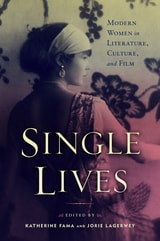
cover of Single Lives: Modern Women in Literature, Culture, and Film

Single Lives

Modern Women in Literature, Culture, and Film

Katherine Fama

Rutgers University Press, 2022
Single Lives is a collection of singleness studies essays from the interdisciplinary humanities that explores the last two hundred years of literature and popular media by, about, and for single women in the US and the UK. Independent women have always been a center around which social anxieties and excitement coalesced. Moving between the family home and domestic independence, between household and public labor, and between celibacy and a range of sexual relations, the single woman remains a literary and cultural focus, as she has been from the 19th to the 21st centuries. This collection offers readers the opportunity to uncover the social, political, economic, and cultural connections between the "singly blessed" women and "bachelor girls" of the 19th and early 20th century and "all the single ladies" of the 21st century. Essays read singleness across genre and field, offering new approaches to studying modern and contemporary single women in literature, film, and history. Authors engage scholarship from wide ranging fields of social history, women's studies, queer theory, and Black feminism. The collection reads familiar texts against the grain, rethinking archival resources, revisiting familiar figures, and exploring new sources: cookbooks, ephemera, personal documents, recovered film histories, and forms of domestic space and labor.This is a book for scholars of gender and sexuality, social history, feminist film and media scholars, and literary historians, and reflects the urgent contemporary interest in single women as a political, economic, and cultural force. 
 
[more]
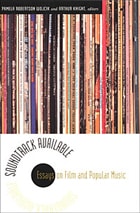
cover of Soundtrack Available: Essays on Film and Popular Music

Soundtrack Available

Essays on Film and Popular Music

Pamela Robertson Wojcik and Arthur Knight, eds.

Duke University Press, 2001

From the silent era to the present day, popular music has been a key component of the film experience. Yet there has been little serious writing on film soundtracks that feature popular music. Soundtrack Available fills this gap, as its contributors provide detailed analyses of individual films as well as historical overviews of genres, styles of music, and approaches to film scoring.
With a cross-cultural emphasis, the contributors focus on movies that use popular songs from a variety of genres, including country, bubble-gum pop, disco, classical, jazz, swing, French cabaret, and showtunes. The films discussed range from silents to musicals, from dramatic and avant-garde films to documentaries in India, France, England, Australia, and the United States. The essays examine both “nondiegetic” music in film—the score playing outside the story space, unheard by the characters, but no less a part of the scene from the perspective of the audience—and “diegetic” music—music incorporated into the shared reality of the story and the audience. They include analyses of music written and performed for films, as well as the now common practice of scoring a film with pre-existing songs. By exploring in detail how musical patterns and structures relate to filmic patterns of narration, character, editing, framing, and mise-en-scene, this volume demonstrates that pop music is a crucial element in the film experience. It also analyzes the life of the soundtrack apart from the film, tracing how popular music circulates and acquires new meanings when it becomes an official soundtrack.

Contributors.
Rick Altman, Priscilla Barlow, Barbara Ching, Kelley Conway, Corey Creekmur, Krin Gabbard, Jonathan Gill, Andrew Killick, Arthur Knight, Adam Knee, Jill Leeper, Neepa Majumdar, Allison McCracken, Murray Pomerance, Paul Ramaeker, Jeff Smith, Pamela Robertson Wojcik, Nabeel Zuberi
[more]
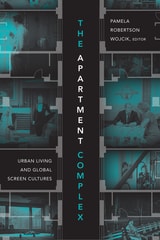
cover of The Apartment Complex: Urban Living and Global Screen Cultures

The Apartment Complex

Urban Living and Global Screen Cultures

Pamela Robertson Wojcik

Duke University Press, 2018

From the bachelor pad that Jack Lemmon's C. C. Baxter loans out to his superiors in Billy Wilder's The Apartment (1960) to the crumbling tenement in a dystopian Taipei in Tsai Ming-liang's The Hole (1998), the apartment in films and television series is often more than just a setting: it can motivate or shape the narrative in key ways. Such works belong to a critical genre identified by Pamela Robertson Wojcik as the apartment plot, which comprises specific thematic, visual, and narrative conventions that explore modern urbanism's various forms and possibilities. In The Apartment Complex a diverse group of international scholars discuss the apartment plot in a global context, examining films made both within and beyond the Hollywood studios. The contributors consider the apartment plot's intersections with film noir, horror, comedy, and the musical, addressing how different national or historical contexts modify the apartment plot and how the genre's framework allows us to rethink the work of auteurs and identify productive connections and tensions between otherwise disparate texts.

Contributors. Steven Cohan, Michael DeAngelis, Veronica Fitzpatrick, Annamarie Jagose, Paula J. Massood, Joe McElhaney, Merrill Schleier, Lee Wallace, Pamela Robertson Wojcik 
[more]
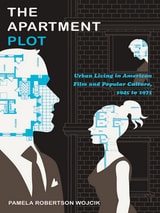
cover of The Apartment Plot: Urban Living in American Film and Popular Culture, 1945 to 1975

The Apartment Plot

Urban Living in American Film and Popular Culture, 1945 to 1975

Pamela Robertson Wojcik

Duke University Press, 2010

Rethinking the significance of films including Pillow Talk, Rear Window, and The Seven Year Itch, Pamela Robertson Wojcik examines the popularity of the “apartment plot,” her term for stories in which the apartment functions as a central narrative device. From the baby boom years into the 1970s, the apartment plot was not only key to films; it also surfaced in TV shows, Broadway plays, literature, and comic strips, from The Honeymooners and The Mary Tyler Moore Show to Subways are for Sleeping and Apartment 3-G. By identifying the apartment plot as a film genre, Wojcik reveals affinities between movies generally viewed as belonging to such distinct genres as film noir, romantic comedy, and melodrama. She analyzes the apartment plot as part of a mid-twentieth-century urban discourse, showing how it offers a vision of home centered on values of community, visibility, contact, mobility, impermanence, and porousness that contrasts with views of home as private, stable, and family-based. Wojcik suggests that the apartment plot presents a philosophy of urbanism related to the theories of Jane Jacobs and Henri Lefebvre. Urban apartments were important spaces for negotiating gender, sexuality, race, and class in mid-twentieth-century America.
[more]