Results by title
51 books match the query 'Woman' and 9 start with a
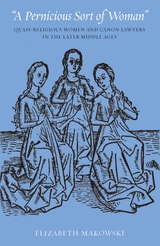
A Pernicious Sort of Woman
Quasi-Religious Women and Canon Lawyers in the Later Middle Ages (Studies in Medieval and Early Modern Canon Law, Volume 6)Elizabeth Makowski
Catholic University of America Press, 2005
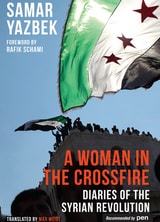
A Woman in the Crossfire
Diaries of the Syrian RevolutionSamar Yazbek
Haus Publishing, 2012
A Woman of the Times
Journalism, Feminism, and the Career of Charlotte CurtisMarilyn S. Greenwald
Ohio University Press, 1999
For twenty-five years, Charlotte Curtis was a society/women's reporter and editor and an op-ed editor at the New York Times. As the first woman section editor at the Times, Curtis was a pioneering journalist and one of the first nationwide to change the nature and content of the women's pages from fluffy wedding announcements and recipes to the more newsy, issue-oriented stories that characterize them today. In this riveting biography, Marilyn Greenwald describes how a woman reporter from Columbus, Ohio, broke into the ranks of the male-dominated upper echelon at the New York Times. It documents what she did to succeed and what she had to sacrifice.
Charlotte Curtis paved the way for the journalists who followed her. A Woman of the Times offers a chronicle of her hard-won journey as she invents her own brand of feminism during the 1960s and 1970s. In the telling of this remarkable woman’s life is the story, as well, of a critical era in the nation’s social history.
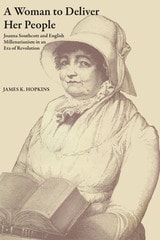
A Woman to Deliver Her People
Joanna Southcott and English Millenarianism in an Era of RevolutionBy James K. Hopkins
University of Texas Press, 1982
The Second Coming of Christ has been prophesied many times through the centuries but seldom by a figure so fascinating as Joanna Southcott (1750–1814), the domestic servant who at the age of forty-two declared that God had chosen her to announce His return. A Woman to Deliver Her People is the most comprehensive study of this remarkable woman and her movement yet written.
Dramatic social and political changes of the late eighteenth century—among them the revolutions in America and France—had a profound effect on the attitudes of English men and women at all levels of society. With events so far outside the range of ordinary experience, both the educated and the uneducated turned to the prophetic books of the Bible, seeking solace and explanation. A number of prophets and prophetesses appeared, claiming to have a special understanding of the biblical texts and offering startling new revelations which had been disclosed to them by God. The greatest and most influential of these was Joanna Southcott, who attracted tens of thousands of followers from the West Country, London, the Midlands, and the industrial North. Her "spiritual communications" filled some sixty-five books and pamphlets from 1801 until her death.
Most contemporary observers dismissed Southcott as a fanatic, and she was frequently the subject of caricature and ridicule. James Hopkins attempts to remedy this distortion by examining Southcott's life and the millenarian movement she led within the context of the social, political, and economic crises of the period. By tracing the psychological and popular roots of Southcott's piety, and casting her appeal against the backdrop of a revolutionary age, Hopkins not only vividly portrays the life of this fascinating woman but also offers a new perspective on the mentality of ordinary English men and women during the years of their transformation into a working class.
Am I Still A Woman
Hysterectomy And Gender IdentityJean Elson
Temple University Press, 2003

An Anthropology of Vocations
Man-and-Woman, The Image of GodMarc Ouellet
Catholic University of America Press, 2026

Annie Adams Fields
Woman of LettersRita Gollin
University of Massachusetts Press, 0
Arms and the Woman
Classical Tradition and Women Writers in the Venetian RenaissanceFrancesca D'Alessandro Behr
The Ohio State University Press, 2018
Arms and the Woman: Classical Tradition and Women Writers in the Venetian Renaissance by Francesca D’Alessandro Behr focuses on the classical reception in the works of female authors active in Venice during the Early Modern Age. Even in this relatively liberal city, women had restricted access to education and were subject to deep-seated cultural prejudices, but those who read and wrote were able, in part, to overcome those limitations.
In this study, Behr explores the work of Moderata Fonte and Lucrezia Marinella and demonstrates how they used knowledge of texts by Virgil, Ovid, and Aristotle to systematically reanalyze the biased patterns apparent both in the romance epic genre and contemporary society. Whereas these classical texts were normally used to bolster the belief in female inferiority and the status quo, Fonte and Marinella used them to envision societies structured according to new, egalitarian ethics. Reflecting on the humanist representation of virtue, Fonte and Marinella insisted on the importance of peace, mercy, and education for women. These authors took up the theme of the equality of genders and participated in the Renaissance querelle des femmes, promoting women’s capabilities and nature.
Asmahan's Secrets
Woman, War, and SongBy Sherifa Zuhur
University of Texas Press, 2001
The great Arab singer Asmahan was the toast of Cairo song and cinema in the late 1930s and early 1940s, as World War II approached. She remained a figure of glamour and intrigue throughout her life and lives on today in legend as one of the shaping forces in the development of Egyptian popular culture. In this biography, author Sherifa Zuhur does a thorough study of the music and film of Asmahan and her historical setting.
A Druze princess actually named Amal al-Atrash, Asmahan came from an important clan in the mountains of Syria but broke free from her traditional family background, left her husband, and became a public performer, a role frowned upon for women of the time.
This unique biography of the controversial Asmahan focuses on her public as well as her private life. She was a much sought-after guest in the homes of Egypt's rich and famous, but she was also rumored to be an agent for the Allied forces during World War II.
Through the story of Asmahan, the reader glimpses not only aspects of the cultural and political history of Egypt and Syria between the two world wars, but also the change in attitude in the Arab world toward women as public performers on stage. Life in wartime Cairo comes alive in this illustrated account of one of the great singers of the Arab world, a woman who played an important role in history.