Results by title
2 books match the query 'Women's bookstores'

Letterpress Revolution
The Politics of Anarchist Print CultureKathy E. Ferguson
Duke University Press, 2023
While the stock image of the anarchist as a masked bomber or brick thrower prevails in the public eye, a more representative figure should be a printer at a printing press. In Letterpress Revolution, Kathy E. Ferguson explores the importance of printers, whose materials galvanized anarchist movements across the United States and Great Britain from the late nineteenth century to the 1940s. Ferguson shows how printers—whether working at presses in homes, offices, or community centers—arranged text, ink, images, graphic markers, and blank space within the architecture of the page. Printers' extensive correspondence with fellow anarchists and the radical ideas they published created dynamic and entangled networks that brought the decentralized anarchist movements together. Printers and presses did more than report on the movement; they were constitutive of it, and their vitality in anarchist communities helps explain anarchism’s remarkable persistence in the face of continuous harassment, arrest, assault, deportation, and exile. By inquiring into the political, material, and aesthetic practices of anarchist print culture, Ferguson points to possible methods for cultivating contemporary political resistance.
[more]
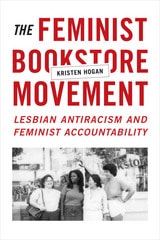
The Feminist Bookstore Movement
Lesbian Antiracism and Feminist AccountabilityKristen Hogan
Duke University Press, 2016
From the 1970s through the 1990s more than one hundred feminist bookstores built a transnational network that helped shape some of feminism's most complex conversations. KA Hogan traces the feminist bookstore movement's rise and eventual fall, restoring its radical work to public feminist memory. The bookwomen at the heart of this story—mostly lesbians and including women of color—measured their success not by profit, but by developing theories and practices of lesbian antiracism and feminist accountability. At bookstores like BookWoman in Austin, the Toronto Women’s Bookstore, and Old Wives’ Tales in San Francisco, and in the essential Feminist Bookstore News, bookwomen changed people’s lives and the world. In retelling their stories, Hogan not only shares the movement's tools with contemporary queer antiracist feminist activists and theorists, she gives us a vocabulary, strategy, and legacy for thinking through today's feminisms.
[more]