Results by title
5 books match the query 'Women's rights in literature'
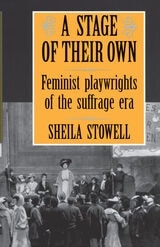
A Stage of Their Own
Feminist Playwrights of the Suffrage EraSheila Stowell
University of Michigan Press, 1994
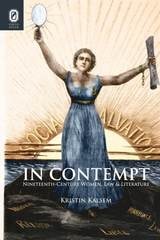
In Contempt
Nineteenth-Century Women, Law, and LiteratureKristin Kalsem
The Ohio State University Press, 2012
In Contempt: Nineteenth-Century Women, Law, and Literature, by Kristin Kalsem, explores the legal advocacy performed by nineteenth-century women writers in publications of nonfiction and fiction, as well as in real-life courtrooms and in the legal forum provided by the novel form.
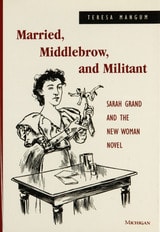
Married, Middlebrow, and Militant
Sarah Grand and the New Woman NovelTeresa Mangum
University of Michigan Press, 1998
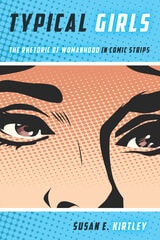
Typical Girls
The Rhetoric of Womanhood in Comic StripsSusan E. Kirtley
The Ohio State University Press, 2021
In the years following 1975, a group of female-created comic strips came to national attention in a traditionally male-dominated medium. Typical Girls: The Rhetoric of Womanhood in Comic Strips uncovers the understudied and developing history of these strips, defining and exploring the ramifications of this expression of women’s roles at a time of great change in history and in comic art. This impressive, engaging, and timely study illustrates how these comics express the complexities of women’s experiences, especially as such experiences were shaped by shifting and often competing notions of womanhood and feminism. Including the comics of Lynn Johnston (For Better or For Worse), Cathy Guisewite (Cathy), Nicole Hollander (Sylvia), Lynda Barry (Ernie Pook’s Comeek), Barbara Brandon-Croft (Where I’m Coming From), Alison Bechdel (Dykes to Watch Out For), and Jan Eliot (Stone Soup), Typical Girls is an important history of the representation of womanhood and women’s rights in popular comic strips.
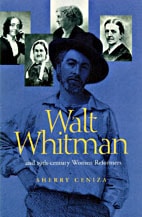
Walt Whitman and Nineteenth-Century Women Reformers
Sherry Ceniza
University of Alabama Press, 1999
WINNER OF THE ELIZABETH AGEE PRIZE IN AMERICAN LITERATURE
Examining Whitman’s poetic development through the documented influence of nineteenth‑century women reformers.
Walt Whitman and 19th-Century Women Reformers documents Whitman's friendships with women during the 1850s, the decade of Whitman's most creative period. The book reveals startling connections between the first three editions of Leaves of Grass and the texts generated by the women he knew during this period, many of whom were radical activists in the women's rights movement.
Sherry Ceniza argues that Whitman's editions of Leaves became progressively more radically 'feminist' as he followed the women's rights movement during the 1850s and that he was influenced by what he called the 'true woman of the new aggressive type . . . woman under the new dispensation.' Ceniza documents the progression of the National Woman's Rights movement through the lives and writings of three of its leaders- Abby Hills Price, Paulina Wright Davis, and Ernestine L. Rose. By juxtaposing the texts written by these women with Leaves, Ceniza shows that Whitman used many of the same arguments and rhetorical gestures as his female activist friends.
The book also discusses the influence of women engaged in women's rights outside the National Woman's Rights organization. And Ceniza's opening chapter is devoted to a fresh interpretation of the life and thought of another strong-minded woman who influenced the poet's writing-Louisa Van Velsor Whitman, Walt Whitman's mother.