Results by title
21 books match the query 'Women household employees'
Dirty Work
Domestic Service in Progressive-Era Women’s FictionAnn Mattis
University of Michigan Press, 2019
Domestic Disturbances
Re-Imagining Narratives of Gender, Labor, and ImmigrationBy Irene Mata
University of Texas Press, 2014
The issue of immigration is one of the most hotly debated topics in the national arena, with everyone from right-wing pundits like Sarah Palin to alternative rockers like Zack de la Rocha offering their opinion. The traditional immigrant narrative that gained popularity in the nineteenth and twentieth centuries continues to be used today in describing the process of the “Americanization” of immigrants. Yet rather than acting as an accurate representation of immigrant experiences, this common narrative of the “American Dream” attempts to ideologically contain those experiences within a story line that promotes the idea of achieving success through hard work and perseverance.
In Domestic Disturbances, Irene Mata dispels the myth of the “shining city on the hill” and reveals the central truth of hidden exploitation that underlies the great majority of Chicana/Latina immigrant stories. Influenced by the works of Latina cultural producers and the growing interdisciplinary field of scholarship on gender, immigration, and labor, Domestic Disturbances suggests a new framework for looking at these immigrant and migrant stories, not as a continuation of a literary tradition, but instead as a specific Latina genealogy of immigrant narratives that more closely engage with the contemporary conditions of immigration. Through examination of multiple genres including film, theatre, and art, as well as current civil rights movements such as the mobilization around the DREAM Act, Mata illustrates the prevalence of the immigrant narrative in popular culture and the oppositional possibilities of alternative stories.
Domestic Economies
Women, Work, and the American Dream in Los AngelesSusanna Rosenbaum
Duke University Press, 2017
Families Apart
Migrant Mothers and the Conflicts of Labor and LoveGeraldine Pratt
University of Minnesota Press, 2012
In a developing nation like the Philippines, many mothers provide for their families by traveling to a foreign country to care for someone else’s. Families Apart focuses on Filipino overseas workers in Canada to reveal what such arrangements mean for families on both sides of the global divide.
The outcome of Geraldine Pratt’s collaboration with the Philippine Women Centre of British Columbia, this study documents the difficulties of family separation and the problems that children have when they reunite with their mothers in Vancouver. Aimed at those who have lived this experience, those who directly benefit from it, and those who simply stand by and watch, Families Apart shows how Filipino migrant domestic workers—often mothers themselves—are caught between competing neoliberal policies of sending and receiving countries and how, rather than paying rich returns, their ambitions as migrants often result in social and economic exclusion for themselves and for their children. This argument takes shape as an open-ended series of encounters, moving between a singular academic voice and the “we” of various research collaborations, between Vancouver and the Philippines, and between genres of “evidence-based” social scientific research, personal testimony, theatrical performance, and nonfictional narrative writing.
Through these experiments with different modes of storytelling, Pratt seeks to transform frameworks of perception, to create and collect sympathetic witnesses—in short, to promote a wide-ranging public discussion and debate about a massive worldwide shift in family (and nonfamily) relations of intimacy and care.
Follow the Maid
Domestic Worker Migration from IndonesiaOlivia Killias
National University of Singapore Press, 2017
This fascinating study unveils the workings of the Indonesian migration regime, one that sends hundreds of thousands of women abroad as domestic workers each year. Drawing on extended ethnographic research since 2007, the book literally follows migrant women from one particular village in Central Java and tracks the moral, social, economic and legal processes by which they are turned into ‘maids’. From recruitment by local brokers to the ‘training’ received in secluded camps in Jakarta, employment in gated middle-class homes in Malaysia and back home again, Olivia Killias highlights the implications of the migration process on gendered practices of labour mobility (and immobilisation). She also reveals the disciplinary power that states, recruitment agencies and employers exercise over migrant domestic workers as well as highlighting frictions within the system. Killias’s analysis demonstrates that ironically, the “legalisation” of the migration industry, under the joint pressures of the Indonesian migration bureaucracy and international humanitarian agencies, does not automatically improve the situation of the women who embark on the migration adventure. Rather, Killias unmasks the gendered moralizing discourses on “illegal” migration and “trafficking” as legitimizing indentured labour and constraining migrant mobility. By exploring the workings of the Indonesian state’s overseas legal labour migration regime for migrants, she brings the reader directly into the nerve-racking lives of migrant village women, and reveals the richness and ambiguity of their experiences, going beyond stereotypical representations of them as “victims of trafficking”.
Global Cinderellas
Migrant Domestics and Newly Rich Employers in TaiwanPei-Chia Lan
Duke University Press, 2006
Lan demonstrates how economic disparities, immigration policies, race, ethnicity, and gender intersect in the relationship between the migrant workers and their Taiwanese employers. The employers are eager to flex their recently acquired financial muscle; many are first-generation career women as well as first-generation employers. The domestics are recruited from abroad as contract and “guest” workers; restrictive immigration policies prohibit them from seeking permanent residence or transferring from one employer to another. They care for Taiwanese families’ children, often having left their own behind. Throughout Global Cinderellas, Lan pays particular attention to how the women she studied identify themselves in relation to “others”—whether they be of different classes, nationalities, ethnicities, or education levels. In so doing, she offers a framework for thinking about how migrant workers and their employers understand themselves in the midst of dynamic transnational labor flows.
House and Street
The Domestic World of Servants and Masters in Nineteenth-Century Rio de JaneiroBy Sandra Lauderdale Graham
University of Texas Press, 1992
During the later half of the nineteenth century, a majority of Brazilian women worked, most as domestic servants, either slave or free. House and Street re-creates the working and personal lives of these women, drawing on a wealth of documentation from archival, court, and church records.
Lauderdale Graham traces the intricate and ambivalent relations that existed between masters and servants. She shows how for servants the house could be a place of protection—as well as oppression—while the street could be dangerous—but also more autonomous. She integrates her discoveries with larger events taking place in Rio de Janeiro during the period, including the epidemics of the 1850s, the abolition of slavery, the demolition of slums, and major improvements in sanitation during the first decade of the 1900s.
Human Rights Counterpublics in Perú
Sylvanna M. Falcón
University of Illinois Press, 2024
Engaging and intimate, Human Rights Counterpublics in Perú illuminates the power of human rights and memory work.
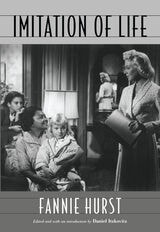
Imitation of Life
Fannie Hurst
Duke University Press, 2004
The author of numerous bestselling novels, a masterful short story writer, and an outspoken social activist, Fannie Hurst was a major celebrity in the first half of the twentieth century. Daniel Itzkovitz’s introduction situates Imitation of Life in its literary, biographical, and cultural contexts, addressing such topics as the debates over the novel and films, the role of Hurst’s one-time secretary and great friend Zora Neale Hurston in the novel’s development, and the response to the novel by Hurst’s friend Langston Hughes, whose one-act satire, “Limitations of Life” (which reverses the races of Bea and Delilah), played to a raucous Harlem crowd in the late 1930s. This edition brings a classic of popular American literature back into print.
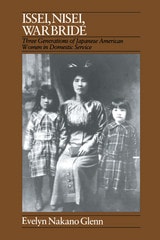
Issei, Nisei, War Bride
Three Generations of Japanese American Women in Domestic ServiceEvelyn Nakano Glenn
Temple University Press, 1988
Maid as Muse
How Servants Changed Emily Dickinson’s Life and LanguageAífe Murray
University of New Hampshire Press, 2010
Muchachas No More
Household Workers in Latin America and the CaribbeanElsa Chaney
Temple University Press, 1991
New Masters, New Servants
Migration, Development, and Women Workers in ChinaYan Hairong
Duke University Press, 2008
Yan analyzes how the migrant women workers are subjected to, make sense of, and reflect on a range of state and neoliberal discourses about development, modernity, consumption, self-worth, quality, and individual and collective longing and struggle. She offers keen insight into the workers’ desire and efforts to achieve suzhi (quality) through self-improvement, the way workers are treated by their employers, and representations of migrant domestic workers on television and the Internet and in newspapers and magazines. In so doing, Yan demonstrates that contestations over the meanings of migrant workers raise broad questions about the nature of wage labor, market economy, sociality, and postsocialism in contemporary China.
Peripheral Labour Mobilities
Tanja Višic
Campus Verlag, 2022
The precarious situation in the successor states of Yugoslavia created a specific dynamic in the field of labor mobility. Still, little research has been done in this region on how women, who are older care workers from Serbia or Bosnia commute—often via illegal border crossings—to German households to look after the elderly. In Peripheral Labor Mobilities, Tanja Višic explores this gender-specific migration pattern in the first expansive ethnography of contemporary cross-border elder care in this region. She takes up questions about how the mobility and work practices of women are integrated into the socio-economic networks of the informal care work sector while also looking at worker confrontations with labor laws and border regimes. Illustrative case studies clearly detail culturally specific patterns of perception of care work, family relationships, and the mobility demanded by these labor arrangements.
Putting Their Hands on Race
Irish Immigrant and Southern Black Domestic WorkersDanielle T. Phillips-Cunningham
Rutgers University Press, 2020
Putting Their Hands on Race offers an important labor history of 19th and early 20th century Irish immigrant and US southern Black migrant domestic workers. Drawing on a range of archival sources, this intersectional study explores how these women were significant to the racial labor and citizenship politics of their time. Their migrations to northeastern cities challenged racial hierarchies and formations. Southern Black migrant women resisted the gendered racism of domestic service, and Irish immigrant women strove to expand whiteness to position themselves as deserving of labor rights. On the racially fractious terrain of labor, Black women and Irish immigrant women, including Victoria Earle Matthews, the “Irish Rambler”, Leonora Barry, and Anna Julia Cooper, gathered data, wrote letters and speeches, marched, protested, engaged in private acts of resistance in the workplace, and created women’s institutions and organizations to assert domestic workers’ right to living wages and protection.
Queering the Global Filipina Body
Contested Nationalisms in the Filipina/o DiasporaGina K. Velasco
University of Illinois Press, 2020
Using a queer diasporic analysis, Velasco examines the politics of nationalism within Filipina/o American cultural production to consider an essential question: can a queer and feminist imagining of the diaspora reconcile with gendered tropes of the Philippine nation? Integrating a transnational feminist analysis of globalized gendered labor with a consideration of queer cultural politics, Velasco envisions forms of feminist and queer diasporic belonging, while simultaneously foregrounding nationalist movements as vital instruments of struggle.
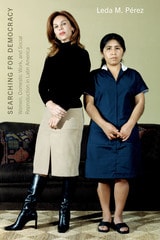
Searching for Democracy
Women, Domestic Work, and Social Reproduction in Latin AmericaLeda M. Pérez
Temple University Press, 2026
How can we achieve lasting social and political equality for women? Leda Pérez tackles this thorny question in Searching for Democracy by interrogating egalitarianism in Latin America, where nearly 20% of women work in domestic service. She examines how women’s participation in society, labor, and politics continues to be conditioned by their relationship to domestic and care work.
Pérez argues that women’s relationship to these spheres of life is indicative of a nation’s development and democracy. She provides a comparative focus on the socio-cultural valuation of this labor and the experiences of women in Bolivia, Chile, Peru, and Uruguay, among other countries. Pérez asserts that it is only by changing sociocultural views on this “women’s work” that nations can create political change, foster equitable legislation, and ensure implementation of effective policies that benefit women.
Searching for Democracy shows why real and lasting equality cannot be achieved without fully enfranchising women in the lowest tiers of employment and closing the equality gap among women. Pérez’s models for gender equality are relevant for women around the world.
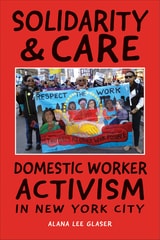
Solidarity & Care
Domestic Worker Activism in New York CityAlana Lee Glaser
Temple University Press, 2023
Solidarity & Care examines the political mobilization of diverse care workers who joined together and supported one another through education, protests, lobbying, and storytelling. Domestic work activists used narrative and emotional appeals to build a coalition of religious communities, employers of domestic workers, labor union members, and politicians to first pass and then to enforce the new law.
Through oral history interviews, as well as ethnographic observation during DWU meetings and protest actions, Glaser chronicles how these women fought (and continue to fight) to improve working conditions. She also illustrates how they endure racism, punitive immigration laws, on-the-job indignities, and unemployment that can result in eviction and food insecurity.
The lessons from Solidarity & Care along with the DWU’s precedent-setting legislative success have applications to workers across industries.
All royalties will go directly to the Domestic Workers United

The Fifth Sun
Mary Helen Lagasse
Northwestern University Press, 2004
Winner of the 3rd Annual Miguel Mármol Prize from Curbstone Press, Mary Helen Lagasse's The Fifth Sun is an inspiring story of an immigrant who struggles valiantly for a better life for herself and her family. A young Mexican woman, Mercedes, leaves her village to work as a housemaid in New Orleans. This fast-paced novel takes us through her adventures in New Orleans, her marriage, her struggle to raise her children, her deportation, and her attempt to re-cross the river and be reunited with her children.
What Diantha Did
Charlotte Perkins Gilman
Duke University Press, 2005
In her introduction to the novel, Charlotte J. Rich highlights Gilman’s engagement with such hotly debated Progressive Era issues as the “servant question,” the rise of domestic science, and middle-class efforts to protect and aid the working girl. She illuminates the novel’s connections to Gilman’s other feminist works, including “The Yellow Wall-Paper” and Herland; to her personal life; and to her commitment to women’s social and economic freedom. Rich contends that the novel’s engagement with class and race makes it particularly significant to the newly complex understanding of Gilman that has emerged in recent scholarship. What Diantha Did provides essential insight into Charlotte Perkins Gilman’s important legacy of social thought.
Workers Like All the Rest of Them
Domestic Service and the Rights of Labor in Twentieth-Century ChileElizabeth Quay Hutchison
Duke University Press, 2022