Results by title
2 books match the query 'Women in advertising'
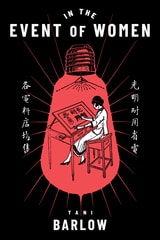
In the Event of Women
Tani Barlow
Duke University Press, 2021
In the Event of Women outlines the stakes of what Tani Barlow calls “the event of women.” Focusing on the era of the late nineteenth century through the mid-twentieth century's Cultural Revolution, Barlow shows that an event is a politically inspired action to install a newly discovered truth, in this case the mammal origins of human social evolution. Highbrow and lowbrow social theory circulating in Chinese urban print media placed humanity's origin story in relation to commercial capital's modern advertising industry and the conclusion that women's liberation involved selling, buying, and advertising industrial commodities. The political struggle over how the truth of women in China would be performed and understood, Barlow shows, means in part that an event of women was likely global because its truth is vested in biology and physiology. In so doing, she reveals the ways in which historical universals are effected in places where truth claims are not usually sought. This book reconsiders Alain Badiou's concept of the event; particularly the question of whose political moment marks newly discovered truths.
[more]
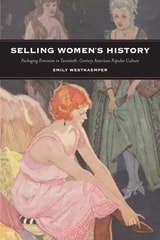
Selling Women's History
Packaging Feminism in Twentieth-Century American Popular CultureWestkaemper, Emily
Rutgers University Press, 2017
Only in recent decades has the American academic profession taken women’s history seriously. But the very concept of women’s history has a much longer past, one that’s intimately entwined with the development of American advertising and consumer culture.
Selling Women’s History reveals how, from the 1900s to the 1970s, popular culture helped teach Americans about the accomplishments of their foremothers, promoting an awareness of women’s wide-ranging capabilities. On one hand, Emily Westkaemper examines how this was a marketing ploy, as Madison Avenue co-opted women’s history to sell everything from Betsy Ross Red lipstick to Virginia Slims cigarettes. But she also shows how pioneering adwomen and female historians used consumer culture to publicize histories that were ignored elsewhere. Their feminist work challenged sexist assumptions about women’s subordinate roles.
Assessing a dazzling array of media, including soap operas, advertisements, films, magazines, calendars, and greeting cards, Selling Women’s History offers a new perspective on how early- and mid-twentieth-century women saw themselves. Rather than presuming a drought of female agency between the first and second waves of American feminism, it reveals the subtle messages about women’s empowerment that flooded the marketplace.
[more]