Results by title

7 books match the query 'Women in community organization'

cover of A Jumble of Needs: Women’s Activism and Neoliberalism in the Colonias of the Southwest

A Jumble of Needs

Women’s Activism and Neoliberalism in the Colonias of the Southwest

Rebecca Dolhinow

University of Minnesota Press, 2010

Many immigrant communities along the U.S. border with Mexico are colonias, border settlements lacking infrastructure or safe housing. A Jumble of Needs examines the leadership of Mexican women immigrants in three colonias in New Mexico, documenting the role of NGOs in shaping women’s activism in these communities. Ethnographer Rebecca Dolhinow, who worked in the colonias, uncovers why such attempts to exercise political agency are so rarely successful.
 
Central to the relationship between NGOs and women activists in colonias, Dolhinow argues, is the looming presence of the neoliberal political project. In particular, the discourses of caretaking that NGOs use to recruit women into leadership positions simultaneously naturalize and depoliticize the activist work that these women do in their communities. Dolhinow discovers the connections between colonias as isolated communities and colonia leaders as political subjects who unintentionally reinforce neoliberal policy. In the long run, she finds, any politicization that might take place is limited to the women leaders and seldom involves the community as a whole.
 
Surprisingly, Dolhinow reveals, many NGOs promote neoliberal ideals, resulting in continued disenfranchisement, despite the women’s activism to better their lives, families, and communities.
[more]
cover of Chicago Latina Trailblazers: Testimonios of Political Activism

Chicago Latina Trailblazers

Testimonios of Political Activism

Edited by Rita D. Hernández, Leticia Villarreal Sosa, Elena R. Gutiérrez

University of Illinois Press, 2024

Mexican American and Puerto Rican women have long taken up the challenge to improve the lives of Chicagoans in the city’s Latino/a/x communities. Rita D. Hernández, Leticia Villarreal Sosa, and Elena R. Gutiérrez present testimonies by Latina leaders who blazed new trails and shaped Latina Chicago history from the 1960s through today.

Taking a do-it-all attitude, these women advanced agendas, built institutions, forged alliances, and created essential resources that Latino/a/x communities lacked. Time and again, they found themselves the first Latina to hold their post or part of the first Latino/a/x institution of its kind. Just as often, early grassroots efforts to address issues affecting themselves, their families, and their neighborhoods grew into larger endeavors. Their experiences ranged from public schools to healthcare to politics to broadcast media, and each woman’s story shows how her work changed countless lives and still reverberates across the entire city.

An eyewitness view of an unknown history, Chicago Latina Trailblazers reveals the vision and passion that fueled a group of women in the vanguard of reform.

Contributors: Ana Castillo, Maria B. Cerda, Carmen Chico, Aracelis Flecha Figueroa, Aida Luz Maisonet Giachello, Mary Gonzales, Ada Nivia López, Emma Lozano, Virginia Martinez, Carmen Mendoza, Elena Mulcahy, Guadalupe Reyes, Luz Maria B. Solis, and Carmen Velasquez
[more]
cover of Composing Feminist Interventions: Activism, Engagement, Praxis

Composing Feminist Interventions

Activism, Engagement, Praxis

Kristine L. Blair

University Press of Colorado, 2018
This edited collection offers self-reflexive, critical accounts of how feminist writing studies scholars variously situated within rhetoric, composition, and literacy studies plan, implement, examine, and represent community-based inquiry and pedagogy. Readers will gain insight into the hows and whys involved with this important disciplinary work. Sharing a commitment to social change, the twenty-one chapter discussions and five course designs complicate and continue to evolve possibilities for how we conceptualize writing research and teaching as deeply collaborative, inclusive, and reciprocal practices.
[more]
cover of Feminism and Community

Feminism and Community

edited by Penny A. Weiss and Marilyn Friedman

Temple University Press, 1995
"Construing 'community' extremely broadly, from personal friendship to global dreams, this imaginative collection reveals the diversity of women's experiences in both traditional and feminist communities." --Alison M. Jaggar, Professor of Philosophy and Women's Studies, University of Colorado at Boulder This rich collection of essays explores a range of feminist perspectives on the importance of community to women's social, cultural, and political relationships. From the personal to the ethnographic to the theoretical, these essays discuss such topics as the viability of lesbian separatism, women and the Holocaust, interracial solidarity among women, the flaws in nonfeminist communitarianism, and the revolutionary prospects of feminist communities.
[more]
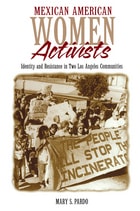
cover of Mexican American Women Activists

Mexican American Women Activists

Mary Pardo

Temple University Press, 1998

When we  see children playing in a supervised playground or hear about a school being renovated, we seldom wonder about who mobilized the community resources to rebuild the school or staff the park. Mexican American Women Activists tells the stories of Mexican American women from two Los Angeles neighborhoods and how they transformed the everyday problems they confronted into political concerns. By placing these women's experiences at the center of her discussion of grassroots political activism, Mary Pardo illuminates the gender, race, and class character of community networking. She shows how citizens help to shape their local environment by creating resources for churches, schools, and community services and generates new questions and answers about collective action and the transformation of social networks into political networks.

By focusing on women in two contiguous but very different communities -- the working-class, inner-city neighborhood of Boyle Heights in Eastside Los Angeles and the racially mixed middle-class suburb of Monterey Park -- Pardo is able to bring class as ell as gender and ethnic concerns to bear on her analysis in ways that shed light on the complexity of mobilizing for urban change.

Unlike many studies, the stories told here focus on women's strengths rather than on their problems. We follow the process by which these women empowered themselves by using their own definitions of social justice and their own convictions about the importance of traditional roles. Rather than becoming political participants in spite of their family responsibilities, women in both neighborhoods seem to have been more powerful because they had responsibilities, social networks, and daily routines separate from the men in their communities.

Pardo asserts that the decline of real wages and the growing income gap means that unforunately most women will no longer be able to focus their energies on unpaid community work. She reflects on the consequences of this change for women's political involvement, as well as on the politics of writing about women and politics.
[more]
cover of Strength in Unity: Christian Base Communities and the Urban Popular Movement in Guadalajara, 1965–1994

Strength in Unity

Christian Base Communities and the Urban Popular Movement in Guadalajara, 1965–1994

Brad H. Wright

University of Alabama Press, 2026

Examines how poor and working-class communities in Guadalajara organized through faith, education, and culture to claim dignity, justice, and the right to the city.

Strength in Unity: Christian Base Communities and the Urban Popular Movement in Guadalajara, 1965–1994 presents the grassroots history of Guadalajara’s urban popular movement, centering the voices and struggles of poor and working-class communities, especially women, who organized for dignity, justice, and the right to the city. Brad H. Wright brings to light the transformative role of Christian base communities and Freirean popular education as incubators of political consciousness and collective action in the face of authoritarian repression and neoliberal coaptation.

Drawing from oral histories, personal archives, and the records of the Sagrado Corazón nuns, Wright reconstructs a powerful counternarrative to dominant portrayals of marginalized populations as “apathetic” and “uneducated.” Strength in Unity reveals a vibrant culture of resistance where women led campaigns for basic services, built schools, and demanded access to transportation, using tools such as community newspapers, street theater, and music to mobilize and sustain solidarity.

This deeply researched and compellingly told history challenges conventional accounts of urban development and social movements in Latin America. Strength in Unity is essential reading for scholars, students, and activists interested in grassroots organizing, liberation theology, and the enduring power of community-led change.
 

[more]
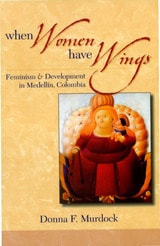
cover of When Women Have Wings: Feminism and Development in Medellin, Colombia

When Women Have Wings

Feminism and Development in Medellin, Colombia

Donna F. Murdock

University of Michigan Press, 2008

In When Women Have Wings, Donna F. Murdock provides an insightful and detailed look at the tensions, contradictions, and positive moments apparent in a women's development project in Medellín, Colombia. Based on sixteen months of ethnographic field research in a working-class women's community center run by a local feminist NGO, this in-depth account illuminates both working- and middle-class women's perspectives on the professionalization of feminist NGOs and provides an unusual ethnographic lens on the process as it unfolds. Using detailed descriptions of the encounters between working- and middle-class women to highlight how the women's center attempts to negotiate the pressures of feminism and professionalization, Murdock depicts the frailty and complexity of cross-class organizing and the ways that this process may be threatened by professionalized NGO styles. Poignant accounts of women's attempts to navigate these challenges amid poverty and civil war show how changing political and economic demands may ultimately compromise feminist NGOs' long-held commitments to sustainable development practice focused on grassroots empowerment. With its clear and vivid style, When Women Have Wings fills a gap for scholars of feminist development, professionalized feminist NGOs, grassroots democracy, and Latin American women's movements and will contribute much-needed insight into the everyday workings of the problems of professionalization and democratic development. "By offering a fine-grained, engaging and provocative account of the workings of feminist nongovernmental organizations and their working-class women constituencies, When Women Have Wings fills a gaping lacuna in the now expansive literature on women's movements in the Global South." -- Sonia E. Alvarez, Department of Political Sciences, University of Massachusetts-Amherst "Donna Murdock's in-depth ethnographic account will be an important contribution to the literature on women's movements, Latin American feminisms, and gender identity politics in the context of neoliberalism and political violence." -- Amy Lind, Department of Women's Studies, University of Cincinnati "This remarkable book, full of ethnographic detail and lucid analysis, tells a compelling story of feminist struggles with neoliberalism in Latin America. Murdock takes us into the lives and struggles of working-class women and their feminist allies, illustrating how class divides are painfully exacerbated by shrinking state budgets, rising requirements for citizenship, and the professionalization of social movements. She nonetheless leaves us with the 'fragile wings of hope,' grounded in women's ongoing efforts to confront violence and make their voices heard in the face of difficult odds. This is important reading for feminists, scholars of development, and those concerned with global justice." -- Millie Thayer, Department of Sociology, University of Massachusetts-Amherst
[more]