Results by title
14 books match the query 'Women in the Bible'
After the Corinthian Women Prophets
Reimagining Rhetoric and PowerJoseph A. Marchal
SBL Press, 2021
Rhetoric, Power, and Possibilities
Thirty years after the publication of Antoinette Clark Wire’s groundbreaking The Corinthian Women Prophets, an interdisciplinary, international, and intergenerational group of scholars reflects upon Wire’s impact on New Testament scholarship. Essays pursue further historical and theoretical possibilities, often in search of marginalized people, including the women of Corinth, using feminist, rhetorical, materialist, decolonizing, queer, and posthumanist approaches to interpret Paul’s letters and the history of ancient Mediterranean assemblies. Contributions from Cavan Concannon, Arminta Fox, Joseph A. Marchal, Shelly Matthews, Anna Miller, Jorunn Økland, and Antoinette Clark Wire reconsider how both the methods and results of Wire’s work reveal the possibilities of other people beside Paul who are worth our attention and effort. The essays in this collection introduce students and scholars to the possibilities of interdisciplinary and intersectional approaches for engaging the broader Pauline corpus.
Ancient Christian Apocrypha
Marginalized Texts in Early ChristianityOuti Lehtipuu
SBL Press, 2022
Dirshuni
Contemporary Women’s MidrashEdited by Tamar Biala
Brandeis University Press, 2022
Dirshuni: Contemporary Women’s Midrash, is the first-ever English edition of a historic collection of midrashim composed by Israeli women, which has been long-anticipated by multiple American audiences, including synagogues, rabbinical seminaries, adult learning programs, Jewish educators, and scholars of gender and religion. Using the classical forms developed by the ancient rabbis, the contributors express their religious and moral thought and experience through innovative interpretations of scripture. The women writers, from all denominations and beyond, of all political stripes and ethnic backgrounds, contribute their Torah to fill the missing half of the sacred Jewish bookshelf. This book reflects dramatic changes in the agency of women in the world of religious writings. The volume features a comprehensive introduction to Midrash for the uninitiated reader by the distinguished scholar Tamar Kadari and extensive annotation and commentary by Tamar Biala.
Early Jewish Writings
Eileen Schuller
SBL Press, 2017
New from the Bible and Women Series
This collection of essays deals with aspects of women and gender relations in early Judaism (during the Persian, Greek, and Roman empires). Some essays focus on specific writings: the Greek (Septuagint) version of Esther, Judith, Joseph and Aseneth, and the Letter of Jeremiah. Others explore how certain biblical texts are reinterpreted: Eve in the Life of Adam and Eve, the mixing of the sons of God with the daughters of men from Genesis 6:1–4, the Egyptian princess at the birth of Moses, and how Josephus retells biblical stories. The third group of essays explore specific social contexts: Philo's views of women in the Roman empire, the Sectarian Dead Sea Scrolls, and women philosophers of the Therapeutae in Egyptian Alexandria.
Features
- An International team of contributors from Europe and North America
- A breadth of materials covered, including many lesser-known early Jewish writings
- Focus is on a gendered perspective and gender specific questions
Gospels
Narrative and HistoryMercedes Navarro Puerto
SBL Press, 2015
An international collection of ecumenical, gender-sensitive interpretations
In this volume of the Bible and Women Series, contributors examine how biblical studies intersects with feminist interpretive methods with regard to the Gospels. Authors examine the lives of women in Roman Palestine, named and unnamed women in the Gospels, and the role of gender in the reception of the Hebrew scriptures in the New Testament.
Features:
- Essays by scholars from scholars from around the world
- An introduction and twenty essays focused on women and gender relations
- Coverage of power relations and ideologies within the texts and in current interpretations
Midrashic Women
Formations of the Feminine in Rabbinic LiteratureJudith R. Baskin
Brandeis University Press, 2002
Prophecy and Gender in the Hebrew Bible
L. Juliana Claassens
SBL Press, 2021
Multifaceted insights into female life in prophetic contexts
Both prophets and prophetesses shared God’s divine will with the people of Israel, yet the voices of these women were often forgotten due to later prohibitions against women teaching in public. This latest volume of the Bible and Women series focuses on the intersection of gender and prophecy in the Former Prophets (Joshua to 2 Kings) as well as in the Latter Prophets of the Hebrew Bible. Essays examine how women appear in the iconography of the ancient world, the historical background of the phenomenon of prophecy, political and religious resistance by women in the biblical text, and gender symbolism and constructions in prophetic material as well as the metaphorical discourse of God. Contributors Michaela Bauks, Athalya Brenner-Idan, Ora Brison, L. Juliana Claassens, Marta García Fernández, Irmtraud Fischer, Maria Häusl, Rainer Kessler, Nancy C. Lee, Hanne Løland Levinson, Christl M. Maier, Ilse Müllner, Martti Nissinen, Ombretta Pettigiani, Ruth Poser, Benedetta Rossi, Silvia Schroer, and Omer Sergi draw insight into the texts from a range of innovative gender-oriented approaches.
Reading Gender in Judges
An Intertextual ApproachShelley L. Birdsong
SBL Press, 2023
Much of the content of Judges can be understood only when read together with other parts of the Hebrew Bible. Narratives in Judges comment, criticize, and reinterpret other texts from across what became the canon, often by troubling gender, disrupting stereotypical binaries, and creating a kind of gender chaos. This volume brings together gender criticism and intertextuality, methods that logically align with intersectional lenses, to draw attention to how race, ethnicity, class, religion, ability, sex, and sexuality all play a role in how one is gendered in the book of Judges. Contributors Elizabeth H. P. Backfish, Shelley L. Birdsong, Zev Farber, Serge Frolov, Susanne Gillmayr-Bucher, Susan E. Haddox, Hyun Chul Paul Kim, Richard D. Nelson, Pamela J. W. Nourse, Tammi J. Schneider, Joy A. Schroeder, Soo Kim Sweeney, Rannfrid I. Lasine Thelle, J. Cornelis de Vos, Jennifer J. Williams, and Gregory T. K. Wong provide substantial new and significant contributions to the study of gender, the book of Judges, and biblical hermeneutics in general. This volume illustrates why biblical scholars and students need to take the intersectional identities of characters and their intertextual environments seriously.
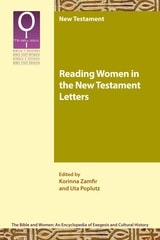
Reading Women in the New Testament Letters
Korinna Zamfir
SBL Press, 2024
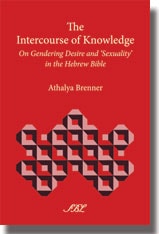
The Intercourse of Knowledge
On Gendering Desire and 'Sexuality' in the Hebrew BibleAthalya Brenner
SBL Press, 2016
Now in paperback!
This groundbreaking book, which builds on the author's earlier work in On Gendering Texts, studies how, by what means, and to what extent human love, desire and sex, and possibly even "sexuality"; are gendered in the Hebrew Bible. The investigation looks into the construction of male and female bodies in language and ideologies; the praxis and ideology of sex, procreation, and contraception; deviation from socio-sexual boundaries (e.g. incest, rape, adultery, homosexuality, prostitution); eroticism and "pornoprophetics."
Features:
- Paperback format of an essential Brill monograph
- A classification and gendering of the linguistic and semantic data
- Discussion of wider sociological and theological implications
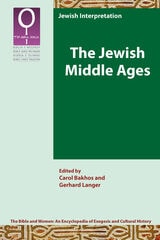
The Jewish Middle Ages
Carol Bakhos
SBL Press, 2023
For many, the Middle Ages in general evokes a sense of the sinister and brings to mind a world of fear, superstition, and religious fanaticism. For Jews it was a period marked by persecutions, pogroms, and expulsions. Yet at the same time, the Middle Ages was also a time of lively cultural exchange and heightened creativity for Jews. In The Jewish Middle Ages, contributors explore the ways in which the stories of biblical women, including, Eve, Sarah, Hagar, Rebekah, Zipporah, Ruth, Esther, and Judith, make their way into the rich tapestry of medieval Jewish literature, mystical texts, and art, particularly in works emanating from Ashkenazic circles. Contributors include Carol Bakhos, Judith R. Baskin, Elisheva Baumgarten, Dagmar Börner-Klein, Constanza Cordoni, Rachel Elior, Meret Gutmann-Grün, Robert A. Harris, Yuval Katz-Wilfing, Sheila Tuller Keiter, Katrin Kogman-Appel, Gerhard Langer, Aurora Salvatierra Ossorio, and Felicia Waldman. These essays give us a glimpse into the role women played and the authority they assumed in medieval Jewish culture beyond the rabbinic centers of Palestine and Babylonia.
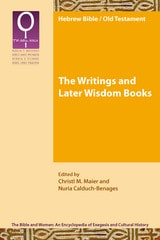
The Writings and Later Wisdom Books
Christl M. Maier
SBL Press, 2014
An international collection of ecumenical, gender-sensitive interpretations
The latest volume in the Bible and Women series seeks to provide an ecumenical, gender-sensitive interpretation and reception history of the Writings and later wisdom traditions including Ben Sira and the Wisdom of Solomon. Articles trace the living conditions of women, examine the presentation of female figures in the Israelite wisdom tradition, discuss women and gender relations in single books, and explore narratives about great female protagonists, such as Ruth, Esther, and Susanna, who prove their wit and strength in situations of conflict.
Features:
- Essays by scholars from five European countries, Israel, and the United States
- An introduction and fourteen essays focused on women and gender relations
- Coverage of power relations and ideologies within the texts and in current interpretations.
Torah
Irmtraud Fischer
SBL Press, 2011
This volume is the first in The Bible and Women series. It presents a history of the reception of the Bible as embedded in Western cultural history with a special focus on the history of women and issues of gender. It introduces the series, explaining the choice of the Hebrew canon in connection with the Christian tradition and preparing the way for a changed view of women throughout the series. The contributors explore the gendered significance of the canonical writings as well as the process of their canonization and the social-historical background of ancient Near Eastern women’s lives, both of which play key roles in the series. Turning to the Pentateuch, essays address a variety of texts and issues still relevant today, such as creation and male-female identity in the image of God, women’s roles in the genealogies of the Pentateuch and in salvation history, the rights and responsibilities of women according to the Hebrew Bible's legal and ritual texts, and how archaeology and iconography can illustrate the texts of the Torah. Contributors include Sophie Démare-Lafont, Dorothea Erbele-Küster, Karin Finsterbusch, Irmtraud Fischer, Mercedes García Bachmann, Thomas Hieke, Carol Meyers, Mercedes Navarro Puerto, Jorunn Økland, Ursula Rapp, Donatella Scaiola, Silvia Schroer, Jopie Siebert-Hommes, and Adriana Valerio.

Women at Work in the Deuteronomistic History
Mercedes L. García Bachmann
SBL Press, 2013
A thorough study of the socio-economic and literary contexts of women in the Deuteronomistic History
Mercedes L. García Bachmann examines the key texts in the Deuteronomistic History that mention women in service occupations: slaves and dependents, cooks, wet nurses, childcare givers, prostitutes, and scribes. The mostly anonymous women who performed this work for others are sometimes mentioned only in a single verse. Consequently, they often are as unrecognized in modern scholarship as they seem in the biblical text. García Bachmann shows that these women were honored not in relation to matters such as sexual purity or marital faithfulness but on account of the valuable service that they provided.
- A close examination of unnamed women
- A review of previous work in feminist, ancient Near Eastern, biblical, and social-scientific studies
- Extensive coverage of Hebrew terms used for women workers