Results by title
5 books match the query 'Women in the labor movement'
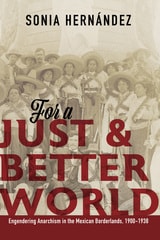
For a Just and Better World
Engendering Anarchism in the Mexican Borderlands, 1900-1938Sonia Hernandez
University of Illinois Press, 2021
A vivid look at a radical activist and her times, For a Just and Better World illuminates the lives and work of Mexican women battling for labor rights and gender equality in the early twentieth century.
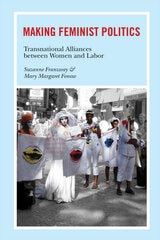
Making Feminist Politics
Transnational Alliances between Women and LaborSuzanne Franzway and Mary Margaret Fonow
University of Illinois Press, 2011
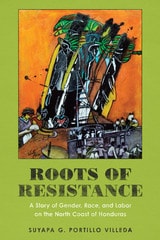
Roots of Resistance
A Story of Gender, Race, and Labor on the North Coast of HondurasSuyapa G. Portillo Villeda
University of Texas Press, 2021
Winner of the 2021 Sara A. Whaley Prize of the National Women’s Studies Association (NWSA)
A first-of-its-kind study of the working-class culture of resistance on the Honduran North Coast and the radical organizing that challenged US capital and foreign intervention at the onset of the Cold War, examining gender, race, and place.
On May 1, 1954, striking banana workers on the North Coast of Honduras brought the regional economy to a standstill, invigorating the Honduran labor movement and placing a series of demands on the US-controlled banana industry. Their actions ultimately galvanized a broader working-class struggle and reawakened long-suppressed leftist ideals. The first account of its kind in English, Roots of Resistance explores contemporary Honduran labor history through the story of the great banana strike of 1954 and centers the role of women in the narrative of the labor movement.
Drawing on extensive firsthand oral history and archival research, Suyapa G. Portillo Villeda examines the radical organizing that challenged US capital and foreign intervention in Honduras at the onset of the Cold War. She reveals the everyday acts of resistance that laid the groundwork for the 1954 strike and argues that these often-overlooked forms of resistance should inform analyses of present-day labor and community organizing. Roots of Resistance highlights the complexities of transnational company hierarchies, gender and race relations, and labor organizing that led to the banana workers' strike and how these dynamics continue to reverberate in Honduras today.
The Limits of Revolution
Worker Citizens in a Bolivian Mining CityElena McGrath
University of Texas Press, 2026
The role of Bolivian mining families in revolution and politics.
In 1952, Bolivia’s Revolutionary Nationalist Movement (MNR) swept into power, promising collective prosperity through class-based nationalism. The heroic symbol of the movement was the worker citizen—the formerly indigenous miner who would fuel economic development in a nationalized mining economy.
The Limits of Revolution explores this history from the worker barrios of the copper mining city of Corocoro. As the state walked back its promises of worker political power at the national level, mining men and women in Corocoro struggled—through protests, court battles, and barfights—to maintain the benefits of worker citizenship locally. After the MNR fell to a military dictatorship in 1964, however, families retreated to defending the nationalized mining company against an increasingly hostile state. In this battle to keep the revolution alive, the expansive potential of worker citizenship disappeared and old racial exclusions resurfaced. Largely forgotten today, Bolivia’s experience of revolution exposes the contradictions of postcolonial nationalism and sheds light on Latin America’s transition from Cold War–era class politics to twenty-first-century Pink Tide politics.
Women's Activist Organizing in US History
A University of Illinois Press AnthologyCompiled by Dawn Durante; Introduction by Deborah Gray White
University of Illinois Press, 2022
Insightful and provocative, Women’s Activist Organizing in US History draws on both classic texts and recent bestsellers to reveal the breadth of activism by women in the United States in the nineteenth and twentieth centuries.
Contributors: Daina Ramey Berry, Melinda Chateauvert, Tiffany M. Gill, Nancy A. Hewitt, Treva B. Lindsey, Anne Firor Scott, Charissa J. Threat, Anne M. Valk, Lara Vapnek, and Deborah Gray White