Results by title
52 books match the query 'Women political activists' and 4 start with a

A Force for Nature
Nancy Russell's Fight to Save the Columbia GorgeBowen Blair
Oregon State University Press, 2022
The 85-mile-long Columbia Gorge forms part of the border between Oregon and Washington and is one of the nation’s most historic and scenic landscapes. Many of the region’s cultural divisions boil over here—urban versus rural, west of the mountains versus east—as well as clashes over private property rights, management of public lands, and tribal treaty rights.
In the early 1980s, as a new interstate bridge linked the City of Portland to rural counties in Washington, the Gorge’s renowned vistas were on the brink of destruction. Nancy Russell, forty-eight years old and with no experience in advocacy, fundraising, or politics, built a grassroots movement that overcame 70 years of failed efforts and bitter opposition from both Oregon and Washington governors, five of the six Gorge counties, 41,000 Gorge residents, and the Reagan administration. While building her campaign, Russell stopped subdivisions, factories, and government neglect through litigation brought by her organization, Friends of the Columbia Gorge, and last-second land purchases by the Trust for Public Land (TPL). Initially ignored, then demonized, Russell’s tires were slashed and her life threatened.
The Columbia River Gorge National Scenic Area Act barely passed—on the last day of the congressional session in 1986—and was signed by a reluctant President Reagan hours before the bill would die. Russell positioned the Friends to be a watchdog and orchestrated the purchase of thousands of acres of land for the public. Bowen Blair, an attorney, former executive director of Friends of the Columbia Gorge, and TPL senior vice president, brings an insider’s perspective to the tumultuous and inspiring story of this conservation battle.
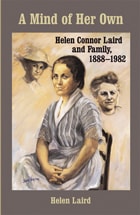
A Mind of Her Own
Helen Connor Laird and Family, 1888–1982Helen L. Laird
University of Wisconsin Press, 2006
A Mind of Her Own: Helen Connor Laird and Family 1888–1982 captures the public achievement and private pain of a remarkable Wisconsin woman and her family, whose interests and influence extended well beyond the borders of the state. Spanning almost a century, the history speaks to the way we were and are: a stridently materialistic nation with a deep and persistent spiritual component.
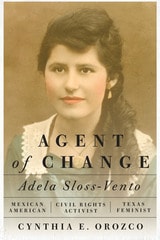
Agent of Change
Adela Sloss-Vento, Mexican American Civil Rights Activist and Texas FeministBy Cynthia E. Orozco
University of Texas Press, 2020
Liz Carpenter Award for Research in the History of Women, Texas State Historical Association
The essayist Adela Sloss-Vento (1901–1998) was a powerhouse of activism in South Texas’s Lower Rio Grande Valley throughout the Mexican American civil rights movement beginning in 1920 and the subsequent Chicano movement of the 1960s and 1970s. At last presenting the full story of Sloss-Vento’s achievements, Agent of Change revives a forgotten history of a major female Latina leader.
Bringing to light the economic and political transformations that swept through South Texas in the 1920s as ranching declined and agribusiness proliferated, Cynthia E. Orozco situates Sloss-Vento’s early years within the context of the Jim Crow/Juan Crow era. Recounting Sloss-Vento’s rise to prominence as a public intellectual, Orozco highlights a partnership with Alonso S. Perales, the principal founder of the League of United Latin American Citizens. Agent of Change explores such contradictions as Sloss-Vento’s tolerance of LULAC’s gender-segregated chapters, even though the activist was an outspoken critic of male privilege in the home and a decidedly progressive wife and mother. Inspiring and illuminating, this is a complete portrait of a savvy, brazen critic who demanded reform on both sides of the US-Mexico border.
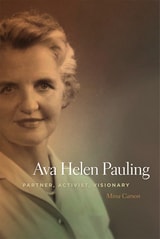
Ava Helen Pauling
Partner, Activist, VisionaryMina Carson
Oregon State University Press, 2013
Though she began her public career in the shadow of her spouse, Ava Helen soon found herself tugged between her ardor to support Linus in his career and her desire that he embrace the social and political causes she felt passionate about. She believed it was her destiny to accept duties as a mother and homemaker, but neither of those roles was fully satisfying. Her more complete identity emerged over decades, as she evolved as an influential activist.
Ava Helen Pauling’s story is significant because so many aspects of it were shared with countless American women of her generation and the generations surrounding her. They had new educational opportunities but were expected to conform to the same limited social roles dictated by the gender ideology of the nineteenth century. When second wave feminism erupted in the 1960s, its force did not come solely from the young women rebelling against their elders’ rules and limitations, but also from the frustrated dreams of those elders themselves.
Ava Helen did not experience overt oppression by her husband or community; she even asserted some very non-feminist positions as a young woman. This, combined with a structural lack of opportunity, contributed to the strength and persistence of role expectations in her life. At the same time, she was feisty and willful. Her personality both created her marital loyalty and eventually took her down an openly feminist path.
Ava Helen Pauling: Partner, Activist, Visionary is an important complement to writings about Linus Pauling and a welcome addition to the literature on women’s and family history. It will also appeal to students and scholars of peace and reform movements and the social history of science.