Results by title
5 books match the query 'Women sculptors'
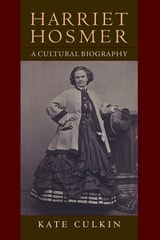
Harriet Hosmer
A Cultural BiographyKate Culkin
University of Massachusetts Press, 2010
Harriet Hosmer (1830–1908) was celebrated as one of the country's most respected artists, credited with opening the field of sculpture to women and cited as a model of female ability and American refinement. In this biographical study, Kate Culkin explores Hosmer's life and work and places her in the context of a notable group of expatriate writers and artists who gathered in Rome in the mid-nineteenth century.
In 1852 Hosmer moved from Boston to Rome, where she shared a house with actress Charlotte Cushman and soon formed close friendships with such prominent expatriates as Robert and Elizabeth Barrett Browning and fellow sculptors John Gibson, Emma Stebbins, and William Wetmore Story. References to Hosmer or characters inspired by her appear in the work of Nathaniel Hawthorne, Louisa May Alcott, and Kate Field among others. Culkin argues that Hosmer's success was made possible by her extensive network of supporters, including her famous friends, boosters of American gentility, and women's rights advocates. This unlikely coalition, along with her talent, ambition, and careful maintenance of her public profile, ultimately brought her great acclaim. Culkin also addresses Hosmer's critique of women's position in nineteenth-century culture through her sculpture, women's rights advocates' use of high art to promote their cause, the role Hosmer's relationships with women played in her life and success, and the complex position a female artist occupied within a country increasingly interested in proving its gentility.
In 1852 Hosmer moved from Boston to Rome, where she shared a house with actress Charlotte Cushman and soon formed close friendships with such prominent expatriates as Robert and Elizabeth Barrett Browning and fellow sculptors John Gibson, Emma Stebbins, and William Wetmore Story. References to Hosmer or characters inspired by her appear in the work of Nathaniel Hawthorne, Louisa May Alcott, and Kate Field among others. Culkin argues that Hosmer's success was made possible by her extensive network of supporters, including her famous friends, boosters of American gentility, and women's rights advocates. This unlikely coalition, along with her talent, ambition, and careful maintenance of her public profile, ultimately brought her great acclaim. Culkin also addresses Hosmer's critique of women's position in nineteenth-century culture through her sculpture, women's rights advocates' use of high art to promote their cause, the role Hosmer's relationships with women played in her life and success, and the complex position a female artist occupied within a country increasingly interested in proving its gentility.
[more]
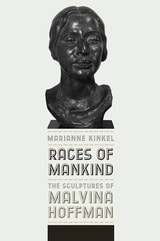
Races of Mankind
The Sculptures of Malvina HoffmanMarianne Kinkel
University of Illinois Press, 2011
In 1930, Chicago's Field Museum of Natural History commissioned sculptor Malvina Hoffman to produce three-dimensional models of racial types for an anthropology display called The Races of Mankind. Marianne Kinkel’s cultural biography of the long-running exhibition measures how Hoffman’s ninety-one bronze and stone sculptures impacted perceptions of race in twentieth-century visual culture. Kinkel looks at how Hoffman's collaborations with curators and anthropologists transformed the commission from a traditional physical anthropology display into a fine art exhibit. She also tracks appearances of statuettes of the works in New York and Paris exhibitions and looks at how publishers used images of the sculptures to illustrate atlases, maps, and encyclopedias. The volume concludes with the dismantling of the exhibit in 1969 and the Field Museum’s redeployment of some of the sculptures in new educational settings.
A fascinating cultural history, Races of Mankind examines how we continually re-negotiate the veracity of race through collaborative processes involved in the production, display, and circulation of visual representations.
[more]
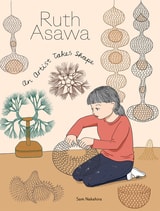
Ruth Asawa
An Artist Takes ShapeSam Nakahira
J. Paul Getty Trust, The, 2024
Brave, unconventional, and determined, Ruth Asawa let nothing stop her from living a life intertwined with art.
Renowned for her innovative wire sculptures, Japanese American artist Ruth Asawa (1926–2013) was a teenager in Southern California when Japan bombed Pearl Harbor and the United States entered World War II. Japanese Americans on the West Coast were forcibly removed from their homes. Asawa’s family had to abandon their farm, her father was incarcerated, and she and the rest of her family were sent to a concentration camp. Asawa nurtured her dreams of becoming an artist while imprisoned and eventually made her way to the experimental Black Mountain College in North Carolina.
This graphic biography by Sam Nakahira, developed in consultation with Asawa’s youngest daughter, Addie Lanier, chronicles the genesis of Asawa as an artist—from the horror of Pearl Harbor to her transformative education at Black Mountain College to building a life in San Francisco, where she would further develop and refine her groundbreaking wire sculpture.
Asawa never sought fame, preferring to work on her own terms: for her, art and life were one. Featuring lively illustrations and photographs of Asawa’s work, this retelling of her young adult years demonstrates the power of making art.
Ages thirteen and up
[more]
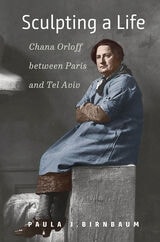
Sculpting a Life
Chana Orloff between Paris and Tel AvivPaula J. Birnbaum
Brandeis University Press, 2022
The first biography of sculptor Chana Orloff.
In Sculpting a Life, the first book-length biography of sculptor Chana Orloff (1888-1968), author Paula Birnbaum tells the story of a fiercely determined and ambitious woman who fled antisemitism in Ukraine, emigrated to Palestine with her family, then travelled to Paris to work in haute couture before becoming an internationally recognized artist. Against the backdrop of revolution, world wars, a global pandemic and forced migrations, her sculptures embody themes of gender, displacement, exile, and belonging. A major figure in the School of Paris, Orloff contributed to the canon of modern art alongside Picasso, Modigliani and Chagall.
Stories from her unpublished memoir enrich this life story of courage, perseverance, and extraordinary artistic accomplishments that take us through the aftermath of the Holocaust when Orloff lived between Paris and Tel Aviv. This biography brings new perspectives and understandings to Orloff’s multiple identities as a cosmopolitan émigré, woman, and Jew, and is a much-needed intervention into the narrative of modern art.
[more]
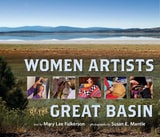
Women Artists of the Great Basin
Mary Lee Fulkerson
University of Nevada Press, 2017
Thirty-two women artists scattered over 200,000 square miles introduce a powerhouse of three-dimensional art in Women Artists of the Great Basin. A wave of women’s art has begun to paint the land with a giant brush, and nowhere have the winds of change been more evident than in the Great Basin, where a sense of freedom and rugged individualism has swept across the playas and through cities and towns. This book is a stunning visual rendering of a wide range of visionary women artists of all ages and backgrounds, and readers will discover their dynamic works and get to know them on a personal level. Sculptors, painters, fabric artists, glassblowers, marble and stone workers, and even a renowned Twinkie artist are represented here, all producing artwork that is jam-packed with originality.
Fulkerson and Mantle, longtime artists and residents of the Great Basin themselves, offer a behind-the-scenes intimate glimpse into these women’s lives and artwork—showing not only what they create, but why they create it. Too often overlooked, the women covered here prove there is much richness, life, and creativity in what has often been dismissed as a barren desert. Their stories of overcoming great obstacles unfold right alongside images of their art. Many circle outside the conventional world of galleries, museums, and art publications and have created varied paths to their success. They are indeed true originals, rooted in a land of unique geography, a stew of cultures, and stories like no other.
Fulkerson and Mantle, longtime artists and residents of the Great Basin themselves, offer a behind-the-scenes intimate glimpse into these women’s lives and artwork—showing not only what they create, but why they create it. Too often overlooked, the women covered here prove there is much richness, life, and creativity in what has often been dismissed as a barren desert. Their stories of overcoming great obstacles unfold right alongside images of their art. Many circle outside the conventional world of galleries, museums, and art publications and have created varied paths to their success. They are indeed true originals, rooted in a land of unique geography, a stew of cultures, and stories like no other.
[more]