Results by title
10 books match the query 'Women travelers'
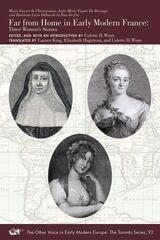
Far from Home in Early Modern France
Three Women’s StoriesMarie Guyart de l’Incarnation, Anne-Marie Fiquet du Boccage, and Henriette-Lucie Dillon de la Tour du Pin
Iter Press, 2022
This book showcases three Frenchwomen who ventured far from home at a time when such traveling was rare. In 1639, Marie de l’Incarnation embarked for New France where she founded the first Ursuline monastery in present-day Canada. In 1750, Madame du Boccage set out at the age of forty on her first “grand tour.” She visited England, the Netherlands, and Italy where she experienced firsthand the intellectual liberty offered there to educated women. As the Reign of Terror gripped France, the Marquise de la Tour du Pin fled to America with her husband and their two young children, where they ran a farm from 1794 to 1796. The writings these women left behind detailing their respective journeys abroad represent significant contributions to early modern travel literature. This book makes available to anglophone readers three texts that are rich in both historical and literary terms.
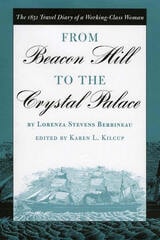
From Beacon Hill to the Crystal Palace
The 1851 Travel Diary of a Working-Class WomanLorenza Stevens Berbineau
University of Iowa Press, 2002
Because prior studies of American women’s travel writing have focused exclusively on middle-class and wealthy travelers, it has been difficult to assess the genre and its participants in a holistic fashion. One of the very few surviving working-class travel diaries, Lorenza Stevens Berbineau’s account provides readers with a unique perspective of a domestic servant in the wealthy Lowell family in Boston. Staying in luxurious hotels and caring for her young charge Eddie during her six-month grand tour, Berbineau wrote detailed and insightful entries about the people and places she saw.
Contributing to the traditions of women’s, diary, and travel literature from the perspective of a domestic servant, Berbineau's narrative reveals an arresting and intimate outlook on both her own life and the activities, places, and people she encounters. For example, she carefully records Europeans’ religious practices, working people and their behavior, and each region’s aesthetic qualities. Clearly writing in haste and with a pleasing freedom from the constraints of orthographic and stylistic convention, Berbineau offers a distinctive voice and a discerning perspective. Alert to nuances of social class, her narrative is as appealing and informative to today's readers as it no doubt was to her fellow domestics in the Lowell household.
Unobtrusively edited to retain as much as possible the individuality and texture of the author’s original manuscript, From Beacon Hill to the Crystal Palace offers readers brief framing summaries, informative endnotes, and a valuable introduction that analyzes Berbineau’s narrative in relation to gender and class issues and compares it to the published travel writing of her famous contemporary, Harriet Beecher Stowe.
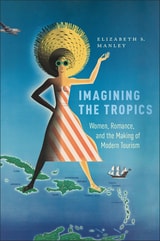
Imagining the Tropics
Women, Romance, and the Making of Modern TourismElizabeth S. Manley
Rutgers University Press, 2025

Italy and American Female Imagination
Debra Bernardi
The Ohio State University Press, 2025
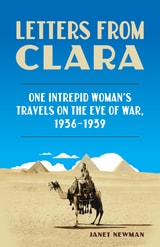
Letters from Clara
One Intrepid Woman's Travels on the Eve of War, 1936-1939Janet Newman
Wisconsin Historical Society Press, 2022
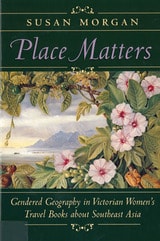
Place Matters
Morgan, Susan
Rutgers University Press, 1996
"Morgan has written an important and original work that presents a well-substantiated challenge to many recent studies of 'colonial discourse'."--Nancy L. Paxton,
Susan Morgan's study of materials and regions, previously neglected in contemporary postcolonial studies, begins with the transforming premise that "place matters." Concepts derived from writings about one area of the world cannot simply be transposed to another area, in some sort of global theoretical move. Moreover, place in the discourse of Victorian imperialism is a matter of gendered as well as geographic terms. Taking up works by Anna Forbes and Marianne North on the Malay Archipelago, by Margaret Brooke and Harriette McDougall on Sarawak, by Isabella Bird and Emily Innes on British Malaya, by Anna Leonowens on Siam, Morgan also makes extensive use of theorists whose work on imperialism in Southeast Asia is unfamiliar to most American academics.
This vivid examination of a different region and different writings emphasizes that in Victorian literature there was no monolithic imperialist location, authorial or geographic. The very notion of a ‘colony’ or an ‘imperial presence’ in Southeast Asia is problematic. Morgan is concerned with marking the intersections of particular Victorian imperial histories and constructions of subjectivity. She argues that specific places in Southeast Asia have distinctive, and differing, masculine imperial rhetorics. It is within these specific rhetorical contexts that women’s writings, including their moments of critique, can be read.
Transatlantic Women Travelers, 1688-1843
Misty Krueger
Bucknell University Press, 2021
Traveling Economies
American Women's Travel WritingJennifer Bernhardt Steadman
The Ohio State University Press, 2007
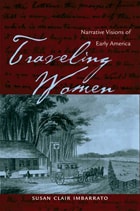
Traveling Women
Narrative Visions of Early AmericaSusan Clair Imbarrato
Ohio University Press, 2006
Susan Clair Imbarrato closely examines women’s accounts of their journeys from 1700 to 1830, including Sarah Kemble Knight’s well-known journal of her trip from Boston to New York in 1704 and many lesser-known accounts, such as Sarah Beavis’s 1779 journal of her travel to Ohio via Kentucky and Susan Edwards Johnson’s account or her 1801–2 journey from Connecticut to North Carolina.
In the women’s keen observations and entertaining wit, readers will find bravado mixed with hesitation, as women set forth on business, to relocate, and for pleasure. These travelers wrote compellingly of crossing rivers and mountains, facing hunger, encountering native Americans, sleeping in taverns, and confronting slavery, expressing themselves in voices that differed in sensibility from male explorers and travelers.
These accounts, as Imbarrato shows, challenge assumptions that such travel was predominately a male enterprise. In addition, Traveling Women provides a more balanced portrait of westward settlement by affirming women’s importance in the settling of early America.

Wanderlust
The Amazing Ida Pfeiffer, the First Female TouristJohn van Wyhe
National University of Singapore Press, 2019
In 1797 in Vienna, Ida Pfeiffer was born into a world that should have been too small for her dreams. The daughter of an Austrian merchant, she made clear from an early age that she would not be bound by convention, dressing in boys’ clothing and playing sports. After her tutor introduced her to stories of faraway lands, she became determined to see the world first-hand. This determination led to a lifetime of travel—much of it alone—and made her one of the most famous women of the nineteenth century.
Pfeiffer faced many obstacles, not least expectations of her gender. She was a typical nineteenth century housewife with a husband and two sons. She was not wealthy nor well connected. Yet after the death of her husband, and once her sons were grown and settled, at the age of forty-one she set off on her first journey, not telling anyone the true extent of her travel plans. Between that trip and her death in 1858, she would barely pause for breath, circling the globe twice—the first woman to do so—and publishing numerous popular books about her travels. Usually traveling solo, Pfeiffer faced storms at sea, trackless deserts, plague, malaria, earthquakes, robbers, murderers, and other risks.
In Wanderlust, John Van Wyhe tells Pfeiffer’s story, with generous excerpts from her published accounts, tell of her involvement with spies, international intrigue, and more. The result is a compelling portrait of the remarkable life of a pioneer unjustly forgotten.