Results by title
3 books match the query 'Women-owned business enterprises'

Before Porn Was Legal
The Erotica Empire of Beate UhseElizabeth Heineman
University of Chicago Press, 2011
Struggling to survive in post–World War II Germany, Beate Uhse (1919–2001)—a former Luftwaffe pilot, war widow, and young mother—turned to selling goods on the black market. A self-penned guide to the rhythm method found eager buyers and started Uhse on her path to becoming the world’s largest erotica entrepreneur. Battling restrictive legislation, powerful churches, and conservative social mores, she built a mail-order business in the 1950s that sold condoms, sex aids, self-help books, and more. The following decades brought the world’s first erotica shop, the legalization of pornography, the expansion of her business into eastern Germany, and web-based commerce.
Uhse was only one of many erotica entrepreneurs who played a role in the social and sexual revolution accompanying Germany’s transition from Nazism to liberal democracy. Tracing the activities of entrepreneurs, customers, government officials, and citizen-activists, Before Porn Was Legal brings to light the profound social, legal, and cultural changes that attended the growth of the erotica sector. Heineman’s innovative readings of governmental and industry records, oral histories, and the erotica industry’s products uncover the roots of today’s sexual marketplace and reveal the indelible ways in which sexual expression and consumption have become intertwined.

Invisibility by Design
Women and Labor in Japan's Digital EconomyGabriella Lukács
Duke University Press, 2020
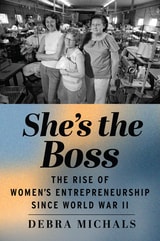
She's the Boss
The Rise of Women’s Entrepreneurship since World War IIDebra Michals
Rutgers University Press, 2025
She’s the Boss chronicles the forces that made entrepreneurship attractive to women. In rich detail, Debra Michals shares the stories of the countless women of all races, ethnicities, genders, and abilities who contributed to this important history. The book also explores the intersection of women’s personal choices within changing social, political, and economic factors, such as the rising divorce rates of the 1960s and 1970s, ongoing workplace and credit discrimination, civil and women’s rights activism and activist entrepreneurs, the 1970s recession and 1980s “Reagan Revolution,” and more recently, the internet, crowd-funding, and social entrepreneurship.