Results by title
11 books match the query 'Woodland culture'

Food Storage in Michigan's Late Woodland
The Work of Indigenous WomenKathryn M. Frederick
University of Alabama Press, 2026
Incorporates experimental archaeology to understand the food-caching strategies led by Indigenous women in Late Woodland Michigan.
This experimental archaeology book centers on the decision of Indigenous women in Michigan’s Late Woodland to store food in cache pits for later use, to ensure a stable food supply. These food storage techniques were efforts to increase communal chances of survival in direct responses to sociopolitical changes. Kathryn M. Frederick highlights the importance of food storage in these communities and the decision-making and behaviors behind it.
To discover why food storage became a popular practice at that period, Frederick considered the efficacy of subterranean food storage and constructed experiments to understand the timing and use of cache pits and to test their reliability and efficiency. She also compiled ethnographic data on location, environmental conditions, movement strategies, and types of foodstuffs stored for dozens of hunter-gatherer groups. Two distinct patterns of food storage emerged: “reliant” and “redundant.” Frederick argues that the Indigenous women utilized a system of reliant storage during times of abundance but could switch to a redundant system as the socioeconomic climate shifted. This book will interest a wide swath of archaeologists and others interested in Indigenous foodways and women’s key roles.
Garden Creek
The Archaeology of Interaction in Middle Woodland AppalachiaAlice P. Wright
University of Alabama Press, 2020
Presents archaeological data to explore the concept of glocalization as applied in the Hopewell world
Originally coined in the context of twentieth-century business affairs, the term glocalization describes how the global circulation of products, services, or ideas requires accommodations to local conditions, and, in turn, how local conditions can significantly impact global markets and relationships. Garden Creek: The Archaeology of Interaction in Middle Woodland Appalachia presents glocalization as a concept that can help explain the dynamics of cross-cultural interaction not only in the present but also in the deep past.
Alice P. Wright uses the concept of glocalization as a framework for understanding the mutual contributions of large-scale and small-scale processes to prehistoric transformations. Using geophysical surveys, excavations, and artifact analysis, Wright shows how Middle Woodland cultural contact wrought changes in religious practices, such as mound building and the crafting of ritual objects for exchange or pilgrimage.
Wright presents and interprets original archaeological data from the Garden Creek site in western North Carolina as part of a larger study of the Hopewell Interaction Sphere, a well-known but poorly understood episode of cross-cultural interaction that linked communities across eastern North America during the Middle Woodland period. Although Hopewellian culture contact did not encompass the entire planet, it may have been “global” to those who experienced and created it, as it subsumed much of the world as Middle Woodland people knew it. Reimagining Hopewell as an episode of glocalization more fully accounts for the diverse communities, interests, and processes involved in this “global” network.
Kolomoki
Settlement, Ceremony, and Status in the Deep South, A.D. 350 to 750Thomas J. Pluckhahn
University of Alabama Press, 2003
A Dan Josselyn Memorial Publication
The first comprehensive and systematic investigation of a Woodland period ceremonial center.
Kolomoki, one of the most impressive archaeological sites in the southeastern United States, includes at least nine large earthen mounds in the lower Chattahoochee River valley of southwest Georgia. The largest, Mound A, rises approximately 20 meters above the terrace that borders it. From its flat-topped summit, a visitor can survey the string of smaller mounds that form an arc to the south and west.
Archaeological research had previously placed Kolomoki within the Mississippian period (ca. A.D. 1000-1500) primarily because of the size and form of the mounds. But this book presents data for the main period of occupation and mound construction that confirm an earlier date, in the Woodland period (ca. A.D. 350-750). Even though the long-standing confusion over Kolomoki’s dating has now been settled, questions remain regarding the lifeways of its inhabitants. Thomas Pluckhahn's research has recovered evidence concerning the level of site occupation and the house styles and daily lives of its dwellers. He presents here a new, revised history of Kolomoki from its founding to its eventual abandonment, with particular attention to the economy and ceremony at the settlement.
This study makes an important contribution to the understanding of middle range societies, particularly the manner in which ceremony could both level and accentuate status differentiation within them. It provides a readable overview of one of the most important but historically least understood prehistoric Native American sites in the United States.
Pinson Mounds
Middle Woodland Ceremonialism in the MidsouthRobert C. Mainfort Jr.
University of Arkansas Press, 2013
Structure and Regional Diversity in the Meadowood Interaction Sphere
Karine Taché
University of Michigan Press, 2011
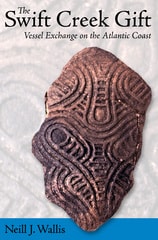
The Swift Creek Gift
Vessel Exchange on the Atlantic CoastNeill J. Wallis
University of Alabama Press, 2011
A unique dataset for studying past social interactions comes from Swift Creek Complicated Stamped pottery that linked sites throughout much of the Eastern Woodlands but that was primarily distributed over the lower Southeast. Although connections have been demonstrated, their significance has remained enigmatic. How and why were apparently utilitarian vessels, or the wooden tools used to make them, distributed widely across the landscape?
This book assesses Woodland Period interactions using technofunctional, mineralogical, and chemical data derived from Swift Creek Complicated Stamped sherds whose provenience is fully documented from both mortuary mounds and village middens along the Atlantic coast. Together, these data demonstrate formal and functional differences between mortuary and village assemblages along with the nearly exclusive occurrence of foreign-made cooking pots in mortuary contexts. The Swift Creek Gift provides insight into the unique workings of gift exchanges to transform seemingly mundane materials like cooking pots into powerful tools of commemoration, affiliation, and ownership.
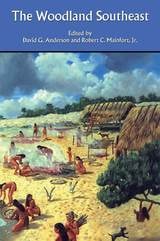
The Woodland Southeast
Edited by David G. Anderson and Robert C. Mainfort
University of Alabama Press, 2002
This collection presents, for the first time, a much-needed synthesis of the major research themes and findings that characterize the Woodland Period in the southeastern United States.
The Woodland Period (ca. 1200 B.C. to A.D. 1000) has been the subject of a great deal of archaeological research over the past 25 years. Researchers have learned that in this approximately 2000-year era the peoples of the Southeast experienced increasing sedentism, population growth, and organizational complexity. At the beginning of the period, people are assumed to have been living in small groups, loosely bound by collective burial rituals. But by the first millennium A.D., some parts of the region had densely packed civic ceremonial centers ruled by hereditary elites. Maize was now the primary food crop. Perhaps most importantly, the ancient animal-focused and hunting-based religion and cosmology were being replaced by solar and warfare iconography, consistent with societies dependent on agriculture, and whose elites were increasingly in competition with one another. This volume synthesizes the research on what happened during this era and how these changes came about while analyzing the period's archaeological record.
In gathering the latest research available on the Woodland Period, the editors have included contributions from the full range of specialists working in the field, highlighted major themes, and directed readers to the proper primary sources. Of interest to archaeologists and anthropologists, both professional and amateur, this will be a valuable reference work essential to understanding the Woodland Period in the Southeast.
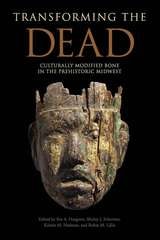
Transforming the Dead
Culturally Modified Bone in the Prehistoric MidwestEve A. Hargrave
University of Alabama Press, 2015
Revealing how the dead continued to shape the spiritual and social worlds of prehistoric North America.
Transforming the Dead is a collection of essays that examines culturally modified human bones and their roles as “cultural and ritual objects” among prehistoric Eastern Woodland cultures. Previous scholarship has explored the role of human body parts in Native American cultures as trophies of war and revered ancestors. This collection discusses new evidence that human elements were also important components of daily and ritual activities across the Eastern Woodlands. The contributors to this volume discuss each case study within the unique regional and temporal contexts of the material, rather than seeking universal answers to how these objects were used.
Most research addressing modified human bone has focused on cut marks and trauma associated with warfare, trophy taking, and burial practices. The editors and contributors of Transforming the Dead document the varied and often overlooked ways that human bone was intentionally modified through drilling, incising, cutting, and polishing for utilitarian, ornamental, spiritual, or ritual use. Examples include bracelets and gorgets to be worn, as well as musical rasps, pipe stems, masks, and protective talismans. The form and function of these objects are not unusual; their construction from the remains of “another” sets them apart.
Through a flexible but systematic analysis of the archaeological record, the contributors bring into focus how the careful selection, modification, and retention of particular bones or body parts of an individual after death offer insights into concepts of personhood, the body, life, and death among the prehistoric Native Americans in the Midwest.
Two Terminal Archaic/Early Woodland Sites in Central Michigan
Scott G. Beld
University of Michigan Press, 1991
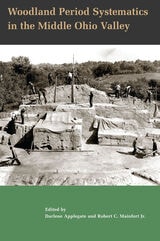
Woodland Period Systematics in the Middle Ohio Valley
Edited by Darlene Applegate and Robert C. Mainfort Jr.
University of Alabama Press, 2005
The important questions are diverse. What criteria are useful in defining periods and cultural types, and over what spatial and temporal boundaries do those criteria hold? How can we accommodate regional variation in the development and expression of traits used to delineate periods and cultural types? How does the concept of tradition relate to periods and cultural types? Is it prudent to equate culture types with periods? Is it prudent to equate archaeological cultures with ethnographic cultures? How does the available taxonomy hinder research? Contributing authors address these issues and others in the context of their Middle Ohio Valley Woodland Period research
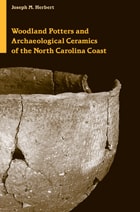
Woodland Potters and Archaeological Ceramics of the North Carolina Coast
Joseph M. Herbert
University of Alabama Press, 2009
Pottery types, composed of specific sets of attributes, have long been defined for various periods and areas of the Atlantic coast, but their relationships and meanings have not been explicitly examined. In exploring these relationships for the North Carolina coast, this work examines the manner in which pottery traits cross-cut taxonomic types, tests the proposition that communities of practice existed at several scales, and questions the fundamental notion of ceramic types as ethnic markers.
Ethnoarchaeological case studies provide a means of assessing the mechanics of how social structure and gender roles may have affected the transmission of pottery-making techniques and how socio-cultural boundaries are reflected in the distribution of ceramic traditions. Another very valuable source of information about past practices is replication experimentation, which provides a means of understanding the practical techniques that lie behind the observable traits, thereby improving our understanding of how certain techniques may have influenced the transmission of traits from one potter to another. Both methods are employed in this study to interpret the meaning of pottery as an indicator of social activity on the North Carolina coast.