Results by title

23 books match the query 'Work and family'
cover of Academic Motherhood: How Faculty Manage Work and Family

Academic Motherhood

How Faculty Manage Work and Family

Ward, Kelly

Rutgers University Press, 2012

Academic Motherhood tells the story of over one hundred women who are both professors and mothers and examines how they navigated their professional lives at different career stages. Kelly Ward and Lisa Wolf-Wendel base their findings on a longitudinal study that asks how women faculty on the tenure track manage work and family in their early careers (pre-tenure) when their children are young (under the age of five), and then again in mid-career (post-tenure) when their children are older. The women studied work in a range of institutional settings—research universities, comprehensive universities, liberal arts colleges, and community colleges—and in a variety of disciplines, including the sciences, the humanities, and the social sciences.

Much of the existing literature on balancing work and family presents a pessimistic view and offers cautionary tales of what to avoid and how to avoid it. In contrast, the goal of Academic Motherhood is to help tenure track faculty and the institutions at which they are employed “make it work.” Writing for administrators, prospective and current faculty as well as scholars, Ward and Wolf-Wendel bring an element of hope and optimism to the topic of work and family in academe. They provide insight and policy recommendations that support faculty with children and offer mechanisms for problem-solving at personal, departmental, institutional, and national levels.
[more]
cover of At the Heart of Work and Family: Engaging the Ideas of Arlie Hochschild

At the Heart of Work and Family

Engaging the Ideas of Arlie Hochschild

Edited by Anita Ilta Garey and Karen V. Hansen

Rutgers University Press, 2011
At the Heart of Work and Family presents original research on work and family by scholars who engage and build on the conceptual framework developed by well-known sociologist Arlie Russell Hochschild. These concepts, such as "the second shift," "the economy of gratitude," "emotion work," "feeling rules," "gender strategies," and "the time bind," are basic to sociology and have shaped both popular discussions and academic study. The common thread in these essays covering the gender division of housework, childcare networks, families in the global economy, and children of consumers is the incorporation of emotion, feelings, and meaning into the study of working families. These examinations, like Hochschild's own work, connect micro-level interaction to larger social and economic forces and illustrate the continued relevance of linking economic relations to emotional ones for understanding contemporary work-family life.
[more]
cover of Balancing Act: Motherhood, Marriage, and Employment Among American Women

Balancing Act

Motherhood, Marriage, and Employment Among American Women

Daphne Spain

Russell Sage Foundation, 1996

"A wonderful compendium of everything you always wanted to know about trends in women's roles—both in and out of the home. It is a balanced and data-rich assessment of how far women have come and how far they still have to go. "—Isabelle Sawhill, Urban Institute "Based primarily on the 1990 population census, Balancing Act reports on the current situation of American women and temporal and cross-national comparisons. Meticulously and clearly presented, the information in this book highlights changing behaviors, such as the growing incidence of childbearing to older women, and unmarried women in general, and a higher ratio of women's earnings to men's. The authors' thoughtful analysis of these and other factors involved in women's fin de siècle 'balancing act' make this an indispensable reference book and valuable classroom resource." —Louise A. Tilly, Michael E. Gellert Professor of History and Sociology, The New School for Social Research In Balancing Act, authors Daphne Spain and Suzanne Bianchi draw upon multiple census and survey sources to detail the shifting conditions under which women manage their roles as mothers, wives, and breadwinners. They chronicle the progress made in education—where female college enrollment now exceeds that of males—and the workforce, where women have entered a wider variety of occupations and are staying on the job longer, even after becoming wives and mothers. But despite progress, lower-paying service and clerical positions remain predominantly female, and although the salary gap between men and women has shrunk, women are still paid less. As women continue to establish a greater presence outside the home, many have delayed marriage and motherhood. Marked jumps in divorce and out-of-wedlock childbirth have given rise to significant numbers of female-headed households. Married women who work contribute more significantly than ever to the financial well-being of their families, yet evidence shows that they continue to perform most household chores. Balancing Act focuses on how American women juggle the simultaneous demands of caregiving and wage earning, and compares their options to those of women in other countries. The United States is the only industrialized nation without policies to support working mothers and their families—most tellingly in the absence of subsidized childcare services. Many women are forced to work in less rewarding part-time or traditionally female jobs that allow easy exit and re-entry, and as a consequence poverty is the single greatest danger facing American women. As the authors show, the risk of poverty varies significantly by race and ethnicity, with African Americans—most of whose children live in mother-only families—the most adversely affected. This volume contributes to the national dialogue about family policy, welfare reform, and responsibility for children by highlighting the pivotal roles women play at the intersection of family and work.
[more]
cover of Caribbean Journeys: An Ethnography of Migration and Home in Three Family Networks

Caribbean Journeys

An Ethnography of Migration and Home in Three Family Networks

Karen Fog Olwig

Duke University Press, 2007

Caribbean Journeys is an ethnographic analysis of the cultural meaning of migration and home in three families of West Indian background that are now dispersed throughout the Caribbean, North America, and Great Britain. Moving migration studies beyond its current focus on sending and receiving societies, Karen Fog Olwig makes migratory family networks the locus of her analysis. For the people whose lives she traces, being “Caribbean” is not necessarily rooted in ongoing visits to their countries of origin, or in ethnic communities in the receiving countries, but rather in family narratives and the maintenance of family networks across vast geographical expanses.

The migratory journeys of the families in this study began more than sixty years ago, when individuals in the three families left home in a British colonial town in Jamaica, a French Creole rural community in Dominica, and an African-Caribbean village of small farmers on Nevis. Olwig follows the three family networks forward in time, interviewing family members living under highly varied social and economic circumstances in locations ranging from California to Barbados, Nova Scotia to Florida, and New Jersey to England. Through her conversations with several generations of these far-flung families, she gives insight into each family’s educational, occupational, and socioeconomic trajectories. Olwig contends that terms such as “Caribbean diaspora” wrongly assume a culturally homogeneous homeland. As she demonstrates in Caribbean Journeys, anthropologists who want a nuanced understanding of how migrants and their descendants perceive their origins and identities must focus on interpersonal relations and intimate spheres as well as on collectivities and public expressions of belonging.

[more]
cover of Deregulating Desire: Flight Attendant Activism, Family Politics, and Workplace Justice

Deregulating Desire

Flight Attendant Activism, Family Politics, and Workplace Justice

Ryan Patrick Murphy

Temple University Press, 2016

In 1975, National Airlines was shut down for 127 days when flight attendants went on strike to protest long hours and low pay. Activists at National and many other U.S. airlines sought to win political power and material resources for people who live beyond the boundary of the traditional family. In Deregulating Desire, Ryan Patrick Murphy, a former flight attendant himself, chronicles the efforts of single women, unmarried parents, lesbians and gay men, as well as same-sex couples to make the airline industry a crucible for social change in the decades after 1970.

Murphy situates the flight attendant union movement in the history of debates about family and work. Each chapter offers an economic and a cultural analysis to show how the workplace has been the primary venue to enact feminist and LGBTQ politics.

From the political economic consequences of activism to the dynamics that facilitated the rise of what Murphy calls the “family values economy” to the Airline Deregulation Act of 1978, Deregulating Desire emphasizes the enduring importance of social justice for flight attendants in the twenty-first century.

[more]
cover of Dreadful Desires: The Uses of Love in Neoliberal China

Dreadful Desires

The Uses of Love in Neoliberal China

Charlie Yi Zhang

Duke University Press, 2022
In Dreadful Desires Charlie Yi Zhang examines how the Chinese state deploys affective notions of love to regulate the population and secure China’s place in the global economy. Zhang shows how the state frames love as a set of desires that encompass heteronormative intimacy, familial and communal attachment, upward mobility, and private property ownership. These desires—as circulated in performance in the nationalistic ceremony, same-sex romantic fan fiction, the wildly popular reality television dating show If You Are the One, and the cult of patriarchal personality around Xi Jinping—are explicitly based in oppressive systems of gender, class, and sexuality. Zhang contends that such desires connect love to economic survival and gender normativity in ways that underwrite Chinese neoliberalism at the expense of individual flourishing. By outlining how state-framed forms of love create desires that cannot be fulfilled, Zhang places China at the forefront of using affective attachments to nation, leader, and family in the global shifts toward exploitation and authoritarianism.
[more]
cover of Families That Work: Policies for Reconciling Parenthood and Employment

Families That Work

Policies for Reconciling Parenthood and Employment

Janet C. Gornick

Russell Sage Foundation, 2003

Parents around the world grapple with the common challenge of balancing work and child care. Despite common problems, the industrialized nations have developed dramatically different social and labor market policies—policies that vary widely in the level of support they provide for parents and the extent to which they encourage an equal division of labor between parents as they balance work and care. In Families That Work, Janet Gornick and Marcia Meyers take a close look at the work-family policies in the United States and abroad and call for a new and expanded role for the U.S. government in order to bring this country up to the standards taken for granted in many other Western nations. In many countries in Europe and in Canada, family leave policies grant parents paid time off to care for their young children, and labor market regulations go a long way toward ensuring that work does not overwhelm family obligations. In addition, early childhood education and care programs guarantee access to high-quality care for their children. In most of these countries, policies encourage gender equality by strengthening mothers' ties to employment and encouraging fathers to spend more time caregiving at home. In sharp contrast, Gornick and Meyers show how in the United States—an economy with high labor force participation among both fathers and mothers—parents are left to craft private solutions to the society-wide dilemma of "who will care for the children?" Parents—overwhelmingly mothers—must loosen their ties to the workplace to care for their children; workers are forced to negotiate with their employers, often unsuccessfully, for family leave and reduced work schedules; and parents must purchase care of dubious quality, at high prices, from consumer markets. By leaving child care solutions up to hard-pressed working parents, these private solutions exact a high price in terms of gender inequality in the workplace and at home, family stress and economic insecurity, and—not least—child well-being. Gornick and Meyers show that it is possible–based on the experiences of other countries—to enhance child well-being and to increase gender equality by promoting more extensive and egalitarian family leave, work-time, and child care policies. Families That Work demonstrates convincingly that the United States has much to learn from policies in Europe and in Canada, and that the often-repeated claim that the United States is simply "too different" to draw lessons from other countries is based largely on misperceptions about policies in other countries and about the possibility of policy expansion in the United States.
[more]
cover of Families and Work

Families and Work

Naomi Gerstel

Temple University Press, 1987

Emphasizing gender inequality in the past and present, this book analyzes the connections between work and family that produce conflict and change at home and in the marketplace.
[more]
cover of Families at Work: Expanding the Bounds

Families at Work

Expanding the Bounds

Naomi Gerstel

Vanderbilt University Press, 2002

What is the relationship between work and family in a world where employment creates endless tensions for families and families create endless tensions for the workplace? This collection of reprinted and original articles broadens this discussion by addressing issues from the perspectives of often neglected populations: from white middle-class women with young children to people of color, to poor families, to the new sorts of families gays and lesbians are struggling to construct, to fathers, to older children.

To discuss work and family is also to discuss gender. Ranging from California's Silicon Valley to a remote fishing village in the northeast, part one shows how new work arrangements have created new expectations for what it means to be a woman or a man, and how slow and uneven the pace of change can be. Nowhere are the tensions of work and family more potent than around childcare. Part two takes up these tensions, showing how various "solutions" to caring for children of all ages (whether infants or teenagers) create new problems. Parts three and four turn outward to show how the new relationships between families and work are changing the relationships between families and the communities in which they live and generating new social policy dilemmas.
[more]
cover of Family and Work in Everyday Ethnography

Family and Work in Everyday Ethnography

Tamara M. Brown

Temple University Press, 2013
Family and Work in Everyday Ethnography exposes the intimate relationship between ethnographers as both family members and researchers. The contributors to this exciting volume question and problematize the “artificial divide” between work and family that continues to permeate writing on ethnographic field work as social scientists try to juggle research and family tensions while “on the job.”
 
Essays relate experiences that mirror work-family dilemmas that all employed parents face, and show how deeply personal experiences affect social scientists’ home life and their studies. Bringing together voices of various family members—pregnant women, mothers, fathers, and children—Family and Work in Everyday Ethnography demonstrates how the mixture of work and family in this particular occupation has raised questions—both practical and theoretical—that relate to race, class, and gender.
 
Contributors include: Chris Bobel, Erynn Masi de Casanova, Randol Contreras, C. Aiden Downey, Tanya Golash-Boza, Steven Gold, Sherri Grasmuck, Barbara Katz Rothman,
Jennifer Reich, Leah Schmalzbauer, Gregory Smithsimon, and the editors.
[more]
cover of Fighting For Time: Shifting Boundaries of Work and Social Life

Fighting For Time

Shifting Boundaries of Work and Social Life

Cynthia Fuchs Epstein

Russell Sage Foundation, 2004
Though there are still just twenty-four hours in a day, society's idea of who should be doing what and when has shifted. Time, the ultimate scarce resource, has become an increasingly contested battle zone in American life, with work, family, and personal obligations pulling individuals in conflicting directions. In Fighting for Time, editors Cynthia Fuchs Epstein and Arne Kalleberg bring together a team of distinguished sociologists and management analysts to examine the social construction of time and its importance in American culture. Fighting for Time opens with an exploration of changes in time spent at work—both when people are on the job and the number of hours they spend there—and the consequences of those changes for individuals and families. Contributors Jerry Jacobs and Kathleen Gerson find that the relative constancy of the average workweek in America over the last thirty years hides the fact that blue-collar workers are putting in fewer hours while more educated white-collar workers are putting in more. Rudy Fenwick and Mark Tausig look at the effect of nonstandard schedules on workers' health and family life. They find that working unconventional hours can increase family stress, but that control over one's work schedule improves family, social, and health outcomes for workers. The book then turns to an examination of how time influences the organization and control of work. The British insurance company studied by David Collinson and Margaret Collinson is an example of a culture where employees are judged on the number of hours they work rather than on their productivity. There, managers are under intense pressure not to take legally guaranteed parental leave, and clocks are banned from the office walls so that employees will work without regard to the time. In the book's final section, the contributors examine how time can have different meanings for men and women. Cynthia Fuchs Epstein points out that professional women and stay-at-home fathers face social disapproval for spending too much time on activities that do not conform to socially prescribed gender roles—men are mocked by coworkers for taking paternity leave, while working mothers are chastised for leaving their children to the care of others. Fighting for Time challenges assumptions about the relationship between time and work, revealing that time is a fluid concept that derives its importance from cultural attitudes, social psychological processes, and the exercise of power. Its insight will be of interest to sociologists, economists, social psychologists, business leaders, and anyone interested in the work-life balance.
[more]
cover of Gender and Family Issues in the Workplace

Gender and Family Issues in the Workplace

Francine D. Blau

Russell Sage Foundation, 1997
Today, as married women commonly pursue careers outside the home, concerns about their ability to achieve equal footing with men without sacrificing the needs of their families trouble policymakers and economists alike. In 1993 federal legislation was passed that required most firms to provide unpaid maternity leave for up to twelve weeks. Yet, as Gender and Family Issues in the Workplace reveals, motherhood remains a primary obstacle to women's economic success. This volume offers fascinating and provocative new analyses of women's status in the labor market, as it explores the debate surrounding parental leave: Do policies that mandate extended leave protect jobs and promote child welfare, or do they sidetrack women's careers and make them less desirable employees? An examination of the disadvantages that women—particularly young mothers—face in today's workplace sets the stage for the debate. Claudia Goldin presents evidence that female college graduates are rarely able to balance motherhood with career track employment, and Jane Waldfogel demonstrates that having children results in substantially lower wages for women. The long hours demanded by managerial and other high powered professions further penalize women who in many cases still bear primary responsibility for their homes and children. Do parental leave policies improve the situation for women? Gender and Family Issues in the Workplace offers a variety of perspectives on this important question. Some propose that mandated leave improves women's wages by allowing them to preserve their job tenure. Other economists express concern that federal leave policies prevent firms and their workers from acting on their own particular needs and constraints, while others argue that because such policies improve the well-being of children they are necessary to society as a whole. Olivia Mitchell finds that although the availability of unpaid parental leave has sharply increased, only a tiny percentage of workers have access to paid leave or child care assistance. Others caution that the current design of family-friendly policies may promote gender inequality by reinforcing the traditional division of labor within families. Parental leave policy is a complex issue embedded in a tangle of economic and social institutions. Gender and Family Issues in the Workplace offers an innovative and up-to-date investigation into women's chances for success and equality in the modern economy.
[more]
cover of Home and Work: Negotiating Boundaries through Everyday Life

Home and Work

Negotiating Boundaries through Everyday Life

Christena E. Nippert-Eng

University of Chicago Press, 1996

Do you put family photos on your desk at work? Are your home and work keys on the same chain? Do you keep one all-purpose calendar for listing home and work events? Do you have separate telephone books for colleagues and friends? In Home and Work, Christena Nippert-Eng examines the intricacies and implications of how we draw the line between home and work.

Arguing that relationships between the two realms range from those that are highly "integrating" to those that are highly "segmenting," Nippert-Eng examines the ways people sculpt the boundaries between home and work. With remarkable sensitivity to the symbolic value of objects and actions, Nippert-Eng explores the meaning of clothing, wallets, lunches and vacations, and the places and ways in which we engage our family, friends, and co-workers. Commuting habits are also revealing, showing how we make the transition between home and work selves though ritualized behavior like hellos and goodbyes, the consumption of food, the way we dress, our choices of routes to and from work, and our listening, working, and sleeping habits during these journeys.

The ways each of us manages time, space, and people not only reflect but reinforce lives that are more "integrating" or "segmenting" at any given time. In clarifying what we take for granted, this book will leave you thinking in different ways about your life and work.

[more]
cover of Mining Coal and Undermining Gender: Rhythms of Work and Family in the American West

Mining Coal and Undermining Gender

Rhythms of Work and Family in the American West

Jessica Smith Rolston

Rutgers University Press, 2014

Winner of the 2018 Distinguished Book Award from the Western Social Science Association​

 Though mining is an infamously masculine industry, women make up 20 percent of all production crews in Wyoming’s Powder River Basin—the largest coal-producing region in the United States.  How do these women fit into a working culture supposedly hostile to females?  This is what anthropologist Jessica Smith Rolston, herself a onetime mine worker and the daughter of a miner, set out to discover.  Her answers, based on years of participant-observation in four mines and extensive interviews with miners, managers, engineers, and the families of mine employees, offer a rich and surprising view of the working “families” that miners construct.  In this picture, gender roles are not nearly as straightforward—or as straitened—as stereotypes suggest.

Gender is far from the primary concern of coworkers in crews.  Far more important, Rolston finds, is protecting the safety of the entire crew and finding a way to treat each other well despite the stresses of their jobs.  These miners share the burden of rotating shift work—continually switching between twelve-hour day and night shifts—which deprives them of the daily rhythms of a typical home, from morning breakfasts to bedtime stories. Rolston identifies the mine workers’ response to these shared challenges as a new sort of constructed kinship that both challenges and reproduces gender roles in their everyday working and family lives.

Crews’ expectations for coworkers to treat one another like family and to adopt an “agricultural” work ethic tend to minimize gender differences.  And yet, these differences remain tenacious in the equation of masculinity with technical expertise, and of femininity with household responsibilities. For Rolston, such lingering areas of inequality highlight the importance of structural constraints that flout a common impulse among men and women to neutralize the significance of gender, at home and in the workplace.

At a time when the Appalachian region continues to dominate discussion of mining culture, this book provides a very different and unexpected view—of how miners live and work together, and of how their lives and work reconfigure ideas of gender and kinship.
[more]
cover of Mothering from the Field: The Impact of Motherhood on Site-Based Research

Mothering from the Field

The Impact of Motherhood on Site-Based Research

Edited by Bahiyyah Miallah Muhammad and Mélanie-Angela Neuilly

Rutgers University Press, 2019

The heated national conversation about gender equality and women in the workforce is something that women in academia have been concerned with and writing about for at least a decade. Overall, the conversation has focused on identifying how women in general and mothers in particular fair in the academy as a whole, as well as offering tips on how to maximize success. Aside from a long-standing field-specific debate in anthropology, rare are the volumes focusing on the particulars of motherhood’s impacts on how scientific research is conducted, particularly when it comes to field research.
 
Mothering from the Field offers both a mosaic of perspectives from current women scientists’ experiences of conducting field research across a variety of sub-disciplines while raising children, and an analytical framework to understand how we can redefine methodological and theoretical contributions based on mothers’ experiences in order not just to promote healthier, more inclusive, nurturing, and supportive environments in physical, life, and social sciences, but also to revolutionize how we conceptualize research.  
[more]
cover of Paid to Party: Working Time and Emotion in Direct Home Sales

Paid to Party

Working Time and Emotion in Direct Home Sales

Mullaney, Jamie L

Rutgers University Press, 2012

On any given night in living rooms across America, women gather for a fun girls’ night out to eat, drink, and purchase the latest products—from Amway to Mary Kay cosmetics. Beneath the party atmosphere lies a billion-dollar industry, Direct Home Sales (DHS), which is currently changing how women navigate work and family.

Drawing from numerous interviews with consultants and observations at company-sponsored events, Paid to Party takes a closer look at how DHS promises to change the way we think and feel about the struggles of balancing work and family. Offering a new approach to a flexible work model, DHS companies tell women they can, in fact, have it all and not feel guilty. In DHS, work time is not measured by the hands of the clock, but by the emotional fulfillment and fun it brings.
[more]
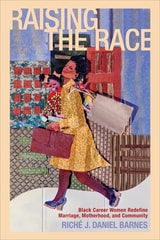
cover of Raising the Race: Black Career Women Redefine Marriage, Motherhood, and Community

Raising the Race

Black Career Women Redefine Marriage, Motherhood, and Community

Barnes, Riché J. Daniel

Rutgers University Press, 2015

Winner of the 2017 Race, Gender, and Class Section Book Award from the American Sociological Association

Popular discussions of professional women often dwell on the conflicts faced by the woman who attempts to “have it all,” raising children while climbing up the corporate ladder. Yet for all the articles and books written on this subject, there has been little work that focuses on the experience of African American professional women or asks how their perspectives on work-family balance might be unique.
 
Raising the Race is the first scholarly book to examine how black, married career women juggle their relationships with their extended and nuclear families, the expectations of the black community, and their desires to raise healthy, independent children. Drawing from extensive interviews with twenty-three Atlanta-based professional women who left or modified careers as attorneys, physicians, executives, and administrators, anthropologist Riché J. Daniel Barnes found that their decisions were deeply rooted in an awareness of black women’s historical struggles. Departing from the possessive individualistic discourse of “having it all,” the women profiled here think beyond their own situation—considering ways their decisions might help the entire black community.
 
Giving a voice to women whose perspectives have been underrepresented in debates about work-family balance, Barnes’s profiles enable us to perceive these women as fully fledged individuals, each with her own concerns and priorities. Yet Barnes is also able to locate many common themes from these black women’s experiences, and uses them to propose policy initiatives that would improve the work and family lives of all Americans.
[more]
cover of The Family Track: Keeping Your Faculties while You Mentor, Nurture, Teach, and Serve

The Family Track

Keeping Your Faculties while You Mentor, Nurture, Teach, and Serve

Edited by Constance Coiner and Diana Hume George

University of Illinois Press, 1998

     How do the necessities of caring for others deter, benefit, or redefine
        research and teaching in higher education? What have universities done
        to recognize the difficulties facing academic parents, single mothers
        and fathers, graduate students, lesbian and gay couples? What pro-family
        policies can be enacted during institutional budget crises?
      At a time when the academy is an ever more demanding arbiter and shaper
        of the lives of those it employs, The Family Track: Keeping Your Faculties
        While You Mentor, Nurture, Teach, and Serve discusses the challenges
        and benefits of balancing a rewarding professional life with the competing
        needs to nurture children, care for aging parents, and engage in other
        personal relationships. Here academic women and men explore issues that
        include biological and tenure clocks, childcare and eldercare, surrogate
        parenting of students, and increasing job demands. In telling stories
        about the quality of their lives, they express their hopes, anxieties,
        difficulties, and personal strategies for maintaining a delicate but achievable
        balance.
      "Lively, well-written, useful, and persuasive … The Family
        Track reveals much on family roles within the academy and suggests
        many specific projects and guidelines for Institutional change."
        -- Judith Kegan Gardiner, editor of Provoking Agents: Gender and Agency
        in Theory and Practice
 
[more]
cover of Weaving Work & Motherhood

Weaving Work & Motherhood

Anita Garey

Temple University Press, 1999

In American culture, the image of  balancing  work and family life is often represented in the glossy shot of the executive-track woman balancing cell-phone, laptop, and baby. In Weaving Work and Motherhood, Anita Ilta Garey focuses not on  the  corporate executives so frequently represented in American ads and magazines but, rather, on the women in jobs that typify the vast majority of women's employment in the United States.

A sociologist and work and family expert, Garey situates her research in the health service industry. Interviewing a racially and ethnically diverse group of women hospital workers -- clerical workers, janitorial workers, nurses, and nurse's aids -- Garey analyzes what it means to be at once a mother who is employed and a worker with children.  Within the limits of the resources available to them, women integrate their identities as workers and their identities as mothers by valuing their  relation to work while simultaneously preserving cultural norms about what it means to be a good mother. Some of these women work non-day shifts in order to have the right blocks of time at home, including, for example, a registered nurse who explains how working the night shift enables her to see her children off to school, greet them when they return, and attend school events in the way she feels "good mothers" should -- even if she finds little time for sleep.

Moving beyond studies of women, work, and family in terms of structural incompatibilities, Garey challenges images of the exclusively "work-oriented" or exclusively "family-oriented" mother. As women talk about their lives, Garey focuses on the meanings of motherhood and of work that underlie their strategies for integrating employment and motherhood. She replaces notions of how women "balance" work and family with a better understanding of how women integrate, negotiate, and weave together their identities as both workers and mothers.

Breaking new ground in the study of work and family, Weaving Work and Motherhood offers new insights for those interested in sociology, gender and women's studies, social policy, child care, social welfare, and health care.
[more]
cover of Women Between Two Worlds: Midlife Reflections on Work and Family

Women Between Two Worlds

Midlife Reflections on Work and Family

Myra Dinnerstein

Temple University Press, 1992
Myra Dinnerstein examines the choices and compromises of a generation of women who came of age after World War II. Her in-depth study traces the experiences of twenty-two middle-class women from childhood to adulthood and their evolution from traditional wives and mothers to career women at midlife. Her richly detailed interviews explore the tensions of combining work, marriage, and family life and remind us of the significance of one's social and personal context with respect to the ability to make satisfying choices. Middle-class women born between 1936 and 1944 have been split between two worlds. As they were growing up, traditional expectations and limited opportunities seemed to make marriage and motherhood inevitable choices. When they reached their thirties, the Women's Movement and expanding opportunities in the workplace presented options for them that had not been available to their mothers. Now it was considered appropriate for women to have ambitions and to act on them--and the women described in this book were among those who did.
[more]
cover of Women Employment & Family: In The International Division Of Labor

Women Employment & Family

In The International Division Of Labor

Sharon Stichter

Temple University Press, 1990
In the present stage of international capitalist development, women are increasingly being drawn into paid employment by multinational and state investment in the Third World. This volume investigates the interrelations between women's participation in the urban wage economy and their productive and reproductive roles in the household and family. It brings together a selection of important recent research on all major regions of the developing world by leading scholars in this emerging field. It argues that the household itself is an important determinant of the character and timing of women's labour force participation, and it assesses the extent to which family patterns can be expected to change as women increasingly work outside the home.
[more]
cover of Work and Family in the United States: A Critical Review and Agenda for Research and Policy

Work and Family in the United States

A Critical Review and Agenda for Research and Policy

Rosabeth Moss Kanter

Russell Sage Foundation, 1977
Now considered a classic in the field, this book first called attention to what Kanter has referred to as the "myth of separate worlds." Rosabeth Moss Kanter was one of the first to argue that the assumes separation between work and family was a myth and that research must explore the linkages between these two roles.
[more]
cover of Working in a 24/7 Economy: Challenges for American Families

Working in a 24/7 Economy

Challenges for American Families

Harriet B. Presser

Russell Sage Foundation, 2003

An economy that operates 24/7—as ours now does—imposes extraordinary burdens on workers. Two-fifths of all employed Americans work mostly during evenings, nights, weekends, or on rotating shifts outside the traditional 9-to-5 work day. The pervasiveness of nonstandard work schedules has become a significant social phenomenon, with important implications for the health and well-being of workers and their families. In Working in a 24/7 Economy, Harriet Presser looks at the effects of nonstandard work schedules on family functioning and shows how these schedules disrupt marriages and force families to cobble together complex child-care arrangements that should concern us all. The number of hours Americans work has received ample attention, but the issue of which hours—or days—Americans work has received much less scrutiny. Working in a 24/7 Economy provides a comprehensive overview of who works nonstandard schedules and why. Presser argues that the growth in women's employment, technological change, and other demographic changes over the past thirty years gave rise to the growing demand for late-shift and weekend employment in the service sector. She also demonstrates that most people who work these hours do so primarily because it is a job requirement, rather than a choice based on personal considerations. Presser shows that the consequences of working nonstandard schedules often differ for men and women since housework and child-rearing remain assigned primarily to women even when both spouses are employed. As with many other social problems, the burden of these schedules disproportionately affects the working poor, reflecting their lack of options in the workplace and adding to their disadvantage. Presser also documents how such work arrangements have created a new rhythm of daily life within many American families, including those with two earners and absent fathers. With spouses often not at home together in the evenings or nights, and parents often not at home with their children at such times, the relatively new concept of "home-time" has emerged as primary concern for families across the nation. Employing a wealth of empirical data, Working in a 24/7 Economy shows that nonstandard work schedules are both highly prevalent among American families and generate a level of complexity in family functioning that demands greater public attention. Presser makes a convincing case for expanded research and meaningful policy initiatives to address this growing social phenomenon.
[more]