Results by title
17 books match the query 'Workplace'
Crippled Justice
The History of Modern Disability Policy in the WorkplaceRuth O'Brien
University of Chicago Press, 2001
O'Brien shows how the remnants of postwar cultural values bogged down the rights-oriented policy in the 1970s and how they continue to permeate judicial interpretations of provisions under the Americans with Disabilities Act. In effect, O'Brien argues, these decisions have created a lose/lose situation for the very people the act was meant to protect. Covering developments up to the present, Crippled Justice is an eye-opening story of government officials and influential experts, and how our legislative and judicial institutions have responded to them.

Fetal Rights, Women's Rights
Gender Equality in the WorkplaceSuzanne U. Samuels
University of Wisconsin Press, 1995
In the late 1970s and throughout the 1980s, many private employers in the United States enacted fetal protection policies that barred fertile women—that is, women who had not been surgically sterilized—from working in jobs that might expose fetuses to toxins. In Fetal Rights, Women’s Rights, Suzanne Samuels analyzes these policies and the ambiguous responses to them by federal and state courts, legislatures, administrative agencies, litigants, and interest groups. She poses provocative questions about the implicit links between social welfare concerns and paternalism in the workplace, including: are women workers or wombs?
Placing the fetal protection controversy within the larger societal debate about gender roles, Samuels argues that governmental decision-makers confuse sex, which is based solely on biological characteristics, with gender, which is based on societal conceptions. She contends that the debate about fetal protection policies brought this ambiguity into stark relief, and that the response of policy-makers was rooted in assumptions about gender roles. Judges, legislators, and regulators used gender as a proxy, she argues, to sidestep the question of whether fetal protection policies could be justified by the biological differences between women and men.
The fetal protection controversy raises a number of concerns about women's role in the workplace. Samuels discusses the effect on governmental policies of the ongoing controversy over abortion rights and the debates between egalitarian and relational feminists about the treatment of women at work. A timely and engrossing study, Fetal Rights, Women's Rights details the pattern of gender politics in the United States and demonstrates the broader ramifications of gender bias in the workplace.
Gender and Family Issues in the Workplace
Francine D. Blau
Russell Sage Foundation, 1997
Intergroup Dialogue
Deliberative Democracy in School, College, Community, and WorkplaceDavid Schoem and Sylvia Hurtado, Editors
University of Michigan Press, 2001
Intergroup Dialogue is the most comprehensive study of intergroup dialogue to date, showcasing twelve in-depth case studies, offering critical perspectives, and exploring the foundation of such dialogue in democratic theory. The case studies are drawn from leading American organizations offering intergroup dialogue, including the Anti-Defamation League and the National Conference for Community and Justice, as well as several major universities and consultants to corporate America. Each case study presents a particular program's rationale, its details, an account of its successes, and evaluation data.
The pieces collected by David Schoem and Sylvia Hurtado will be of interest to community leaders, teachers, human resources managers, student affairs deans, and intergroup dialogue practitioners in the United States and abroad; particularly as the 2024 presidential election draws near.
Language at Work
Analyzing Communication Breakdown in the Workplace to Inform Systems DesignKeith Devlin and Duska Rosenberg
CSLI, 1996
Low-Wage America
How Employers Are Reshaping Opportunity in the WorkplaceEileen Appelbaum
Russell Sage Foundation, 2003

Negotiation Skills in the Workplace
A Practical HandbookLarry Cairns
Pluto Press, 1996
Newcomers In Workplace
Immigrants and the Restructing of the U.S. Economyedited by Louise Lamphere, Alex Stepick and Guillermo Grenier
Temple University Press, 1994
Newcomers in the Workplace documents and dramatizes the changing face of the American workplace, transformed in the 1980s by immigrant workers in all sectors. This collection of excellent ethnographies captures the stench of meatpacking plants, the clatter of sewing machines, the sweat of construction sites, and the strain of management-employee relations in hotels and grocery stores as immigrant workers carve out crucial roles in a struggling economy.
Case studies focus on three geographical regions—Philadelphia, Miami, and Garden City, Kansas—where the active workforce includes increasing numbers of Cubans, Haitians, Koreans, Puerto Ricans, Laotians, Vietnamese, and other new immigrants. The portraits show these newcomers reaching across ethnic boundaries in their determination to retain individualism and to insure their economic survival.
In the series Labor and Social Change, edited by Paula Rayman and Carmen Sirianni.
Preparing Adult English Learners to Read for College and the Workplace
Edited by Kirsten Schaetzel, Joy Kreeft Peyton, and Rebeca Fernández
University of Michigan Press, 2024
After reading this book, adult ESL practitioners will be able to
- Prepare adults learning English to apply appropriate reading strategies to a variety of academic and professional contexts and purposes
- Use instructional strategies, including digital technology, to help struggling and developing readers close gaps in skills and conceptual knowledge
- Improve reading comprehension through robust vocabulary instruction
- Enhance reading skills and comprehension through writing instruction that balances sentence-level, discourse, and interactive processes and practices
- Inspire students to become lifelong readers who engage in extensive reading outside of school and professional contexts
Preparing Adult English Learners to Write for College and the Workplace
Kirsten Schaetzel, Joy Kreeft Peyton, and Rebeca Fernández
University of Michigan Press, 2019
The volume is organized into four parts: Setting the Stage for Teaching Writing, Supporting the Writing Process, Working with Beginning Writers, and Aligning Writing with Accountability Systems. Chapters are written by current (or former) adult educators with experience across levels. Each chapter introduces an approach based on research that can guide writing instruction and provides specific guidance and tools for implementation. Questions open and close the chapters to guide reading and frame future exploration. JoAnn (Jodi) Crandall has written the Epilogue.
Readers will discover ways to move adults into higher education and careers by helping them be college and career ready, to integrate writing into the existing curriculum in adult education programs at all levels, including content classes, and to teach writing according to national and state standards.
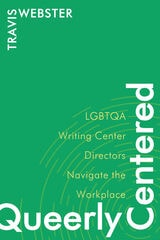
Queerly Centered
LGBTQA Writing Center Directors Navigate the WorkplaceTravis Webster
Utah State University Press, 2021
Signed Language Interpreting in the Workplace
Jules Dickinson
Gallaudet University Press, 2017
Jules Dickinson’s examination of interpreted workplace interactions is based on the only detailed, empirical study of this setting to date. Using practitioner responses and transcripts of real-life interpreted workplace interactions, Dickinson’s findings demonstrate the complexity of the interpreter’s role and responsibilities. The book concentrates on the ways in which signed language interpreters affect the interaction between deaf and hearing employees in team meetings by focusing on humor, small talk, and the collaborative floor. Signed Language Interpreting in the Workplace demonstrates that deaf employees require highly skilled professionals to enable them to integrate into the workplace on a level equal with their hearing peers. It also provides actionable insights for interpreters in workplace settings that will be a valuable resource for interpreting students, practitioners, interpreter trainers, and researchers.

Skills Development for Engineers
Innovative model for advanced learning in the workplaceKevin Hoag
The Institution of Engineering and Technology, 2001

The 360 Librarian
A Framework for Integrating Mindfulness, Emotional Intelligence, and Critical Reflection in the WorkplaceTammi M. Owens
Assoc of College & Research Libraries, 2019
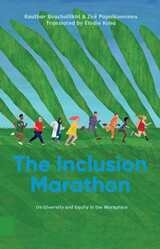
The Inclusion Marathon
On Diversity and Equity in the WorkplaceZoë Papaikonomou
Amsterdam University Press, 2023
In The Inclusion Marathon, Kauthar Bouchallikht and Zoë Papaikonomou interview 41 practitioners and researchers about their knowledge and experience within the field of diversity, equity and inclusion in the Netherlands. These experts discuss different approaches and the bumps and barriers they come across. The Inclusion Marathon is a revealing book exploring the persistent lack of diversity and equity within many organisations. At the same time, it is a constructive, concrete guide to how organisations may become more diverse, equitable and inclusive.
The Inclusion Marathon is an extensive English summary of the Dutch book De inclusiemarathon.
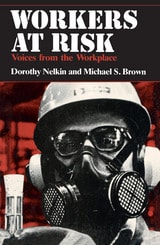
Workers At Risk
Voices from the WorkplaceDorothy Nelkin and Michael S. Brown
University of Chicago Press, 1984
More than seventy of them speak here of their jobs, their health, and the difficult choices they face in coming to grips with the responsibilities, risks, fears, and satisfactions of their work. Some struggle for information and acknowledgment of their health risks; others struggle to put out of their minds the dangers they know too well. Through extensive interviews, the authors have captured in these voices that double bind of the chemical worker: "If I had known that it would be that lethal, that it could give me or one of my children cancer, I would have refused to work. But it's a matter of survival and we just don't consider all these things. Meanwhile, we've got to make money to survive."
Writing in the Workplace
New Research PerspectivesEdited by Rachel Spilka
Southern Illinois University Press, 1998
Rachel Spilka brings together nineteen previously unpublished essays concerned with ways in which recent research on workplace writing can contribute to the future direction of the discipline of technical and professional writing. Hers is the first anthology on the social perspective in professional writing to feature focused discussions of research advances and future research directions.
The workplace as defined by this volume is a widely diverse area that encompasses small companies and large corporations, public agencies and private firms, and a varied population of writers—engineers, managers, nurses, social workers, government employees, and others. Because much research has been conducted on the relationship between workplace writing and social contexts since the ground~breaking 1985 publication of Odell and Goswami’s Writing in Nonacademic Settings, Spilka contends that this is an appropriate time for the professional writing community to consider what it has learned to date and where it should be heading next in light of these recent discoveries. She argues that now professional writers should try to ask better questions and to define new directions.
Spilka breaks the anthology into two parts. Part 1 is a collection of ten essays presenting textual and qualitative studies conducted by the authors in the late l980s on workplace writing. Spilka has chosen these studies as representative of the finest research being conducted in professional writing that can serve as models for current and future researchers in the field. Barbara Couture, Jone Rymer, and Barbara Mirel report on surveys they conducted relying on the social perspective both to design survey instruments and to analyze survey data. Jamie MacKinnon assesses a qualitative study describing what workplace professionals might need to learn about social contexts and workplace writing. Susan Kleimann and editor Rachel Spilka discuss multiple case studies they conducted that help explain the value during the composing process of social interaction among the participants of a rhetorical situation. Judy Z. Segal explores the negotiation between the character of Western medicine and the nature of its professional discourse. Jennie Dautermann describes a qualitative study in which a group of nurses "claimed the authority to restructure their own procedural information system." Anthony Paré finds in a case study of social workers that writing can be constrained heavily by socially imposed limitations and restrictions. Graham Smart describes a study of discourse conventions in a financial institution. Geoffrey A. Cross reports on a case study of the interrelation of genre, context, and process in the group production of an executive letter and report.