Results by title
3 books match the query 'Worldview'
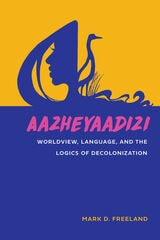
Aazheyaadizi
Worldview, Language, and the Logics of DecolonizationMark D. Freeland
Michigan State University Press, 2020
Many of the English translations of Indigenous languages that we commonly use today have been handed down from colonial missionaries whose intent was to fundamentally alter or destroy prior Indigenous knowledge and praxis. In this text, author Mark D. Freeland develops a theory of worldview that provides an interrelated logical mooring to shed light on the issues around translating Indigenous languages in and out of colonial languages. In tandem with other linguistic and narrative methods, this theory of worldview can be employed to help root out the reproduction of colonial culture in Indigenous languages and can be a useful addition to the repertoire of tools needed to return to life-giving relationships with our environment. These issues of decolonization are highlighted in the trajectory of treaty language associated with relationships to land and their present-day importance. This book uses the 1836 Treaty of Washington and its contemporary manifestation in Great Lakes fishing rights and the State of Michigan’s 2007 Inland Consent Decree as a means of identifying the role of worldview in deciphering the logics embedded in Anishinaabe thought associated with these relationships to land. A fascinating study for students of Indigenous and linguistic disciplines, this book deftly demonstrates the significance of worldview theory in relation to the logics of decolonization of Indigenous thought and praxis.
[more]
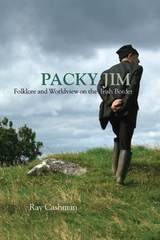
Packy Jim
Folklore and Worldview on the Irish BorderRay Cashman
University of Wisconsin Press, 2017
Growing up on a secluded smuggling route along the border of Northern Ireland and the Republic, Packy Jim McGrath regularly heard the news, songs, and stories of men and women who stopped to pass the time until cover of darkness. In his early years, he says, he was all ears—but now it is his turn to talk.
Ray Cashman, who has been interviewing McGrath for more than fifteen years, demonstrates how Packy Jim embellishes daily conversation with stories of ghosts and fairies, heroic outlaws and hateful landlords. Such folklore is a boundless resource that he uses to come to grips with the past and present, this world and the next. His stories reveal an intricate worldview that is both idiosyncratic and shared—a testament to individual intelligence and talent, and a window into Irish vernacular culture.
Ray Cashman, who has been interviewing McGrath for more than fifteen years, demonstrates how Packy Jim embellishes daily conversation with stories of ghosts and fairies, heroic outlaws and hateful landlords. Such folklore is a boundless resource that he uses to come to grips with the past and present, this world and the next. His stories reveal an intricate worldview that is both idiosyncratic and shared—a testament to individual intelligence and talent, and a window into Irish vernacular culture.
[more]
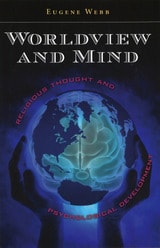
Worldview and Mind
Religious Thought and Psychological DevelopmentEugene Webb
University of Missouri Press, 2009
When worldviews clash, the world reverberates. Now a distinguished scholar who has written widely on thinkers ranging from Samuel Beckett to Eric Voegelin inquires into the sources of religious conflict—and into ways of being religious that might diminish that conflict.
Worldview and Mind covers a wide range of thinkers and movements to explore the relation between religion and modernity in all its complexity. Eugene Webb invokes a number of topical issues, including religious terrorism, as he unfolds the phenomenon of religion in all its complications, from the difference between faith and belief to the diversities among—and within—religions.
Building on Karl Jaspers’s psychology of worldviews and Jean Piaget’s developmental psychology, Webb looks at a broad spectrum of religions—especially the history of Christianity, Judaism, and Islam in their various forms—to explore the subjective factors that sometimes render religions conflictual and aggressive and to consider conditions that might foster more helpful and reconciling forms of religiousness. He explores what psychological analysis reveals about the relationship between stages of psychological development and ways of being religious—ways that range from closed-minded literalism to open-minded tolerance. He also identifies unconscious and developmental obstacles to religious maturity and depicts the mature person as one who participates in the mystery of self-transcending love.
Webb argues that authentic religion need not succumb to dogmatism, or support fanaticism, or be consigned to the stages of immature culture. Responding to critics of religion, from Sigmund Freud to Daniel Dennett, he demonstrates that religious traditions have more spiritual depth than these critics have granted and a greater potential for development than they believe, along lines they might even favor. His insightful book proposes that, if religious people can step back from their traditions and consider them as partial ways of relating to transcendent ultimacy, the world’s religions might manage to develop a way of living together with mutual appreciation and respect.
[more]