Results by title
20 books match the query 'Yellowstone National Park'
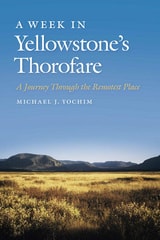
A Week in Yellowstone's Thorofare
A Journey Through the Remotest PlaceMichael J. Yochim
Oregon State University Press, 2016
Drawing upon the first-person accounts of rangers who have patrolled the area, archival documents, and Michael Yochim’s personal experiences over almost three decades, A Week in Yellowstone’s Thorofare distinguishes between the notions of wildness and wilderness. Through historic vignettes, descriptions of natural resources, and the author’s own experiences, it argues that wildness is the most precious, and easily lost, attribute of wilderness.
The Thorofare is remote not only from roads, but also largely unexplored in the vast body of wilderness literature. A Week in Yellowstone’s Thorofare aims to fill that void. Recognizing both the value and the fragility of wildness, the rangers who manage the area have struggled through many eras to preserve it. This book chronicles many of the struggles through which it has remained protected for visitors today.
Yochim offers poignant insight into the passions that motivate those who manage, defend, and journey through the Thorofare. His story demonstrates the importance of wild places for touching and understanding a fundamental part of the human experience. Part history, memoir, travelogue, natural history, and reflection, the book will appeal to readers interested in preservation, the wilderness movement, the history of National Parks, or the natural treasures of Yellowstone.
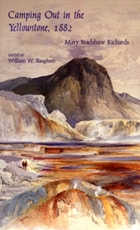
Camping Out In The Yellowstone
William W. Slaughter
University of Utah Press, 1994
Camping out in Yellowstone, 1882 describes the park at a time when Yellowstone was truly an "out-back and beyond" experience.
Writing just five years after the army chased the Nez Peirce Indians through the area, and only ten years after the park’s establishment, Mary Richards provides a vivid picture of the undeveloped and untouristed Yellowstone Park: Fire Hole Basin, Mammoth Hot Spring, Lower Falls, and the Excelsior Geyser, now defunct but mightier at the time than Old Faithful. Augmented by twenty-eight contemporary photographs, this book offers a fascinating perspective for present-day Park lovers.
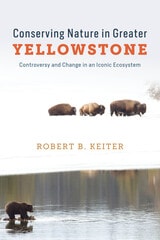
Conserving Nature in Greater Yellowstone
Controversy and Change in an Iconic EcosystemRobert B. Keiter
University of Chicago Press, 2025
For more than 150 years, the Yellowstone region—now widely known as the twenty-three million acre Greater Yellowstone Ecosystem—has played a prominent role in the United States’ nature conservation agenda. In this book, Robert B. Keiter, an award-winning public land law and policy expert, traces the evolution and application of fundamental ecological conservation concepts tied to Yellowstone.
Keiter’s book highlights both the conservation successes and controversies connected with this storied region, which has been enmeshed in change. During the 1980s, leaders in Yellowstone embraced ecosystem management concepts to recover a dwindling grizzly bear population and to support wolf reintroduction. Since then, management policies in the region’s two national parks and adjacent national forests have largely followed suit, prioritizing ecosystem-level conservation over industrial activity. Groundbreaking efforts are currently afoot to protect elk, deer, and pronghorn migration corridors and to maintain the park’s bison population, effectively expanding the scope of regional conservation initiatives. But in the face of explosive human population growth and related development pressures, new efforts must also account for the region’s privately owned lands along with accelerating recreational activities that present quite different problems.
Indeed, the Greater Yellowstone Ecosystem—extending across three states and twenty counties and embracing more than sixteen million acres of federal land as well as private and tribal lands —can only be characterized as a complex, jurisdictionally fragmented landscape. As Keiter makes clear, the quest for common ground among federal land managers, state officials, local communities, conservationists, ranchers, Indigenous tribes, and others is a vital, enduring task.
Exploring both notable conservation accomplishments and the ongoing challenges confronting this special place, Keiter’s book explains the many forces—scientific, political, economic, legal, cultural, climatic, and more—at work driving controversy and change across the region. But more than this, Conserving Nature in Greater Yellowstone shows us that the lessons gleaned from Yellowstone’s expansive nature conservation efforts are profoundly important for both the country and the world.
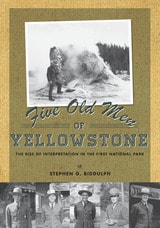
Five Old Men of Yellowstone
The Rise of Interpretation in the First NationalStephen Biddulph
University of Utah Press, 2013
Biddulph’s masterfully woven narrative—part biography, part historical narrative—offers both fascinating factual details about Yellowstone and charming colloquial story telling. The interpretive initiatives of the rangers—nature walks, campfire programs, game stalks, and auto caravans—are enlivened by the colorful personalities of the five men who conducted them. Historians will find that Five Old Men of Yellowstone provides a missing link in the park’s extensive literature, while its humor and sentiment make for an accessible book that will be enjoyed by park history buffs and curious visitors alike.
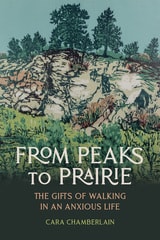
From Peaks to Prairie
The Gifts of Walking in an Anxious LifeCara Chamberlain
Oregon State University Press, 2026
Along twenty-nine trails near Yellowstone National Park, Cara Chamberlain leads readers on a journey of perseverance, drawing lessons from human and natural history. She reflects on being diagnosed with generalized anxiety disorder (GAD) and obsessive-compulsive disorder (OCD) and explores how walking helps manage anxiety, opening rich pathways of perception.
In From Peaks to Prairie, Chamberlain examines her personal life, family history, and struggles as she encounters animals and plants of Montana and Wyoming. Each essay is an episode mingling the past with the present, combining sightings of bears, birds, and wildflowers with memories of her Utah childhood and family. She observes, “I walk. It’s the way I’ve found not to eliminate GAD and OCD, as I used to long to do, but to live with them.” Mountains and prairies offer strength and nurture those who need them. It is on their paths that Chamberlain finds clarity.
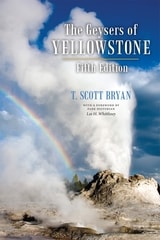
Geysers of Yellowstone, Fifth Edition
T. Scott Bryan
University Press of Colorado, 2018
Both a reference work and a fine introduction to the nature of geyser activity, this popular field guide includes a glossary of key terms, a comprehensive appendix that discusses other geyser areas of the world, detailed maps of each geyser basin, and tables for easy reference. The Geysers of Yellowstone will continue to serve geyser gazers as well as newcomers to geothermal phenomena for years to come.
Geysers of Yellowstone, Fourth Edition
T. Scott Bryan
University Press of Colorado, 2008
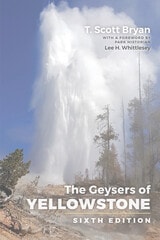
Geysers of Yellowstone
Sixth EditionT. Scott Bryan
University Press of Colorado, 2024
Both a reference work and a fine introduction to the nature of geyser activity, this popular field guide includes detailed maps of each geyser basin, tables for easy reference, and a glossary of key terms. A comprehensive appendix discusses other geyser areas of the world, several of which are described here for the first time. The Geysers of Yellowstone will continue to serve geyser gazers as well as newcomers to geothermal phenomena for years to come.
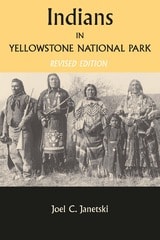
Indians In Yellowstone National Park
Joel Janetski
University of Utah Press, 1987
The vast, pine-covered plateau now known as Yellowstone National Park has been lived in, traveled through, and exploited by humans for thousands of years. It is still possible to see the remnants of old camps and deep-rutted trails over which ancient peoples crossed the Park to reach the bison-rich plains.
When did humans first visit the area we now call Yellowstone?
Who lived there when the first Europeans entered the region?
What happened to the last of the early inhabitants?
How did the Nez Perce, fleeing across the northen of the newly established Park in 1877, escape U.S. troops?
How did Indians perceive the Park's geysers and hot springs?
These and other questions are answered in this popular history of the Park written by a professional archaeologist who is also a seasonal resident of West Yellowstone. Joel Janetski reconstructs past human events from archaeological evidence and historical sources to provide an engrossing story of the people who knew the area hundreds, even thousands, of years ago and who left their traces amidst the grandeur that is today's Yellowstone National Park.
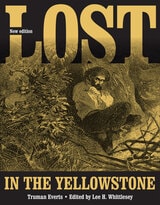
Lost in the Yellowstone
"Thirty-Seven Days of Peril" and a Handwritten Account of Being LostTruman Everts; Edited by Lee H. Whittlesey
University of Utah Press, 2015
In 1870, Truman Everts visited what would two years later become Yellowstone National Park, traveling with an exploration party intent on mapping and investigating that mysterious region. Scattered reports of a mostly unexplored wilderness filled with natural wonders had caught the public’s attention and the fifty-four-year-old Everts, near-sighted and an inexperienced woodsman, had determined to join the expedition. He was soon separated from the rest of the party and from his horse, setting him on a grueling quest for survival. For over a month he wandered Yellowstone alone and injured, with little food, clothing, or other equipment. In “Thirty-seven Days of Peril” he recounted his experiences for the readers of Scribner’s Monthly.
In June 1996, Everts’s granddaughter arrived at Mammoth Hot Springs in Yellowstone National Park to meet with park archivist Lee Whittlesey. She brought two documents that her father had kept hidden and both were handwritten by Everts. One was a brief autobiography that gave new insight into his early life. The other was a never-published alternative account of his confused 1870 journey through Yellowstone. Both have been added to this volume, further enhancing Everts’s unlikely tale of survival.
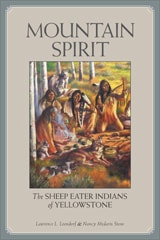
Mountain Spirit
The Sheep Eater Indians of YellowstoneLoendorf, Lawrence L
University of Utah Press, 2006
These robust people were talented artisans, making well-constructed shelters, powerful horn bows, and expertly tailored clothing that was highly sought by their trading partners. They moved in small, kin-based bands, accompanied by large dogs that were indispensable hunting and trekking companions. Moving seasonally through portions of the Beartooth, Absaroka, and Wind River ranges, the Sheep Eaters made skillful use of their environment.
Written for general readers, Mountain Spirit includes photographs, lithographs, and a number of color drawings and sketches of Sheep Eater life ways by Davíd Joaquin. It presents a vivid picture of the vanished way of life of a people whose accomplishments have been largely ignored in histories of Native peoples.

Take Down Flag & Feed Horses
Bill Everhart
University of Illinois Press, 1998
ensures biological diversity.
One of an elite cadre of Park Service employees who served in the system for many years, Everhart would smile knowingly at a comrade's recollection of an old-timer who left often unnecessary instructions that regularly concluded with, "Take down flag & feed horses (TDF &; FH)." His book, a gentle excursion through places and among people, will be attractive to a wide range of readers.

Where Light Comes and Goes
A NovelSandra Cavallo Miller
University of Nevada Press, 2020
Book 2 in the Dr. Abby Wilmore Series
Where Light Comes and Goes brings back Dr. Abby Wilmore, the young family physician who was the protagonist of Miller’s first novel, The Color of Rock. Abby has accepted the directorship of a summer clinic in Yellowstone National Park where she hopes to expand her medical skills. She arrives to find herself working above the increasingly restless Yellowstone supervolcano, treating visitors, staff, and locals, all while evading the advances of a lecherous concession manager and maintaining a long-distance relationship with her partner who stays at the Grand Canyon Clinic. As tremors in the park escalate and the lakes seethe with bubbling gases, Abby learns that some-one is mysteriously killing the bison.
What follows is an engrossing mystery unfolding in a spectacular setting with rich, quirky, and endearing characters and unexpected plot turns. While an overworked Abby makes new friends among her clinic staff and patients, tension builds as the volcano seems to be moving closer to a major eruption and the bison killings become more frequent. Soon, Abby finds herself in mortal danger as the story races to a thrilling and unexpected conclusion.
Sandra Cavallo Miller demonstrated in The Color of Rock that she is a gifted storyteller. Where Light Comes and Goes deftly combines a gripping mystery set in the accurately depicted routine of a busy medical practice amid the wonders of Yellowstone’s magnificent scenery and wildlife. This is entertaining reading at its best.
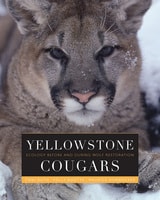
Yellowstone Cougars
Ecology before and during Wolf RestorationToni K. Ruth
University Press of Colorado, 2018
Of practical importance, Yellowstone Cougars addresses the management and conservation of multiple carnivores in increasingly human-dominated landscapes. The authors move beyond a single-species approach to cougar management and conservation to one that considers multiple species, which was impossible to untangle before wolf reestablishment in the Yellowstone area provided biologists with this research opportunity.
Yellowstone Cougars provides objective scientific data at the forefront of understanding cougars and large carnivore community structure and management issues in the Greater Yellowstone Ecosystem, as well as in other areas where wolves and cougars are reestablishing. Intended for an audience of scientists, wildlife managers, conservationists, and academics, the book also sets a theoretical precedent for writing about competition between carnivorous mammals.
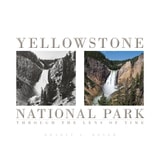
Yellowstone National Park
Through the Lens of TimeBradly J. Boner
University Press of Colorado, 2017
Pioneer photographer William Henry Jackson’s photographs from the 1871 Hayden Survey were instrumental in persuading Congress to designate Yellowstone as a national park—America’s first and greatest experiment in the preservation of an extraordinary landscape. Yellowstone National Park: Through the Lens of Time is an extended visual essay presenting Jackson’s images paired with breathtaking color rephotographs of each view from photojournalist Bradly J. Boner. These contemporary comparisons to Jackson’s originals reveal just how well that experiment has stood the test of time.
Yellowstone is always changing. The Grand Canyon is getting deeper and wider as the Yellowstone River carves a chasm into the earth. The flows of the great hot springs at Mammoth are creating new layers of delicate, colorful cascades and leaving the old terraces to crumble in decay. Roads, bridges, and pathways wind through the park, and there are restaurants, campgrounds, and hotels. Yet even with the impact of humanity, Yellowstone remains remarkably intact, evidence that the effort to preserve and sustain the park for future generations has been a success.
Combining more than 100 gorgeous “then and now” sets of photographs—the first complete published collection of Jackson’s images from the 1871 Hayden Survey and a result of Boner's three years of work rephotographing them—with history, extensive notes, and personal tales, Yellowstone National Park: Through the Lens of Time pays homage to the park’s early history and its present state, and offers a glimpse into the future. The great experiment of Yellowstone—which captivates millions of visitors from all corners of the globe each year—has transcended generations and should be maintained for generations to come.
The University Press of Colorado and the author gratefully acknowledge the generous contributions of the many donors to the Kickstarter campaign supporting the publication of this book.
Yellowstone Story, Revised Edition, Volume I
A History of Our First National ParkAubrey L. Haines
University Press of Colorado, 1996
The Yellowstone Park Act
Approved March 1, 1872
Be it enacted by the Senate and House of Representatives of the United States of America in Congress assembled, That the tract of land in the Territories of Montana and Wyoming, lying near the headwaters of the Yellowstone river . . . is hereby reserved and withdrawn from settlement, occupancy, or sale under the laws of the United States, and dedicated and set apart as a public park or pleasuring-ground for the benefit and enjoyment of the people.
Yellowstone Story, Revised Edition, Volume II
A History of Our First National ParkAubrey L. Haines
University Press of Colorado, 1996
Yellowstone Wildlife
Ecology and Natural History of the Greater Yellowstone EcosystemPaul A. Johnsgard, Photographs by Thomas D. Mangelsen
University Press of Colorado, 2013
From charismatic megafauna like elk, bison, wolves, bighorn sheep, and grizzly bears, to smaller mammals like bats, pikas, beavers, and otters, to some of the 279 species of birds, Johnsgard describes the behavior of animals throughout the seasons, with sections on what summer and autumn mean to the wildlife of the park, especially with the intrusion of millions of tourists each year. Enhanced by Mangelsen’s wildlife photography, Yellowstone Wildlife reveals the beauty and complexity of these species’ intertwined lives and that of Yellowstone’s greater ecosystem.
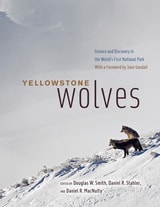
Yellowstone Wolves
Science and Discovery in the World's First National ParkEdited by Douglas W. Smith, Daniel R. Stahler, and Daniel R. MacNulty
University of Chicago Press, 2020
Here, for the first time in a single book, is the incredible story of the wolves’ return to Yellowstone National Park as told by the very people responsible for their reintroduction, study, and management. Anchored in what we have learned from Yellowstone, highlighting the unique blend of research techniques that have given us this knowledge, and addressing the major issues that wolves still face today, this book is as wide-ranging and awe-inspiring as the Yellowstone restoration effort itself. We learn about individual wolves, population dynamics, wolf-prey relationships, genetics, disease, management and policy, newly studied behaviors and interactions with other species, and the rippling ecosystem effects wolves have had on Yellowstone’s wild and rare landscape. Perhaps most importantly of all, the book also offers solutions to ongoing controversies and debates.
Featuring a foreword by Jane Goodall, beautiful images, a companion online documentary by celebrated filmmaker Bob Landis, and contributions from more than seventy wolf and wildlife conservation luminaries from Yellowstone and around the world, Yellowstone Wolves is a gripping, accessible celebration of the extraordinary Yellowstone Wolf Project—and of the park through which these majestic and important creatures once again roam.
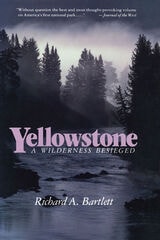
Yellowstone
A Wilderness BesiegedRichard A. Bartlett
University of Arizona Press, 1985
"Without question the best and most thought-provoking volume on America's first national park that has been written in the last half-century." —Journal of the West
"Broad ranging, informative, thoughtful, and simply fun to read." —Western Historical Quarterly
"...written in warm and human terms. It documents that good can triumph over greed, that man himself can overcome his tendency toward exploitation and follow his better self toward conservation and concern." --USA Today