Results by title
3 books match the query 'Yemen'
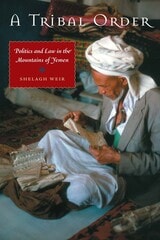
A Tribal Order
Politics and Law in the Mountains of YemenBy Shelagh Weir
University of Texas Press, 2006
2008 — British-Kuwait Friendship Prize in Middle Eastern Studies – British Society for Middle Eastern Studies
A Tribal Order describes the politico-legal system of Jabal Razih, a remote massif in northern Yemen inhabited by farmers and traders. Contrary to the popular image of Middle Eastern tribes as warlike, lawless, and invariably opposed to states, the tribes of Razih have stable structures of governance and elaborate laws and procedures for maintaining order and resolving conflicts with a minimum of physical violence. Razihi leaders also historically cooperated with states, provided the latter respected their customs, ideals, and interests. Weir considers this system in the context of the rugged environment and productive agricultural economy of Razih, and of centuries of continuous rule by Zaydi Muslim regimes and (latterly) the republican governments of Yemen.
The book is based on Weir's extended anthropological fieldwork on Jabal Razih, and on her detailed study of hundreds of handwritten contracts and treaties among and between the tribes and rulers of Razih. These documents provide a fascinating insight into tribal politics and law, as well as state-tribe relations, from the early seventeenth to the late twentieth century. A Tribal Order is also enriched by case histories that vividly illuminate tribal practices. Overall, this unusually wide-ranging work provides an accessible account of a remarkable Arabian society through time.
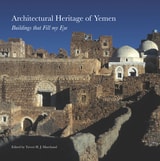
Architectural Heritage of Yemen
Buildings that Fill My EyeEdited by Trevor H. J. Marchand
Gingko, 2017

Peripheral Visions
Publics, Power, and Performance in YemenLisa Wedeen
University of Chicago Press, 2008
Lisa Wedeen, who spent a year and a half in Yemen observing and interviewing its residents, argues that national solidarity in such weak states tends to arise not from attachments to institutions but through both extraordinary events and the ordinary activities of everyday life. Yemenis, for example, regularly gather to chew qat, a leafy drug similar to caffeine, as they engage in wide-ranging and sometimes influential public discussions of even the most divisive political and social issues. These lively debates exemplify Wedeen’s contention that democratic, national, and pious solidarities work as ongoing, performative practices that enact and reproduce a citizenry’s shared points of reference. Ultimately, her skillful evocations of such practices shift attention away from a narrow focus on government institutions and electoral competition and toward the substantive experience of participatory politics.