Results by title
16 books match the query 'Yoruba (African people)'
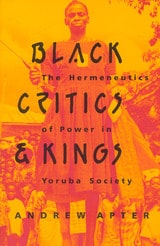
Black Critics and Kings
The Hermeneutics of Power in Yoruba SocietyAndrew Apter
University of Chicago Press, 1992
Documenting the development of a Yoruba kingdom from its nineteenth-century genesis to Nigeria's 1983 elections and subsequent military coup, Apter identifies the central role of ritual in reconfiguring power relations both internally and in relation to wider political arenas. What emerges is an ethnography of an interpretive vision that has broadened the horizons of local knowledge to embrace Christianity, colonialism, class formation, and the contemporary Nigerian state. In this capacity, Yoruba òrìsà worship remains a critical site of response to hegemonic interventions.
With sustained theoretical argument and empirical rigor, Apter answers critical anthropologists who interrogate the possibility of ethnography. He reveals how an indigenous hermeneutics of power is put into ritual practice—-with multiple voices, self-reflexive awareness, and concrete political results. Black Critics and Kings eloquently illustrates the ethnographic value of listening to the voice of the other, with implications extending beyond anthropology to engage leading debates in black critical theory.
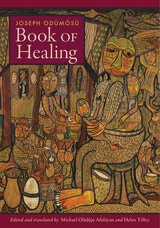
Book of Healing
Joseph Odùmósù
University of Wisconsin Press, 2026
While the existence of Odùmósù’s massive work is well-known in southwestern Nigeria, it has not previously been available in English. Michael Ọládẹ̀jọ Afọláyan and Helen Tilley have translated the volume in its entirety, and here use it as an entrée into greater understandings of Yorùbá medicine, spirituality, and print culture during a time of rapid change under British colonialism and the spread of Christianity.

Dancing Wisdom
Embodied Knowledge in Haitian Vodou, Cuban Yoruba, and Bahian CandombléYvonne Daniel
University of Illinois Press, 2005
Combining her background in dance and anthropology to parallel the participant/scholar dichotomy inherent to dancing's "embodied knowledge," Daniel examines these misunderstood and oppressed performative dances in terms of physiology, psychology, philosophy, mathematics, ethics, and aesthetics.
"Dancing Wisdom offers the rare opportunity to see into the world of mystical spiritual belief as articulated and manifested in ritual by dance. Whether it is a Cuban Yoruba dance ritual, slave Ring Shout or contemporary Pentecostal Holy Ghost possession dancing shout, we are able to understand the relationship with spirit through dancing with the Divine. Yvonne Daniel's work synthesizes the cognitive empirical objectivity of an anthropologist with the passionate storytelling of a poetic artist in articulating how dance becomes prayer in ritual for Africans of the Diaspora."
--Leon T. Burrows, Protestant Chaplain, Smith College’
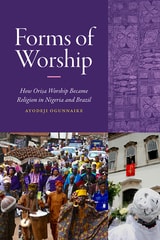
Forms of Worship
How Orisa Worship Became Religion in Nigeria and BrazilAyodeji Ogunnaike
Duke University Press, 2026
Hegemony and Culture
Politics and Religious Change among the YorubaDavid D. Laitin
University of Chicago Press, 1986
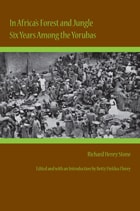
In Africa's Forest and Jungle
Six Years Among the YorubasRichard Henry Stone, edited by Betty Finklea Florey
University of Alabama Press, 2009
Stone served in Africa with his wife and successfully learned the Yoruba language. He was an intelligent, self-reflective, and reliable observer, making his works important sources of information on Yoruba society before the intervention of European colonialism. In Africa's Forest and Jungle is a rare account of West African culture, made all the more complete by the additional journal entries, letters, and photographs collected in this edition.

Juju
A Social History and Ethnography of an African Popular MusicChristopher Alan Waterman
University of Chicago Press, 1990
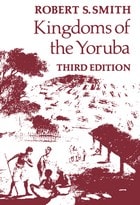
Kingdoms Of The Yoruba
Robert S. Smith
University of Wisconsin Press, 1988
The twenty million Yorubas are one of the largest and most important groups of people on the African continent. Historically they were organized in a series of autonomous kingdoms and their past is richly recorded in oral tradition and archaeology. From the fifteenth century onwards there are descriptions by visitors and from the nineteenth century there are abundant official reports from administrators and missionaries.
Yoruba sculpture in stone, metal, ivory, and wood is famous. Less well-known are the elaborate and carefully designed constitutional forms which were evolved in the separate kingdoms, the methods of warfare and diplomacy, the oral literature, and the religion based on the worship of a “high god” surrounded by a pantheon of more accessible deities. Many of these aspects are shown in the drawings and photographs which have been used—for the first time—to illustrate this distinguished work.
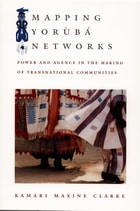
Mapping Yorùbá Networks
Power and Agency in the Making of Transnational CommunitiesKamari Maxine Clarke
Duke University Press, 2004
Examining how the development of a deterritorialized network of black cultural nationalists became aligned with a lucrative late-twentieth-century roots heritage market, Clarke explores the dynamics of Òyótúnjí Village’s religious and tourist economy. She discusses how the community generates income through the sale of prophetic divinatory consultations, African market souvenirs—such as cloth, books, candles, and carvings—and fees for community-based tours and dining services. Clarke accompanied Òyótúnjí villagers to Nigeria, and she describes how these heritage travelers often returned home feeling that despite the separation of their ancestors from Africa as a result of transatlantic slavery, they—more than the Nigerian Yorùbá—are the true claimants to the ancestral history of the Great Òyó Empire of the Yorùbá people. Mapping Yorùbá Networks is a unique look at the political economy of homeland identification and the transnational construction and legitimization of ideas such as authenticity, ancestry, blackness, and tradition.
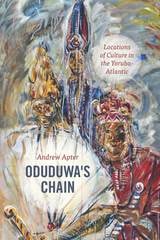
Oduduwa's Chain
Locations of Culture in the Yoruba-AtlanticAndrew Apter
University of Chicago Press, 2017
Focusing on Yoruba history and culture in Nigeria, Apter applies a generative model of cultural revision that allows him to identify formative Yoruba influences without resorting to the idea that culture and tradition are fixed. For example, Apter shows how the association of African gods with Catholic saints can be seen as a strategy of empowerment, explores historical locations of Yoruba gender ideologies and their variations in the Atlantic world, and much more. He concludes with a rousing call for a return to Africa in studies of the Black Atlantic, resurrecting a critical notion of culture that allows us to transcend Western inventions of African while taking them into account.
Science and an African Logic
Helen Verran
University of Chicago Press, 2001
In this captivating book, Helen Verran addresses precisely that question by looking at how science, mathematics, and logic come to life in Yoruba primary schools. Drawing on her experience as a teacher in Nigeria, Verran describes how she went from the radical conclusion that logic and math are culturally relative, to determining what Westerners find so disconcerting about Yoruba logic, to a new understanding of all generalizing logic. She reveals that in contrast to the one-to-many model found in Western number systems, Yoruba thinking operates by figuring things as wholes and their parts. Quantity is not absolute but always relational. Certainty is derived not from abstract logic, but from cultural practices and associations.
A powerful story of how one woman's investigation in this everday situation led to extraordinary conclusions about the nature of numbers, generalization, and certainty, this book will be a signal contribution to philosophy, anthropology of science, and education.
Spirit, Structure, and Flesh
Gender and Power in Yoruba African Instituted ChurchesDeidre Helen Crumbley
University of Wisconsin Press, 2008
Vodun in Coastal Benin
Unfinished, Open-Ended, GlobalDana Rush
Vanderbilt University Press, 2013
The book is richly illustrated with color photographs of Vodun shrines, temple wall paintings, masquerades, and Hindu chromolithographs.
This book is the first publication in a new series called "Critical Investigations of the African Diaspora." The series grows out of Issues in Critical Investigation, a Vanderbilt initiative to assist junior scholars through critical feedback from senior faculty, annual symposia, and prize competitions in the humanities and social sciences. Dana Rush's Vodun in Coastal Benin is the winner of the inaugural Anna Julia Cooper Prize in the Humanities.
Yorùbá Bàtá Goes Global
Artists, Culture Brokers, and FansDebra L. Klein
University of Chicago Press, 2007
Yorùbá Bàtá Goes Global describes the dramatic changes and reinventions of traditional bàtá performance in recent years, showing how they are continually recreated, performed, and sold. Klein delves into the lives of Yorùbá musicians, focusing on their strategic collaborations with artists, culture brokers, researchers, and entrepreneurs worldwide. And she explores how reinvigorated performing ensembles are beginning to parlay success on the world stage into increased power and status within Nigeria. Klein’s study of the interwoven roles of innovation and tradition will interest scholars of African, global, and cultural studies, anthropology, and ethnomusicology alike.
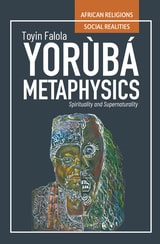
Yorùbá Metaphysics
Spirituality and SupernaturalityToyin Falola
Ohio University Press, 2025
Yorùbá Metaphysics challenges Western dominance in the field of epistemology and sheds light on the sophisticated realm of indigenous African knowledge systems and metaphysical thought. Toyin Falola comprehensively explores the complex interplay between the physical and spiritual worlds as understood by the Yorùbá people, offering a fresh perspective on metaphysics, spirituality, and the societal roles these elements play in African communities. The book contributes to the fields of philosophy, religious studies, and African studies by revealing how indigenous epistemologies can inform broader discussions of metaphysics, ethics, and societal development that are outside the Western frame of thought. Each of the book’s fifteen chapters focuses on a distinct aspect of Yorùbá life and cosmology. Topics encompass the everyday consequences of spiritual beliefs on social interactions and community living as well as the philosophical foundations that inform these practices. Noteworthy discussions include the function of language in conveying metaphysical knowledge, the societal impact of esoteric beliefs, and the application of these traditional understandings to contemporary life challenges. This work not only elucidates the nuances of Yorùbá metaphysical thought but also promotes the integration of this knowledge into broader academic and practical settings to advance societal development and sustainability. As global discourse increasingly seeks to acknowledge and incorporate diverse viewpoints, this book provides essential insights into the workings of an African metaphysical philosophy and its relevance to both regional and international concerns. Falola urges the academic community to reconsider the value and role of indigenous knowledge systems in present-day education and policy formation. This work is vital for scholars, policymakers, and practitioners interested in cultural studies, philosophy, religious studies, and African studies. It is not merely a scholarly work; it is an appeal for a reassessment of the methods by which indigenous knowledge is viewed and applied on an international scale.
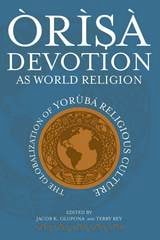
Òrìsà Devotion as World Religion
The Globalization of Yorùbá Religious CultureEdited by Jacob K. Olupona and Terry Rey
University of Wisconsin Press, 2008
The African spirit proved remarkably resilient in the face of the transatlantic slave trade, inspiring the perseverance of African religion wherever its adherents settled in the New World. Among the most significant manifestations of this spirit, Yorùbá religious culture persisted, adapted, and even flourished in the Americas, especially in Brazil and Cuba, where it thrives as Candomblé and Lukumi/Santería, respectively. After the end of slavery in the Americas, the free migrations of Latin American and African practitioners has further spread the religion to places like New York City and Miami. Thousands of African Americans have turned to the religion of their ancestors, as have many other spiritual seekers who are not themselves of African descent.
Ifá divination in Nigeria, Candomblé funerary chants in Brazil, the role of music in Yorùbá revivalism in the United States, gender and representational authority in Yorùbá religious culture—these are among the many subjects discussed here by experts from around the world. Approaching Òrìsà devotion from diverse vantage points, their collective effort makes this one of the most authoritative texts on Yorùbá religion and a groundbreaking book that heralds this rich, complex, and variegated tradition as one of the world’s great religions.