Results by title
5 books match the query 'Young Man'
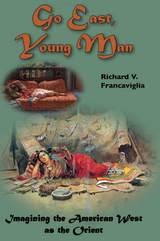
Go East, Young Man
Imagining the American West as the OrientRichard Francaviglia
Utah State University Press, 2011
Transference of orientalist images and identities to the American landscape and its inhabitants, especially in the West—in other words, portrayal of the West as the “Orient”—has been a common aspect of American cultural history. Place names, such as the Jordan River or Pyramid Lake, offer notable examples, but the imagery and its varied meanings are more widespread and significant. Understanding that range and significance, especially to the western part of the continent, means coming to terms with the complicated, nuanced ideas of the Orient and of the North American continent that European Americans brought to the West. Such complexity is what historical geographer Richard Francaviglia unravels in this book.
Since the publication of Edward Said’s book, Orientalism, the term has come to signify something one-dimensionally negative. In essence, the orientalist vision was an ethnocentric characterization of the peoples of Asia (and Africa and the “Near East”) as exotic, primitive “others” subject to conquest by the nations of Europe. That now well-established point, which expresses a postcolonial perspective, is critical, but Francaviglia suggest that it overlooks much variation and complexity in the views of historical actors and writers, many of whom thought of western places in terms of an idealized and romanticized Orient. It likewise neglects positive images and interpretations to focus on those of a decadent and ostensibly inferior East.
We cannot understand well or fully what the pervasive orientalism found in western cultural history meant, says Francaviglia, if we focus only on its role as an intellectual engine for European imperialism. It did play that role as well in the American West. One only need think about characterizations of American Indians as Bedouins of the Plains destined for displacement by a settled frontier. Other roles for orientalism, though, from romantic to commercial ones, were also widely in play. In Go East, Young Man, Francaviglia explores a broad range of orientalist images deployed in the context of European settlement of the American West, and he unfolds their multiple significances.
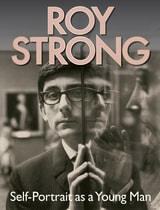
Roy Strong
Self-Portrait as a Young ManRoy Strong
Bodleian Library Publishing, 2013
In this book, Strong recounts his early years and the stirrings of what would become a lifelong passion for art. During a childhood spent in suburban North London, Strong recalls himself as a shy and solitary boy who spent his time painting Elizabethan miniatures and Shakespearean set designs. The book follows his progression through grammar school, which he attended alongside Alan Bennett and David Hockney, and university, where he developed a love of learning and enjoyed visits to the theater, opera, and ballet. With remarkable honesty, he explores the important relationships in his life—family, friends, and a schoolteacher with whom he maintained a long correspondence—as well as his debt to figures like Cecil Beaton, Frances Yates, C. V. Wedgwood, and A. L. Rowse.
Richly illustrated throughout with photographs, drawings, and letters, this book offers a compelling look at a young man poised for success.
Sentimental Education
The Story of a Young ManGustave Flaubert
University of Minnesota Press, 2024
A fresh and vivid translation of Flaubert’s influential bildungsroman
Gustave Flaubert conceived Sentimental Education, his final complete novel, as the history of his own generation, one that failed to fulfill the promise of the Revolution of 1848. Published a few months before the start of the 1870 Franco–Prussian War, it offers both a sweeping panorama of French society over three decades and an intimate bildungsroman of a young man from a small town who arrives in Paris when protests against the monarchy are increasing.
The novel’s protagonist, Frédéric Moreau, alternates between aimlessness and ambition as he searches for a meaningful life through love affairs and republican politics. Flaubert’s narrative includes scenes of high drama, as scattered protests across Paris swell into revolution, and quiet moments of self-aware romanticism, crafting a story that possesses the sweep and scope of a historical novel combined with deep emotion and scandalous intimacy. Suffused with tragedy and the poignancy of lost chances and wasted lives, Sentimental Education is sharpened by satirical observations of what Flaubert condemned as the Second Empire’s endemic hypocrisy and willful blindness.
This vibrant, new translation by Raymond N. MacKenzie includes an extensive critical introduction and annotations to help the modern reader appreciate Flaubert’s achievement. Sentimental Education intertwines the personal, the intimate, and the subjective with the political, social, and cultural, embedding Frédéric’s story in the larger arc of what Flaubert saw as France’s decline into mediocrity and imbecility in its politics and manners.
Three Plays
Dividing the Estate, The Trip to Bountiful, and The Young Man from AtlantaHorton Foote
Northwestern University Press, 2008
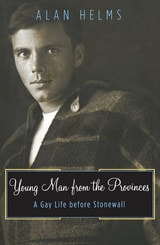
Young Man From The Provinces
A Gay Life Before StonewallAlan Helms
University of Minnesota Press, 2003
An insider’s account of gay high society in pre-Stonewall New York City—now back in print!
Young, intelligent, and handsome, Alan Helms left a brutal midwestern childhood for New York City in 1955. Denied a Rhodes scholarship because of his sexual orientation, he soon became an object of desire in a gay underground scene frequented by, among many others, Noel Coward, Leonard Bernstein, and Marlene Dietrich. In this unusually vivid and sensitive account, Helms describes the business of being a sex object and its psychological and physical toll.