Results by title

3 books match the query 'Young Woman'
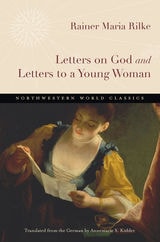
cover of Letters on God and Letters to a Young Woman

Letters on God and Letters to a Young Woman

Rainer Maria Rilke, Translated from the German by Annemarie S. Kidder

Northwestern University Press, 2012

For Rainer Maria Rilke, letter writing was a discipline and art unto itself. Some seven thousand of his letters have survived, among them works of profound beauty and insight to rival his poems and fiction. For the first time, this volume makes available to an English-speaking audience two of the earliest collections of Rilke letters published after his death, each with a nuanced introduction and notes by Annemarie S. Kidder.

The thematic collection Letters on God contains two letters by Rilke, the first an actual letter written during World War I, in 1915 in Munich, the second a fictional one composed after the war, in 1922 at Muzot in Switzerland. In these letters, Rilke builds on the mystical view of God conceived in The Book of Hours, but he moves beyond it, demonstrating a unique vision of God and Christ, the church and religious experience, friendship and death.

Like his famous Letters to a Young Poet, Rilke’s Letters to a Young Woman presents an intimate series of letters written to a young admirer. The nine letters collected here were written to Lisa Heise over the course of five years, from 1919 to 1924. Though Rilke and Heise never met, the poet emerges in these letters as a compassionate listener and patient teacher who with levelheaded sensitivity affirms and guides the movements of another person’s soul.
[more]
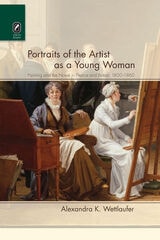
cover of Portraits of the Artist as a Young Woman: Painting and the Novel in France and Britain, 1800–1860

Portraits of the Artist as a Young Woman

Painting and the Novel in France and Britain, 1800–1860

Alexandra K. Wettlaufer

The Ohio State University Press, 2011

As women entered the field of cultural production in unprecedented numbers in nineteenth-century France and Britain, they gradually forged a place for themselves, however tenuous, in artistic movements and exhibitions, in academies and salons, and finally in the public imagination. Portraits of the Artist as a Young Woman: Painting and the Novel in France and Britain, 1800–1860 focuses on a decisive period in that process of professional self-invention and maps out the concrete and symbolic roles played by women painters, real and fictional, in the construction of female artistic identity in the aesthetic and the public spheres. Alexandra K. Wettlaufer examines the diverse and complex ways canonical and non-canonical women painters and novelists—including Anne Brontë, Sydney Owenson, Margaret Gillies, Marceline Desbordes-Valmore, George Sand, and Hortense Haudebourt-Lescot—figured and brought forth the radical image of a female subject representing the world.
 
Wettlaufer brings to light a rich and nearly forgotten culture of women’s artistic production, allowing us to understand the nineteenth-century in more complex and nuanced ways across the borders of gender, genre, and nation. In her close readings of paintings by women and novels about women painting, she charts the political and cultural resonances of this artistic self-representation, tracing its evolution through themes of “The Studio” (Part I), “Cosmopolitan Visions” (Part II), and “The Portrait” (Part III). By pairing painting and literature in a single study that also considers works from two distinct but closely related cultures, Portraits of the Artist as a Young Woman locates the interpretation of these works in the dialogic context in which they were created and consumed, highlighting aesthetic and political intersections between nineteenth-century British and French art, literature, and feminism that are too often elided by the disciplinary boundaries of scholarship.
[more]
cover of Voice, Silence and Gender in South Africa's Anti-Apartheid Struggle: The Shadow of a Young Woman

Voice, Silence and Gender in South Africa's Anti-Apartheid Struggle

The Shadow of a Young Woman

Rachel E. Johnson

University of London Press, 2025

In 1978, amidst the aftermath of the Soweto Uprisings and after being held in detention without charge for over a year, a young black woman who had just turned eighteen stepped into the witness box at Kempton Park Circuit Court, northeast of Johannesburg. She was there to testify in the apartheid State’s case against eleven Soweto school student activists, on trial for sedition. She confirmed her name as Mary Masabata Loate. Loate would live with the consequences of this decision to talk for the rest of her short life.

Who spoke about the liberation struggle whilst it was ongoing? When did they speak and how? And what effects do the gendered history of speech and silence within anti-apartheid politics continue to have upon our knowledge of the past? Arguing that she is emblematic of the way gendered narratives of the struggle have been made, this book listens for the voice and silence of Masabata Loate and her contemporaries within political trials; newspapers; photography; human rights reportage; creative fiction, drama, poetry and song; autobiography and memoir; and oral histories. The result is an unconventional biography that sees this young woman as a shadow within the story of South Africa’s anti-apartheid liberation struggle.
[more]