Results by title
12 books match the query 'Young adult fiction, American'
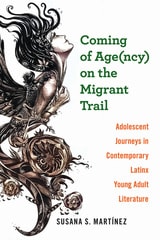
Coming of Age(ncy) on the Migrant Trail
Adolescent Journeys in Contemporary Latinx Young Adult LiteratureSusana S. Martínez
The Ohio State University Press, 2025
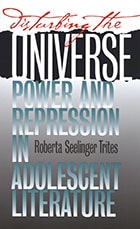
Disturbing the Universe
Power and Repression in Adolescent LiteratureRoberta S. Trites
University of Iowa Press, 2004
The Young Adult novel is ordinarily characterized as a coming-of-age story, in which the narrative revolves around the individual growth and maturation of a character, but Roberta Trites expands this notion by chronicling the dynamics of power and repression that weave their way through YA books. Characters in these novels must learn to negotiate the levels of power that exist in the myriad social institutions within which they function, including family, church, government, and school.
Trites argues that the development of the genre over the past thirty years is an outgrowth of postmodernism, since YA novels are, by definition, texts that interrogate the social construction of individuals. Drawing on such nineteenth-century precursors as Little Women and Adventures of Huckleberry Finn, Disturbing the Universe demonstrates how important it is to employ poststructuralist methodologies in analyzing adolescent literature, both in critical studies and in the classroom. Among the twentieth-century authors discussed are Blume, Hamilton, Hinton, Le Guin, L'Engle, and Zindel.
Trites' work has applications for a broad range of readers, including scholars of children's literature and theorists of post-modernity as well as librarians and secondary-school teachers.
Disturbing the Universe: Power and Repression in Adolescent Literature by Roberta Seelinger Trites is the winner of the 2002 Children's Literature Association's Book Award. The award is given annually in order to promote and recognize outstanding contributions to children's literature, history, scholarship, and criticisim; it is one of the highest academic honors that can accrue to an author of children's literary criticism.

Experiencing America's Story through Fiction
Historical Novels for Grades 7-12Hilary Susan Crew
American Library Association, 2014

Freud in Oz
At the Intersections of Psychoanalysis and Children’s LiteratureKenneth B. Kidd
University of Minnesota Press, 2011
Children’s literature has spent decades on the psychiatrist’s couch, submitting to psychoanalysis by scores of scholars and popular writers alike. Freud in Oz turns the tables, suggesting that psychoanalysts owe a significant and largely unacknowledged debt to books ostensibly written for children. In fact, Kenneth B. Kidd argues, children’s literature and psychoanalysis have influenced and interacted with each other since Freud published his first case studies.
In Freud in Oz, Kidd shows how psychoanalysis developed in part through its engagement with children’s literature, which it used to articulate and dramatize its themes and methods, turning first to folklore and fairy tales, then to materials from psychoanalysis of children, and thence to children’s literary texts, especially such classic fantasies as Peter Pan and Alice’s Adventures in Wonderland. He traces how children’s literature, and critical response to it, aided the popularization of psychoanalytic theory. With increasing acceptance of psychoanalysis came two new genres of children’s literature—known today as picture books and young adult novels—that were frequently fashioned as psychological in their forms and functions.
Freud in Oz offers a history of reigning theories in the study of children’s literature and psychoanalysis, providing fresh insights on a diversity of topics, including the view that Maurice Sendak and Bruno Bettelheim can be thought of as rivals, that Sendak’s makeover of monstrosity helped lead to the likes of the Muppets, and that “Poohology” is its own kind of literary criticism—serving up Winnie the Pooh as the poster bear for theorists of widely varying stripes.
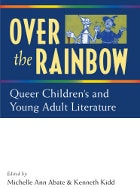
Over the Rainbow
Queer Children's and Young Adult LiteratureEdited by Michelle Ann Abate and Kenneth Kidd
University of Michigan Press, 2011
"Over the Rainbow is lively, engaging, and thoughtful. More to the point, the field of children's literature needs such a collection."
---Katherine Capshaw Smith, University of Connecticut
In spite of the growing critical interest concerning gender and sexual nonnormativity in and around narratives written for young readers, no book-length volume on the subject has yet appeared. Over the Rainbow: Queer Children's and Young Adult Literature is the first collection of essays dedicated to LGBTQ issues in children's literature. Bringing together significant essays and introducing new work, Over the Rainbow is intended to serve both as a scholarly reference and as a textbook for students of children's studies; gender/queer studies; and related disciplines such as English, history, sociology, and education. Editors Michelle Ann Abate and Kenneth Kidd showcase important essays on the subject of LGBTQ children's and young adult literature ---including Harriet the Spy, Rainbow Boys, Little Women, the Harry Potter series, and A Separate Peace---while providing a provisional history of both the literature and the scholarship and examining the field's origins, current status, and possible future orientations.
Over the Rainbow collects essays by Jes Battis, Robin Bernstein, Thomas Crisp, June Cummins, Elizabeth A. Ford, Sherrie A. Inness, Christine A. Jenkins, Vanessa Wayne Lee, Biddy Martin, Robert McRuer, Claudia Nelson, Jody Norton, Tison Pugh, Catherine Tosenberger, Eric L. Tribunella, Roberta Seelinger Trites, and Andrea Wood. These pieces will be of interest to scholars and students in the fields of children's literature, American Studies, LGBTQ and queer studies, cultural studies, and literary criticism.
Cover art: Original title page of The Wonderful Wizard of Oz, by Frank L. Baum, illustrated by W. W. Denslow. New York: George M. Hill, 1900.
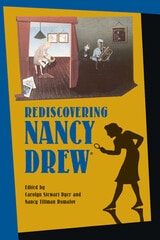
Rediscovering Nancy Drew
Carolyn Stewart Dyer
University of Iowa Press, 1995
The Readers' Advisory Guide to Street Literature
Vanessa Irvin Morris
American Library Association, 2011
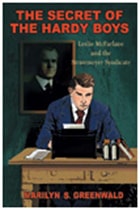
The Secret of the Hardy Boys
Leslie McFarlane and the Stratemeyer SyndicateMarilyn S. Greenwald
Ohio University Press, 2004
For generations of readers, the Hardy Boys were the creations of the legendary Franklin W. Dixon—except Dixon never existed. Behind the iconic series stood the Stratemeyer Syndicate, a powerhouse of children’s publishing, and one gifted but largely unrecognized writer: Leslie McFarlane.
In The Secret of the Hardy Boys, acclaimed biographer Marilyn S. Greenwald uncovers the remarkable story of the man who first brought Frank and Joe Hardy to life. A young Canadian journalist with ambitions beyond formula fiction, McFarlane infused the Syndicate’s rigid plots with wit, atmosphere, and narrative vitality—helping to shape one of the most enduring franchises in children’s literature.
Bound by contract and reluctant to claim authorship, McFarlane kept his role a secret for decades, receiving little financial reward for books that sold in the millions. Yet his story is far from one of regret. Drawing on extensive research, Greenwald paints a vivid portrait of a versatile writer who navigated the shifting landscape of twentieth-century media, from pulp magazines to radio and film.
Rich in literary history and human insight, The Secret of the Hardy Boys is both a revealing behind-the-scenes account of a cultural phenomenon and an inspiring testament to creativity, resilience, and the quiet architects of beloved stories.
Twain, Alcott, and the Birth of the Adolescent Reform Novel
Roberta S. Trites
University of Iowa Press, 2007
Young Adult Literature, Fourth Edition
From Romance to RealismMichael Cart
American Library Association, 2022
Editorial Advisory Board: Sarah Park Dahlen, Associate Professor, School of Information Sciences, University of Illinois Urbana-Champaign; Marianne Martens, Associate Professor, School of Information, Kent State University; Amy Pattee, Associate Professor and Co-coordinator of Dual-Degree MS LIS/MA Children’s Literature, School of Library and Information Science, Children’s Literature, Simmons University
“Comprehensive and substantial … a highly recommended resource," raved VOYA about the third edition. Now, to keep pace with changes in the field of publishing and realign itself to the newest generation of young adults, Cart returns with a sweeping update of his classic text. Relied upon by educators, LIS instructors and students, and practitioners for its insight and thoroughness, his book
- surveys the landscape of YA lit both past and present, sketching out its origins and showing how it has evolved to deal with subjects every bit as complex as its audience;
- closely examines teen demographics, literacy, audiobooks, the future of print, the role of literary criticism, and other key topics;
- provides updated coverage of perennially popular genre fiction, including horror, sci fi, and dystopian fiction;
- delves deeply into multicultural and LGBTQIA+ literature, substantially updated in this edition;
- features expansive interviews with best-selling authors like Eric Shanower, Jackie Woodson, and Bill Konigsberg as well as several publishers and leaders in the field;
- discusses the impact of the Printz Award, ALAN’s Walden Award, the National Book Award, The Los Angeles Times Book Award, and other honors; and
- features abundant bibliographic material to aid in readers' advisory and collection development.
Young Adult Literature
From Romance to RealismMichael Cart
American Library Association, 2016
Young Adult Literature
From Romance to RealismMichael Cart
American Library Association, 2010