Results by title

2 books match the query 'Younger'
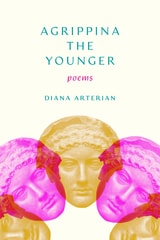
cover of Agrippina the Younger: Poems

Agrippina the Younger

Poems

Diana Arterian

Northwestern University Press, 2025

A poetic journey through the past of the Roman Empress Agrippina looks toward the future
 
Agrippina the Younger follows one woman’s study of another, separated by thousands of miles and two millennia but bound by a shared sense of powerlessness. Agrippina was a daughter in a golden political family, destined for greatness—but she hungered for more power than women were allowed. Exhausted by the misogyny of the present, Diana Arterian reaches into the past to try to understand the patriarchal systems of today. In lyric verse and prose poems, she traces Agrippina’s rise, interrogating a life studded with intrigue, sex, murder, and manipulation. Arterian eagerly pursues Agrippina through texts, ruins, and films, exhuming the hidden details of the ancient noblewoman’s life. These poems consider the valences of patriarchy, power, and the archive to try to answer the question: How do we recover a woman erased by history? 
[more]
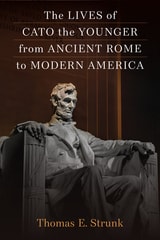
cover of The Lives of Cato the Younger from Ancient Rome to Modern America

The Lives of Cato the Younger from Ancient Rome to Modern America

Thomas E. Strunk

University of Michigan Press, 2026

The Lives of Cato the Younger from Ancient Rome to Modern America traces the reception and influence of Cato from his suicide at the fall of the Roman Republic to the twenty-first century. In preferring death to Julius Caesar’s dictatorship, Cato became a symbol of resistance to tyrannical rulers during the Roman Empire. In the years that followed, three interpretations of Cato became predominant: Cato lived and died with the resolve of a philosopher; he was a traitor to Caesar’s legitimate rule; or he was a republican statesman defending liberty. Beginning with these interpretations, Thomas E. Strunk explores Cato’s reception in antiquity with chapters on Tacitus and Plutarch; and he later discusses medieval Christian writers such as Augustine, who considered Cato’s suicide sinful, and Dante, who made him the noble guardian of Purgatory. In Europe, playwrights composed dramas on Cato’s death that ignited the revolutionary spirit of the age, later inspiring American general George Washington and his soldiers. Abolitionists such as Frederick Douglass invoked Cato and his revolutionary spirit, yet after the Civil War, Cato’s name was appropriated as a symbol of allegiance for Confederates and their descendants, and lines memorializing Cato were inscribed on the Confederate Memorial at Arlington Cemetery. As the first book to provide an in-depth study of Cato and his lasting influence, Strunk’s study seeks to explore the contemporary nature of his principles and their influence on present-day American politics.
[more]