Results by title
118 books match the query 'Youth' and 7 start with a
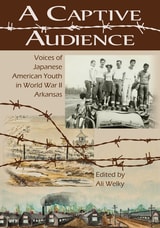
A Captive Audience
Voices of Japanese American Youth in World War II ArkansasAli Welky
Butler Center for Arkansas Studies, 2015
Intended for young-adult readers, this book explores important dimensions of Arkansas and U.S. history, including human rights and what it means to be an American.

A Kiss across the Ocean
Transatlantic Intimacies of British Post-Punk and US LatinidadRichard T. Rodríguez
Duke University Press, 2022

A Time of Youth
San Francisco, 1966–1967William Gedney
Duke University Press, 2021
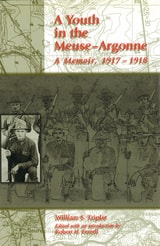
A Youth in the Meuse-Argonne
A Memoir, 1917-1918William S. Triplet, Edited & Intro by Robert H. Ferrell
University of Missouri Press, 2027
A Youth in the Meuse-Argonne is a firsthand account of World War I through the eyes of an enlisted soldier. William S. Triplet was a seventeen-year-old junior in high school when, on April 2, 1917, President Woodrow Wilson asked for a declaration of war. Passed by Congress and signed by the nation's chief executive four days later, this declaration stirred the superintendent of schools in Triplet's hometown of Sedalia, Missouri, to make an emotional plea to all eligible students to join the armed forces. "Any student who felt called upon to fight, bleed, and die for his country could receive his graduation diploma upon his return from the war." Triplet was eighteen months short of being of legal enlistment age, but the army didn't check birth certificates. The appeal of military benefits—room and board, travel, adventure, and fifteen dollars a month, plus knowing he would receive his high school diploma—was too much for the young Triplet to pass up. Thus began William S. Triplet's remarkable career in the U.S. Army, in which he served until his retirement as a full colonel in 1954.
In A Youth in the Meuse-Argonne, Triplet covers the early years of his service in Company D, 140th Infantry Regiment, 35th Division, from shortly after the time of his enlistment in 1917 to his honorable discharge in 1919. During those months he participated in several actions, most notably the battle of the Meuse-Argonne. With both elegance and a touch of humor, he masterfully portrays the everyday life of the soldier, humanizing the men with whom he served. His vivid depictions of how soldiers fought give the reader a much clearer view of the terrifying experiences of combat. He also touches on the special problems he encountered as a sergeant with an infantry platoon composed of soldiers from many different walks of life.
In writing this memoir, Triplet relied heavily on a detailed diary that he kept while he was in France in 1918. Through his annotations, Robert H. Ferrell provides the historical context for Triplet's firsthand experiences. The result is a compelling memoir that offers insight into the lives of the soldiers who served during World War I. Anyone with an interest in World War I or military history in general will find A Youth in the Meuse-Argonne of great interest.

Adolescent Relations with Mothers, Fathers and Friends
James Youniss and Jacqueline Smollar
University of Chicago Press, 1987
"A must for anyone interested in adolescent behavior."—Edward Z. Dager, Contemporary Sociology
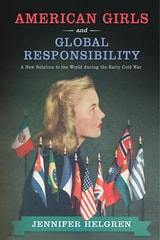
American Girls and Global Responsibility
A New Relation to the World during the Early Cold WarHelgren, Jennifer
Rutgers University Press, 2017
Jennifer Helgren argues that a new internationalist girl citizenship took root in the country in the years following World War II in youth organizations such as Camp Fire Girls, Girl Scouts, YWCA Y-Teens, schools, and even magazines like Seventeen. She shows the particular ways that girls’ identities and roles were configured, and reveals the links between internationalist youth culture, mainstream U.S. educational goals, and the U.S. government in creating and marketing that internationalist girl, thus shaping the girls’ sense of responsibilities as citizens.
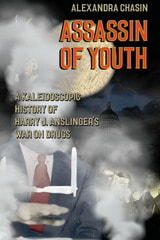
Assassin of Youth
A Kaleidoscopic History of Harry J. Anslinger’s War on DrugsAlexandra Chasin
University of Chicago Press, 2016
In Assassin of Youth, Alexandra Chasin gives us a lyrical, digressive, funny, and ultimately riveting quasi-biography of Anslinger. Her treatment of the man, his times, and the world that arose around and through him is part cultural history, part kaleidoscopic meditation. Each of the short chapters is anchored in a historical document—the court decision in Webb v. US (1925), a 1935 map of East Harlem, FBN training materials from the 1950s, a personal letter from the Treasury Department in 1985—each of which opens onto Anslinger and his context. From the Pharmacopeia of 1820 to death of Sandra Bland in 2015, from the Pennsylvania Railroad to the last passenger pigeon, and with forays into gangster lives, CIA operatives, and popular detective stories, Chasin covers impressive ground. Assassin of Youth is as riotous and loose a history of drug laws as can be imagined—and yet it culminates in an arresting and precise revision of the emergence of drug prohibition.
Today, even as marijuana is slowly being legalized, we still have not fully reckoned with the racist and xenophobic foundations of our cultural appetite for the severe punishment of drug offenders. In Assassin of Youth, Chasin shows us the deep, twisted roots of both our love and our hatred for drug prohibition.