Results by title

4 books match the query 'Youth in literature'
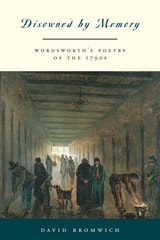
cover of Disowned by Memory: Wordsworth's Poetry of the 1790s

Disowned by Memory

Wordsworth's Poetry of the 1790s

David Bromwich

University of Chicago Press, 1998

Although we know him as one of the greatest English poets, William Wordsworth might not have become a poet at all without the experience of personal and historical catastrophe in his youth. In Disowned by Memory, David Bromwich connects the accidents of Wordsworth's life with the originality of his writing, showing how the poet's strong sympathy with the political idealism of the age and with the lives of the outcast and the dispossessed formed the deepest motive of his writings of the 1790s.

"This very Wordsworthian combination of apparently low subjects with extraordinary 'high argument' makes for very rewarding, though often challenging reading."—Kenneth R. Johnston, Washington Times

"Wordsworth emerges from this short and finely written book as even stranger than we had thought, and even more urgently our contemporary."—Grevel Lindop, Times Literary Supplement

"[Bromwich's] critical interpretations of the poetry itself offer readers unusual insights into Wordworth's life and work."—Library Journal

"An added benefit of this book is that it restores our faith that criticism can actually speak to our needs. Bromwich is a rigorous critic, but he is a general one whose insights are broadly applicable. It's an intellectual pleasure to rise to his complexities."—Vijay Seshadri, New York Times Book Review
[more]
cover of Growing Up Ethnic: Nationalism and the Bildungsroman in African American and Jewish American Fiction

Growing Up Ethnic

Nationalism and the Bildungsroman in African American and Jewish American Fiction

Japtok, Martin

University of Iowa Press, 2005
Growing Up Ethnic examines the presence of literary similarities between African American and Jewish American coming-of-age stories in the first half of the twentieth century; often these similarities exceed what could be explained by sociohistorical correspondences alone. Martin Japtok argues that these similarities result from the way both African American and Jewish American authors have conceptualized their "ethnic situation." The issue of "race" and its social repercussions certainly defy any easy comparisons. However, the fact that the ethnic situations are far from identical in the case of these two groups only highlights the striking thematic correspondences in how a number of African American and Jewish American coming-of-age stories construct ethnicity. Japtok studies three pairs of novels--James Weldon Johnson's Autobiography of an Ex-Coloured Man and Samuel Ornitz's Haunch, Paunch and Jowl, Jessie Fauset's Plum Bun and Edna Ferber's Fanny Herself, and Paule Marshall's Brown Girl, Brownstones and Anzia Yezierska's Bread Giver--and argues that the similarities can be explained with reference to mainly two factors, ultimately intertwined: cultural nationalism and the Bildungsroman genre. Growing Up Ethnic shows that the parallel configurations in the novels, which often see ethnicity in terms of spirituality, as inherent artistic ability, and as communal responsibility, are rooted in nationalist ideology. However, due to the authors' generic choice--the Bildungsroman--the tendency to view ethnicity through the rhetorical lens of communalism and spiritual essence runs head-on into the individualist assumptions of the protagonist-centered Bildungsroman. The negotiations between these ideological counterpoints characterize the novels and reflect and refract the intellectual ferment of their time. This fresh look at ethnic American literatures in the context of cultural nationalism and the Bildungsroman will be of great interest to students and scholars of literary and race studies.
[more]
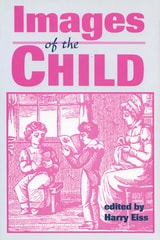
cover of Images of the Child

Images of the Child

Harry Eiss

University of Wisconsin Press, 1994

This collection of articles on images of the child offers an excellent range of perspectives on an equally wide range of concerns, including advertising, girls' book series, rap music, realistic fiction, games, dolls, violence, and movies. Taken together as a book, this collection confirms the complexity of the world of childhood, and demonstrates how strongly images of the child reflect the entire culture.
[more]
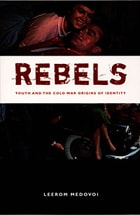
cover of Rebels: Youth and the Cold War Origins of Identity

Rebels

Youth and the Cold War Origins of Identity

Leerom Medovoi

Duke University Press, 2005

Holden Caulfield, the beat writers, Elvis Presley, Chuck Berry, and James Dean—these and other avatars of youthful rebellion were much more than entertainment. As Leerom Medovoi shows, they were often embraced and hotly debated at the dawn of the Cold War era because they stood for dissent and defiance at a time when the ideological production of the United States as leader of the “free world” required emancipatory figures who could represent America’s geopolitical claims. Medovoi argues that the “bad boy” became a guarantor of the country’s anti-authoritarian, democratic self-image: a kindred spirit to the freedom-seeking nations of the rapidly decolonizing third world and a counterpoint to the repressive conformity attributed to both the Soviet Union abroad and America’s burgeoning suburbs at home.

Alongside the young rebel, the contemporary concept of identity emerged in the 1950s. It was in that decade that “identity” was first used to define collective selves in the politicized manner that is recognizable today: in terms such as “national identity” and “racial identity.” Medovoi traces the rapid absorption of identity themes across many facets of postwar American culture, including beat literature, the young adult novel, the Hollywood teen film, early rock ‘n’ roll, black drama, and “bad girl” narratives. He demonstrates that youth culture especially began to exhibit telltale motifs of teen, racial, sexual, gender, and generational revolt that would burst into political prominence during the ensuing decades, bequeathing to the progressive wing of contemporary American political culture a potent but ambiguous legacy of identity politics.

[more]