Results by title
16 books match the query 'Yucatán Peninsula'
A Historical Grammar of the Maya Language of Yucatan
1557-2000Victoria R. Bricker
University of Utah Press, 2018
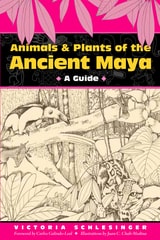
Animals and Plants of the Ancient Maya
A GuideBy Victoria Schlesinger
University of Texas Press, 2002
A growing interest in all things Maya brings an increasing number of visitors to prehistoric Maya ruins and contemporary Maya communities in Guatemala, Belize, El Salvador, western Honduras, the Yucatán Peninsula, and the southern areas of Chiapas and Tabasco, Mexico. For these visitors and indeed everyone with an interest in the Maya, this field guide highlights nearly 100 species of plants and animals that were significant to the ancient Maya and that continue to inhabit the Maya region today.
Drawing from the disciplines of biology, ecology, and anthropology, Victoria Schlesinger describes each plant or animal's habitat and natural history, identifying characteristics (also shown in a black-and-white drawing), and cultural significance to the ancient and contemporary Maya. An introductory section explains how to use the book and offers a concise overview of the history, lifeways, and cosmology of the ancient Maya. The concluding section describes the collapse of ancient Maya society and briefly traces the history of the Maya region from colonial times to the present.
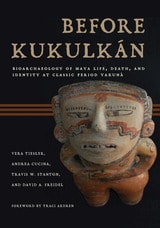
Before Kukulkán
Bioarchaeology of Maya Life, Death, and Identity at Classic Period YaxunáVera Tiesler, Andrea Cucina, Travis W. Stanton, and David A. Freidel; Foreword by Traci Ardren
University of Arizona Press, 2017
Using bioarchaeology, mortuary archaeology, and culturally sensitive mainstream archaeology, the authors create an in-depth regional understanding while also laying out broader ways of learning about the Maya past. Part 1 examines ancient lifeways among the Maya at Yaxuná, while part 2 explores different meanings of dying and cycling at the settlement and beyond: ancestral practices, royal entombment and desecration, and human sacrifice. The authors close with a discussion of the last years of occupation at Yaxuná and the role of Chichén Itzá in the abandonment of this urban center.
Before Kukulkán provides a cohesive synthesis of the evolving roles and collective identities of locals and foreigners at the settlement and their involvement in the region’s trajectory. Theoretically informed and contextualized discussions offer unique glimpses of everyday life and death in the socially fluid Maya city. These findings, in conjunction with other documented series of skeletal remains from this region, provide a nuanced picture of the social and biocultural dynamics that operated successfully for centuries before the arrival of the Itzá.
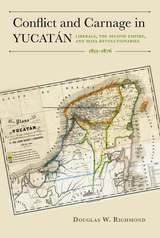
Conflict and Carnage in Yucatán
Liberals, the Second Empire, and Maya Revolutionaries, 1855–1876Douglas W. Richmond
University of Alabama Press, 2015
Synthesizing an extensive and heterogeneous range of sources, Douglas W. Richmond covers three tumultuous political upheavals of this period. First, Mexico’s fledgling republic attempted to impose a liberal ideology at odds with traditional Maya culture on Yucatán; then, the French-backed regime of Emperor Maximilian began to reform Yucatán; and, finally, the republican forces of Benito Juárez restored the liberal hegemony. Many issues spurred resistance to these liberal governments. Instillation of free trade policies, the suppression of civil rights, and persecution of the Roman Catholic Church mobilized white opposition to liberal governors. The Mayas fought the seizure of their communal properties. A long-standing desire for regional autonomy united virtually all Yucatecans. Richmond advances the thought-provoking argument that Yucatán both fared better under Maximilian’s Second Empire than under the liberal republic and would have thrived more had the Second Empire not collapsed.
The most violent and bloody manifestation of these broad conflicts was the Caste War (Guerra de Castas), the longest sustained peasant revolt in Latin American history. Where other scholars have advocated the simplistic position that the war was a Maya uprising designed to reestablish a mythical past civilization, Richmond’s sophisticated recounting of political developments from 1855 to 1876 restores nuance and complexity to this pivotal time in Yucatecan history.
Richmond’s Conflict and Carnage in Yucatán is a welcome addition to scholarship about Mexico and Yucatán as well as about state consolidation, empire, and regionalism.
Dictionary Of The Maya Language
As Spoken in Hocaba YucatanVictoria Bricker
University of Utah Press, 1998
The Maya language of Yucatan is known as Yucate by linguists, but its speakers refer to it as May. Dialiectical differences are minimal across the peninsula, and the more than 750,000 speakers of Maya can be understood wherever they go. Moreover, it is not only a living language but is of great use to epigraphers working on ancient Maya glyphs.
This dictionary is the culmination of fourteen years’ labor centering on the town and dialect of Hocaba. Whereas other dictionaries of may use Latin paradigms, this is the first to provide a comprehensive, systematic listing of the stems that can be derived from each root and that give Maya its distinctive character. The entries cover the full range of Maya speech, from simple expressions and idioms to compound stems. Maya sample sentences provide a window into the richness of everyday communication, with its mixture of wit, epithets, insults, riddles, aphorisms, and exchanges of information, including a wonderful assortment of metaphorical expressions like "peccary’s eyelashes" for a type of bean, "the end of the road" for marriage, and a verb meaning "to draw breath with puckered mouth after eating chili." Among the cultural domains encompassed by the dictionary are agriculture, architecture, astronomy, culinary practices and recipes, education, folklore, games, humor, medical prescriptions, ritual, toys, and weaving, many of which have roots in the Precolumbian past. In addition to the dictionary entries, this work also contains a short grammar, a botanical index, and bibliography.
Heterarchy, Political Economy, and the Ancient Maya
The Three Rivers Region of the East-Central Yucatán PeninsulaEdited by Vernon L. Scarborough, Fred Valdez Jr., and Nicholas Dunning
University of Arizona Press, 2003
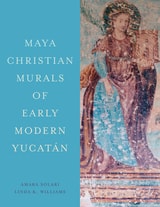
Maya Christian Murals of Early Modern Yucatán
Amara SolariLinda K. Williams
University of Texas Press, 2024
The first study of Christian murals created by indigenous artists in sixteenth and seventeenth century Yucatán.
In the sixteenth and seventeenth centuries, Maya artists painted murals in churches and conventos of Yucatán using traditional techniques to depict iconography brought from Europe by Franciscan friars. The fragmentary visual remains and their placement within religious structures embed Maya conceptions of sacredness beyond the didactic imagery. Mobilizing both cutting-edge technology and tried-and-true analytical methods, art historians Amara Solari and Linda K. Williams reexamine the Maya Christian murals, centering the agency of the people who created them.
The first volume to comprehensively document the paintings, Maya Christian Murals of Early Modern Yucatán collects new research on the material composition of the works, made possible by cutting-edge imaging methods. Solari and Williams investigate pigments and other material resources, as well as the artists and historical contexts of the murals. The authors uncover numerous local innovations in form and content, including images celebrating New World saints, celestial timekeeping, and ritual processions. Solari and Williams argue that these murals were not simply vehicles of coercion, but of cultural “grafting,” that allowed Maya artists to shape a distinctive and polyvocal legacy in their communities.
Maya for Travelers and Students
A Guide to Language and Culture in YucatanBy Gary Bevington
University of Texas Press, 1995
The Yucatan Peninsula draws many North American and European travelers each year to view the ruins of the pre-Columbian Classical Maya civilization and the abundant native flora and fauna. For these travelers, as well as armchair travelers and students, Gary Bevington has prepared the first general English-language introduction to Yucatec Maya, the native language of the people indigenous to the region.
Written in nontechnical terms for learners who have a basic knowledge of simple Mexican Spanish, the book presents easily understood, practical information for anyone who would like to communicate with the Maya in their native language. In addition to covering the pronunciation and grammar of Maya, Bevington includes invaluable tips on learning indigenous languages "in the field." Most helpful are his discussions of the cultural and material worlds of the Maya, accompanied by essential words and expressions for common objects and experiences. A Maya-English-Spanish glossary with extensive usage examples and an English-Maya glossary conclude the book.
Note: The supplemental audiocasette, Spoken Maya for Travelers and Students, is now available as a free download through the book's page on the University of Texas Press's website.
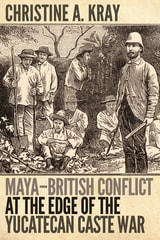
Maya-British Conflict at the Edge of the Yucatecan Caste War
Christine A. Kray
University Press of Colorado, 2023
Official British declarations of neutrality in the Caste War were confounded by a variety of political and economic factors, including competing land claims befuddled by a tangled set of treaties, mahogany extraction by British companies in contested territories, Maya rent demands, British trade in munitions to different groups of Maya combatants, and a labor system reliant on debt servitude. All these factors contributed to uneasy alliances and opportunistic crossings of imagined geopolitical borders in both directions, ultimately leading to a new military conflict in the western and northern regions of the territory claimed by Britain. What frequently began as hyper-local disputes spun out into international affairs as actors called upon more powerful groups for assistance. Evading reductionism, this work traces the decisions and actions of key figures as they maneuvered through the miasma of violence, abuse, deception, fear, flight, and glimpses of freedom.
Positioning the historiographic and ethnographic gaze on the English side without adopting the colonialist narratives and objectives found in English repositories, Maya-British Conflict at the Edge of the Yucatecan Caste War is an important and original contribution to a neglected area of study. It will appeal to students, scholars, and general readers interested in anthropology, Latin American cultures and history, Central American history, British imperialism, Indigenous rights, political anthropology, and colonialism and culture.
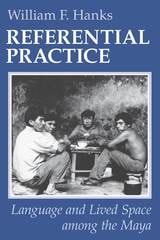
Referential Practice
Language and Lived Space among the MayaWilliam F. Hanks
University of Chicago Press, 1990
As his central case, Hanks undertakes a comprehensive analysis of deixis—linguistic forms that fix reference in context, such as English I, you, this, that, here, and there. He shows that Maya deixis is a basic cultural construct linking language with body space, domestic space, agricultural and ritual practices, and other fields of social activity. Using this as a guide to ethnographic description, he discovers striking regularities in person reference and modes of participation, the role of perception in reference, and varieties of spatial orientation, including locative deixis. Traditionally considered a marginal area in linguistics and virtually untouched in the ethnographic literature, the study of referential deixis becomes in Hanks's treatment an innovative and revealing methodology.
Referential Practice is the first full-length study of actual deictic use in a non-Western language, the first in-depth study of speech practice in Yucatec Maya culture, and the first detailed account of the relation between routine conversation, embodiment, and ritual discourse.
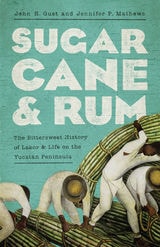
Sugarcane and Rum
The Bittersweet History of Labor and Life on the Yucatán PeninsulaJohn R. Gust and Jennifer P. Mathews
University of Arizona Press, 2020
While the Yucatán Peninsula of Mexico may conjure up images of vacation getaways and cocktails by the sea, these easy stereotypes hide a story filled with sweat and toil. The story of sugarcane and rum production in the Caribbean has been told many times. But few know the bittersweet story of sugar and rum in the jungles of the Yucatán Peninsula during the nineteenth century. This is much more than a history of coveted commodities. The unique story that unfolds in John R. Gust and Jennifer P. Mathews’s new history Sugarcane and Rum is told through the lens of Maya laborers who worked under brutal conditions on small haciendas to harvest sugarcane and produce rum.
Gust and Mathews weave together ethnographic interviews and historical archives with archaeological evidence to bring the daily lives of Maya workers into focus. They lived in a cycle of debt, forced to buy all of their supplies from the company store and take loans from the hacienda owners. And yet they had a certain autonomy because the owners were so dependent on their labor at harvest time. We also see how the rise of cantinas and distilled alcohol in the nineteenth century affected traditional Maya culture and that the economies of Cancún and the Mérida area are predicated on the rum-influenced local social systems of the past. Sugarcane and Rum brings this bittersweet story to the present and explains how rum continues to impact the Yucatán and the people who have lived there for millennia.
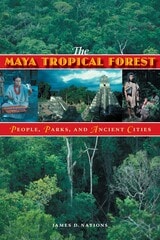
The Maya Tropical Forest
People, Parks, and Ancient CitiesBy James D. Nations
University of Texas Press, 2006
The Maya Tropical Forest, which occupies the lowlands of southern Mexico, Guatemala, and Belize, is the closest rainforest to the United States and one of the most popular tourist destinations in the Western Hemisphere. It has been home to the Maya peoples for nearly four millennia, starting around 1800 BC. Ancient cities in the rainforest such as Palenque, Yaxchilan, Tikal, and Caracol draw thousands of tourists and scholars seeking to learn more about the prehistoric Maya. Their contemporary descendants, the modern Maya, utilize the forest's natural resources in village life and international trade, while striving to protect their homeland from deforestation and environmental degradation.
Writing for both visitors and conservationists, James Nations tells the fascinating story of how ancient and modern Maya peoples have used and guarded the rich natural resources of the Maya Tropical Forest. He opens with a natural history that profiles the forest's significant animals and plants. Nations then describes the Maya peoples, biological preserves, and major archaeological sites in Mexico, Guatemala, and Belize. Drawing on more than twenty-five years of conservation work in the Maya Tropical Forest, Nations tells first-hand stories of the creation of national parks and other protected areas to safeguard the region's natural resources and archaeological heritage. He concludes with an expert assessment of the forest's future in which he calls for expanded archaeological tourism to create an ecologically sustainable economic base for the region.
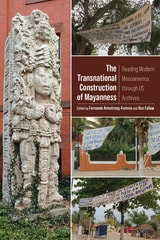
Transnational Construction of Mayanness
Reading Modern Mesoamerica through US ArchivesFernando Armstrong-Fumero
University Press of Colorado, 2023
Contributors tap documentary, ethnographic, and ethnoarchaeological sources from North America to expand established categories of fieldwork and archival research conducted within the national spaces of Mexico and Central America. A particularly rich and diverse set of case studies interrogate the historical processes that remove sources from their place of production in the “field” to the US, challenge the conventional wisdom regarding the geography of data sources that are available for research, and reveal a range of historical relationships that enabled US actors to shape the historical experience of Maya-speaking peoples.
The Transnational Construction of Mayanness offers rich insight into transnational relations and suggests new avenues of research that incorporate an expanded corpus of materials that embody the deep-seated relationship between Maya-speaking peoples and various gringo interlocutors. The work is an important bridge between Mayanist anthropology and historiography and broader literatures in American, Atlantic, and Indigenous studies.
Contributors: David Carey, M. Bianet Castellanos, Matilde Córdoba Azcárate, Lydia Crafts, John Gust, Julio Cesar Hoil Gutierréz, Jennifer Mathews, Matthew Watson
Undoing Modernity
Linguistics, Higher Education, and Indigeneity in YucatanCatherine R. Rhodes
University of Texas Press, 2025
An ethnography of the decolonization of Maya-ness.
On the Yucatan Peninsula today, undergraduates are inventing a new sense of being Maya by studying linguistics and culture in their own language: Maya. In this bold theoretical intervention informed by ethnographic research, Catherine Rhodes argues that these students are undoing the category of modernity itself. Created through colonization of the Americas, modernity is the counterpart to coloniality; the students, Rhodes suggests, are creating decoloniality’s companion: “demodernity.”
Disciplines like linguistics, anthropology, history, and archaeology invented “the Maya” as an essentialized ethnos in a colonial, modern mold. Undoing Modernity follows students and their teachers as they upset the seemingly stable ethnic definition of Maya, with its reliance on a firm dichotomy of Maya and modern. Maya linguistics does not prove that Maya is modern but instead rejects the Maya-ness that modernity built, while also fostering within the university an intellectual space in which students articulate identity on their own terms. An erudite and ultimately hopeful work of interdisciplinary scholarship that brings linguistic anthropology, Mesoamerican studies, and critical Indigenous studies into the conversation, Undoing Modernity dares to imagine the world on the other side of colonial/modern ideals of Indigeneity.
Yucatán's Maya Peasantry and the Origins of the Caste War
By Terry Rugeley
University of Texas Press, 1996
Conflicts between native Maya peoples and European-derived governments have punctuated Mexican history from the Conquest in the sixteenth century to the current Zapatista uprising in Chiapas. In this deeply researched study, Terry Rugeley delves into the 1800-1847 origins of the Caste War, the largest and most successful of these peasant rebellions.
Rugeley refutes earlier studies that seek to explain the Caste War in terms of a single issue. Instead, he explores the interactions of several major social forces, including the church, the hacienda, and peasant villagers. He uncovers a complex web of issues that led to the outbreak of war, including the loss of communal lands, substandard living conditions, the counterpoise of Catholicism versus traditional Maya beliefs, and an increasingly heavy tax burden.
Drawn from a wealth of primary documents, this book represents the first real attempt to reconstruct the history of the pre-Caste War period. In addition to its obvious importance for Mexican history, it will be illuminating background reading for everyone seeking to understand the ongoing conflict in Chiapas.
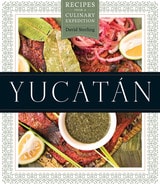
Yucatán
Recipes from a Culinary ExpeditionBy David Sterling
University of Texas Press, 2014
Winner, James Beard Foundation Best Cookbook of the Year Award, 2015
James Beard Foundation Best International Cookbook Award, 2015
The Art of Eating Prize for Best Food Book of the Year, 2015
The Yucatán Peninsula is home to one of the world's great regional cuisines. With a foundation of native Maya dishes made from fresh local ingredients, it shares much of the same pantry of ingredients and many culinary practices with the rest of Mexico. Yet, due to its isolated peninsular location, it was also in a unique position to absorb the foods and flavors of such far-flung regions as Spain and Portugal, France, Holland, Lebanon and the Levant, Cuba and the Caribbean, and Africa. In recent years, gourmet magazines and celebrity chefs have popularized certain Yucatecan dishes and ingredients, such as Sopa de lima and achiote, and global gastronomes have made the pilgrimage to Yucatán to tantalize their taste buds with smoky pit barbecues, citrus-based pickles, and fiery chiles. But until now, the full depth and richness of this cuisine has remained little understood beyond Yucatán's borders.
An internationally recognized authority on Yucatecan cuisine, chef David Sterling takes you on a gastronomic tour of the peninsula in this unique cookbook, Yucatán: Recipes from a Culinary Expedition. Presenting the food in the places where it’s savored, Sterling begins in jungle towns where Mayas concoct age-old recipes with a few simple ingredients they grow themselves. He travels over a thousand miles along the broad Yucatán coast to sample a bounty of seafood; shares “the people’s food”at bakeries, chicharronerías, street vendors, home restaurants, and cantinas; and highlights the cooking of the peninsula’s three largest cities—Campeche, Mérida, and Valladolid—as well as a variety of pueblos noted for signature dishes. Throughout the journey, Sterling serves up over 275 authentic, thoroughly tested recipes that will appeal to both novice and professional cooks. He also discusses pantry staples and basic cooking techniques and offers substitutions for local ingredients that may be hard to find elsewhere. Profusely illustrated and spiced with lively stories of the region’s people and places, Yucatán: Recipes from a Culinary Expedition is the long-awaited definitive work on this distinctive cuisine.