Results by title
3 books match the query 'Zapotec women'
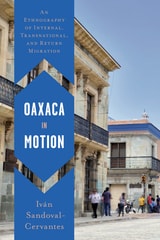
Oaxaca in Motion
An Ethnography of Internal, Transnational, and Return MigrationIván Sandoval-Cervantes
University of Texas Press, 2022
Migration is typically seen as a transnational phenomenon, but it happens within borders, too. Oaxaca in Motion documents a revealing irony in the latter sort: internal migration often is global in character, motivated by foreign affairs and international economic integration, and it is no less transformative than its cross-border analogue.
Iván Sandoval-Cervantes spent nearly two years observing and interviewing migrants from the rural Oaxacan town of Santa Ana Zegache. Many women from the area travel to Mexico City to work as domestics, and men are encouraged to join the Mexican military to fight the US-instigated “war on drugs” or else leave their fields to labor in industries serving global supply chains. Placing these moves in their historical and cultural context, Sandoval-Cervantes discovers that migrants’ experiences dramatically alter their conceptions of gender, upsetting their traditional notions of masculinity and femininity. And some migrants bring their revised views with them when they return home, influencing their families and community of origin. Comparing Oaxacans moving within Mexico to those living along the US West Coast, Sandoval-Cervantes clearly demonstrates the multiplicity of answers to the question, “Who is a migrant?”
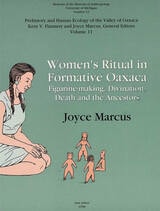
Women's Ritual in Formative Oaxaca
Figurine-making, Divination, Death and the AncestorsJoyce Marcus
University of Michigan Press, 1998
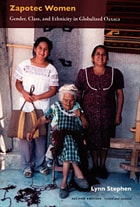
Zapotec Women
Gender, Class, and Ethnicity in Globalized OaxacaLynn Stephen
Duke University Press, 2005
Stephen presents new information about the weaving cooperatives women have formed over the last two decades in an attempt to gain political and cultural rights within their community and standing as independent artisans within the global market. She also addresses the place of Zapotec weaving within Mexican folk art and the significance of increased migration out of Teotitlán. The women weavers and merchants collaborated with Stephen on the research for this book, and their perspectives are key to her analysis of how gender relations have changed within rituals, weaving production and marketing, local politics, and family life. Drawing on the experiences of women in Teotitlán, Stephen considers the prospects for the political, economic, and cultural participation of other indigenous women in Mexico under the policies of economic neoliberalism which have prevailed since the 1990s.