Results by title
3 books match the query 'Zeller, Thomas'
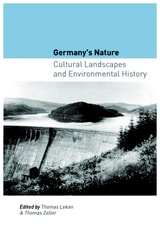
Germany's Nature
Cultural Landscapes and Environmental HistoryLekan, Thomas
Rutgers University Press, 2005
Now for the first time, a survey of the country's natural and cultural landscapes is available in one volume. Essays by leading scholars of history, geography, and the social sciences move beyond the Green movement to uncover the enduring yet ever-changing cultural patterns, social institutions, and geographic factors that have sustained Germany's relationship to its land.
Unlike the American environmental movement, which is still dominated by debates about wilderness conservation and the retention of untouched spaces, discussions of the German landscape have long recognized human impact as part of the "natural order." Drawing on a variety of sites as examples, including forests, waterways, the Autobahn, and natural history museums, the essays demonstrate how environmental debates in Germany have generally centered on the best ways to harmonize human priorities and organic order, rather than on attempts to reify wilderness as a place to escape from industrial society.
Germany's Nature is essential reading for students and professionals working in the fields of environmental studies, European history, and the history of science and technology.
How Green Were the Nazis?
Nature, Environment, and Nation in the Third ReichFranz-Josef Brüggemeier
Ohio University Press, 2005
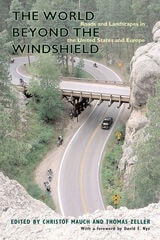
The World beyond the Windshield
Roads and Landscapes in the United States and EuropeChristof Mauch
Ohio University Press, 2008
For better or worse, the view through a car’s windshield has redefined how we see the world around us. In some cases, such as the American parkway, the view from the road was the be-all and end-all of the highway; in others, such as the Italian autostrada, the view of a fast, efficient transportation machine celebrating either Fascism or its absence was the goal. These varied environments are neither necessary nor accidental but the outcomes of historical negotiations, and whether we abhor them or take delight in them, they have become part of the fabric of human existence.
The World beyond the Windshield: Roads and Landscapes in the United States and Europe is the first systematic, comparative look at these landscapes. By looking at examples from the United States and Europe, the chapters in this volume explore the relationship between the road and the landscape thatit traverses, cuts through, defines, despoils, and enhances. The authors analyze the Washington Beltway and the Blue Ridge Parkway, as well as iconic roads in Italy, Nazi Germany, East Germany, and Great Britain. This is a story of the transatlantic exchange of ideas about environment and technology and of the national and nationalistic appropriations of such landscaping.